
The Mumbai-Vadodara segment of the larger Delhi-Mumbai Expressway is where India’s most ambitious road infrastructure project gets closest to its two biggest commercial anchors. The full Delhi-Mumbai Expressway stretches 1,350 to 1,386 kilometres from DND Flyway in Delhi to JNPT in Mumbai — and the Vadodara-to-Virar section within it is the corridor that carries the direct Mumbai metropolitan region approach, connecting Gujarat’s third-largest city to the western edge of the Mumbai MMR through a stretch of the expressway that passes through the industrially significant Surat and Bharuch zones.
As of May 2026, the Delhi-Mumbai Expressway is approximately 90 percent complete with around 929 kilometres operational primarily covering the Delhi-to-Vadodara stretch. The Godhra-Vadodara section entered trial run on April 13, 2026. The Vadodara-to-Virar section — which includes the Mumbai approach — is progressing with packages near Vadodara, Ankleshwar, Kim, and Surat already operational or completed, while certain Maharashtra packages remain under active construction. Full expressway completion is expected by mid-2026 to 2027, depending on the specific section.
Current Status: Partially Operational. Delhi-to-Vadodara largely open (~929 km). Vadodara-Virar section substantially complete; some packages finishing. Full Mumbai approach operational expected mid-2026 to 2027.
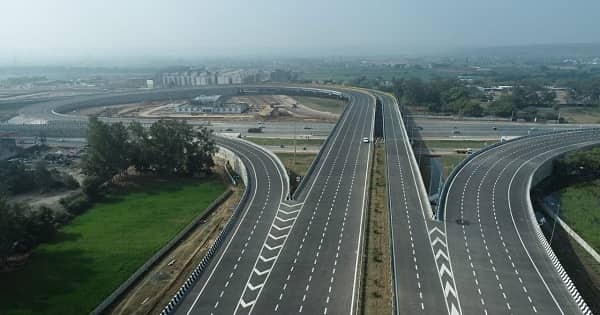
Mumbai Vadodara Expressway Overview
| Detail | Information |
| Name | Mumbai-Vadodara Expressway / Delhi-Mumbai Expressway (NE-4 / NH-148N) — Vadodara-Virar section |
| Current Status | Partially Operational — Vadodara section largely complete; Mumbai approach progressing |
| Full Completion Expected | Mid-2026 to 2027 |
| Route (Full Expressway) | DND Flyway, Delhi → JNPT, Mumbai |
| Route (Vadodara-Mumbai Section) | Vadodara, Gujarat → Virar / JNPT approach, Maharashtra |
| Total Expressway Length | 1,350–1,386 km |
| Vadodara-Virar Section Length | Approx. 400 km |
| States Covered (Full) | Delhi, Haryana, Rajasthan, Madhya Pradesh, Gujarat, Maharashtra |
| Lanes | 8 lanes (expandable to 12) |
| Speed Limit | 120 km/h (cars); reduced near urban zones |
| Toll Rate | Approx. ₹2.19 per km (closed tolling) |
| Estimated Full Delhi-Mumbai Toll (Cars) | Approx. ₹2,700 one-way |
| Toll System | GPS/closed tolling — pay for distance travelled |
| Governing Authority | NHAI under Bharatmala Pariyojana |
| Project Cost (Full Expressway) | Approx. ₹1,00,000 crore |
| Travel Time After Full Completion | Delhi to Mumbai: approx. 12 hours (versus 24 hours currently) |
Route and Location
The Vadodara-to-Mumbai section exits Vadodara on the Gujarat expressway grid and runs southward through Ankleshwar, Bharuch, Kim, and Surat before crossing into Maharashtra and descending toward the Virar and JNPT coastal approach. The Gujarat portion of this section passes through one of western India’s most industrially significant corridors — the Bharuch petrochemical belt, the Surat diamond and textile economy, and the Vapi chemicals manufacturing zone are all within the expressway’s influence corridor.
The Maharashtra section of this approach connects to the Mumbai Metropolitan Region’s western entry zone near Virar, with the JNPT port connection completing the full corridor’s freight logistics objective.
Speed Limits and Toll
The 120 km/h speed limit operates on the open expressway stretches with reductions enforced in transition zones near urban areas and major interchanges. The closed tolling system at ₹2.19 per kilometre means users pay only for the exact distance they travel — a user-friendly structure for the many travelers making partial journeys between Gujarat and Maharashtra cities rather than the full Delhi-to-Mumbai run.
Nearby Areas
Surat: India’s fastest-growing major city and the world’s diamond cutting capital sits directly along the expressway’s Gujarat section — the corridor’s most commercially significant intermediate city. Bharuch and the Petrochemical Belt: The Bharuch-Ankleshwar chemical manufacturing cluster is one of India’s most important industrial zones, and the expressway dramatically improves its logistics connectivity to both Mumbai and Delhi. JNPT: India’s busiest container port is the southern terminus — the expressway was fundamentally conceived as a port-to-capital freight corridor, and the JNPT connection is what makes it strategically significant beyond its passenger transport value.
Frequently Asked Questions (FAQs)
Q1. Is the Mumbai Vadodara Expressway open?
A: The Vadodara zone is largely operational as of April 2026. Mumbai approach packages are substantially complete. Full connectivity expected mid-2026 to 2027.
Q2. What is the toll rate on Delhi Mumbai Expressway?
A: Approximately ₹2.19 per km — around ₹2,700 for the full Delhi-to-Mumbai car journey. Closed tolling means you pay only for distance traveled.
Q3. How long is the full Delhi-Mumbai Expressway?
A: 1,350 to 1,386 kilometres from DND Flyway in Delhi to JNPT in Mumbai.
Q4. What is the speed limit on this expressway?
A: 120 km/h for cars on open sections, with reductions near urban zones and interchanges.
Q5. How many lanes does this expressway have?
A: 8 lanes expandable to 12 — India’s widest expressway class.