
Gujarat’s industrial spine runs from Ahmedabad southward through Anand, Vadodara, Bharuch, and Surat to the Maharashtra border — one of the most commercially dense corridors in India, generating freight volumes that no other state’s highway network matches. The Delhi-Mumbai Expressway cuts through this spine for 426 kilometres — the single largest state section of India’s longest expressway — and when the term “Ahmedabad Mumbai Expressway” is used in common reference, it typically points to this Gujarat section connecting the state’s commercial capital to the Surat-Bharuch industrial belt and onward to Mumbai.
The connection begins at the Ahmedabad-Vadodara Expressway (NE-1) junction at Dodka village, Vadodara district — where the Delhi-Mumbai Expressway’s Sohna-Vadodara section terminates and the Vadodara-Virar section begins its southward journey toward Mumbai. The NE-1 Baroda Expressway (93 km, Ahmedabad to Vadodara, opened 2004) serves as the northern access road connecting Ahmedabad to the Delhi-Mumbai Expressway at Vadodara — making the effective Ahmedabad-Mumbai expressway chain approximately 93 km + 354 km of the Delhi-Mumbai Expressway’s Gujarat-Maharashtra section.
As of April 2026, the Godhra-Vadodara section opened on April 13, 2026. From Godhra to Navsari, continuous connectivity exists via Ahmedabad (NE-1), Vadodara, Bharuch, and Surat — meaning Ahmedabad and Surat are now connected on expressway-standard roads via this chain. The remaining bottleneck: three packages between Gandeva and Vapi in south Gujarat — Packages 8, 9, and 10 of the Vadodara-Virar section — which have been delayed due to contractor issues and are now targeted for completion by March 2028. Delhi-Vadodara section completion is targeted for June 2026. Sanctioned project cost stands at ₹96,547 crore, with ₹77,558 crore already spent as of December 2025.
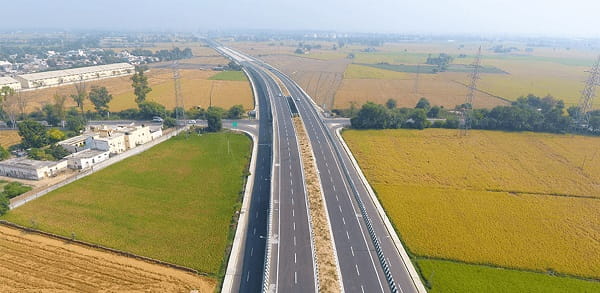
Ahmedabad Mumbai Expressway Overview
| Detail | Information |
| Name | Ahmedabad-Mumbai Expressway (Delhi-Mumbai Expressway’s Gujarat + NE-1 chain) |
| Full Expressway Name | Delhi-Mumbai Expressway (NE-4) |
| Maintained By | NHAI |
| Gujarat Section Length | 426 km (of total 1,386 km) |
| NE-1 Ahmedabad–Vadodara | 93 km (existing, opened 2004) — feeds into Delhi-Mumbai Expressway |
| Total Ahmedabad–Mumbai Chain | 93 km (NE-1) + 354 km (Delhi-Mumbai Exp Gujarat south + Maharashtra) |
| NE-1 Junction | Dodka village, Vadodara — where Delhi-Mumbai Exp meets NE-1 |
| Key Cities (Gujarat) | Ahmedabad, Vadodara, Bharuch, Surat, Navsari, Valsad, Vapi |
| Godhra-Vadodara Opening | April 13, 2026 (trial basis) |
| Current Connectivity | Godhra–Navsari continuous via Ahmedabad, Vadodara, Bharuch, Surat |
| Remaining Delay | Packages 8, 9, 10 (Gandeva–Vapi) — March 2028 |
| Delhi-Vadodara Completion | June 2026 |
| Vadodara-Mumbai Completion | March 2028 (delayed packages) |
| Sanctioned Cost | ₹96,547 crore |
| Expenditure (Dec 2025) | ₹77,558 crore spent |
| Design Speed | 120 km/h |
| Industrial Corridor | Bharuch chemical zone, Surat diamond and textile economy |
Route and Location
The Ahmedabad-Mumbai expressway chain begins at Ahmedabad on NE-1 and runs southward through Kheda, Anand, and Vadodara on the Baroda Expressway before transitioning to the Delhi-Mumbai Expressway’s Vadodara-Virar section. This continues through Bharuch — the chemical and pharmaceutical industrial zone on the Narmada’s south bank — then Surat’s diamond, textile, and petrochemical corridor, Navsari, Valsad, and Vapi before crossing into Maharashtra at Palghar district and reaching Virar and eventually JNPT.
Connectivity
At Vadodara, the junction of NE-1 and the Delhi-Mumbai Expressway makes this the most important highway interchange in Gujarat — connecting northward to Ahmedabad and Delhi, southward to Mumbai, and via NE-1 northward to Gandhinagar, the state capital. The Bharuch section connects to NH-53 (the Nagpur-Bharuch corridor), linking the coast to central India’s mineral economy.
Nearby Areas
The Sardar Patel statue (Statue of Unity) at Kevadia near Vadodara — the world’s tallest statue at 182 metres — is the most visited new tourist destination in India accessible from this expressway corridor. Hazira port near Surat — handling LNG, fertilisers, and automobile cargo — is the expressway’s most commercially significant industrial neighbor in the south Gujarat section. Alang near Bhavnagar — the world’s largest ship-breaking yard — is accessible from the broader Gujarat highway network connecting to this corridor.
Frequently Asked Questions (FAQs)
Q1. What is the Ahmedabad Mumbai Expressway?
A: The combination of NE-1 (93 km, Ahmedabad-Vadodara) and the Delhi-Mumbai Expressway’s Gujarat-Maharashtra section (354 km, Vadodara-Virar) — together forming the Ahmedabad to Mumbai high-speed expressway chain.
Q2. When did the Godhra-Vadodara section of this corridor open?
A: April 13, 2026 on a trial basis — enabling continuous expressway travel from Godhra to Navsari via Ahmedabad, Vadodara, Bharuch, and Surat.
Q3. When will the full Ahmedabad-Mumbai Expressway be complete?
A: Delhi-Vadodara section by June 2026. Three delayed packages (Gandeva-Vapi) by March 2028 — after which the full Vadodara-Mumbai stretch will be seamlessly operational.
Q4. What is the total cost of the Delhi-Mumbai Expressway?
A: Sanctioned cost ₹96,547 crore — with ₹77,558 crore spent as of December 2025.
Q5. Which is the largest industrial city on the Ahmedabad-Mumbai Expressway corridor?
A: Surat — India’s diamond polishing capital, largest textile manufacturing city, and major petrochemical hub — is the most commercially significant city on the Gujarat section of this expressway chain.