
Ask any road engineer in Rajasthan which expressway in the state set the standard for what modern highway infrastructure should look like and deliver, and the Jaipur-Kishangarh Expressway will almost certainly be the answer. Completed in April 2005 and inaugurated as part of the National Highway Development Project’s Golden Quadrilateral programme, the 90-kilometre, six-lane access-controlled corridor connecting Jaipur to Kishangarh was one of the first sections of the Delhi-Mumbai NH-8 (now NH-48) to be upgraded to full expressway standard. Twenty years later, it remains the backbone of one of India’s most commercially, culturally, and industrially significant road corridors.
The Jaipur-Kishangarh Expressway forms part of NH-48 — the national highway connecting Delhi to Mumbai through Gurugram, Jaipur, Kishangarh, Ajmer, Udaipur, Ahmedabad, Vadodara, and Surat. The corridor handles traffic moving between Delhi, Rajasthan’s major cities, and Gujarat’s industrial belt — including the enormous marble trading economy centred on Kishangarh and Makrana, the pilgrimage traffic heading for Ajmer’s Dargah Sharif, and the tourist movement between Jaipur and the Aravalli heritage zone.
The expressway covers 90 kilometres from Jaipur’s Daultapura Toll Plaza southward to Kishangarh in Ajmer district. At Kishangarh, it connects to NH-79A toward Nasirabad and Ajmer — an additional 35 kilometres by conventional highway — giving the full Jaipur-to-Ajmer corridor an effective road distance of approximately 125 kilometres. Kishangarh itself is not merely a transit point; it is India’s marble trading capital, handling Makrana marble supply chains to the country’s entire construction industry, and housing one of Rajasthan’s most celebrated princely-period miniature painting schools.
The expressway’s influence on regional development across these two decades is visible in the real estate, logistics, and commercial transformation of the Jaipur-Kishangarh belt. New industrial estates, warehousing hubs, and residential townships have developed along the expressway in ways that mirror the broader national pattern of greenfield highway corridors generating growth along their alignment.
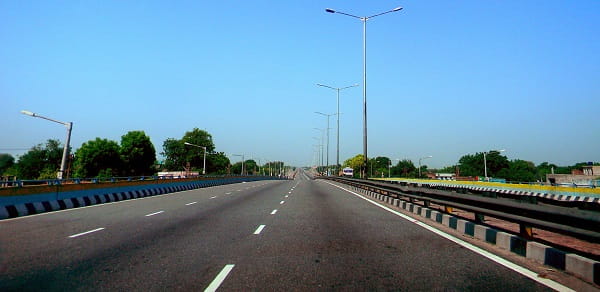
Jaipur Ajmer Expressway Overview
| Detail | Information |
| Name | Jaipur-Kishangarh Expressway (Jaipur-Ajmer Expressway) |
| Highway | NH-48 (formerly NH-8); part of Golden Quadrilateral |
| Length | 90 km |
| Lanes | 6-lane access-controlled |
| North End | Daultapura Toll Plaza, Jaipur |
| South End | Kishangarh, Ajmer District |
| Completed | April 2005 |
| Programme | National Highway Development Project (NHDP) — Golden Quadrilateral |
| State | Rajasthan |
| Distance to Ajmer | Kishangarh + 35 km on NH-79A = total ~125 km from Jaipur to Ajmer |
| Kishangarh Significance | India’s marble trading capital; Makrana marble supply chain hub |
| Dargah Sharif | Ajmer — key pilgrimage destination on this corridor |
| Golden Quadrilateral | Part of Delhi-Mumbai section connecting four metro cities |
| Toll Structure | Closed tolling at Daultapura and Kishangarh plazas |
| 2025 Status | Fully operational; surface improvements ongoing |
| NH-48 Upgrade 2024 | 155-km stretch Jaipur-Shahjahanpur resurfaced 2024 |
| Connects To | NH-79A at Kishangarh toward Nasirabad and Ajmer Sharif |
Route and Location
The expressway starts at Daultapura on the Jaipur side — just off the Jaipur ring road approach where NH-48 enters the city’s southern urban fringe — and runs southwestward for 90 kilometres through the Ajmer district’s agricultural and industrial landscape before reaching Kishangarh. The terrain along this section of Rajasthan is relatively flat — the Aravalli foothills recede to the northwest and the open plains typical of central Rajasthan allow the straight expressway geometry that contributes to its consistently fast traffic movement.
Connectivity
At Kishangarh, NH-79A connects toward Ajmer — India’s most visited Sufi pilgrimage site — and onward toward Nasirabad and central Rajasthan. NH-48 continues southward from Kishangarh toward Udaipur, Ahmedabad, and Mumbai. The Kotputli-Kishangarh Greenfield Expressway currently under construction (construction commenced December 2025, 181 km, ₹6,906 crore) will extend the expressway’s northern reach toward Kotputli and the Delhi-Jaipur corridor, when complete creating a continuous high-speed chain from Delhi through Jaipur to Kishangarh to Ajmer.
Nearby Areas
Ajmer Dargah Sharif — the tomb of Sufi saint Hazrat Moinuddin Chishti, one of the most visited pilgrimage shrines in South Asia drawing people of all faiths from across the subcontinent — is approximately 35 kilometres from the expressway’s southern end at Kishangarh. Pushkar — the sacred lake town with the only Brahma temple in the world, Rajasthan’s famous camel fair, and the hippie trail’s beloved desert destination — is 10 kilometres from Ajmer, making it accessible via this corridor. Makrana — the village whose marble quarries supplied the material for the Taj Mahal and continue supplying marble across India — is approximately 60 kilometres from Kishangarh, its logistics chain running through the expressway corridor.
Frequently Asked Questions (FAQs)
Q1. What is the Jaipur Ajmer Expressway?
A: The 90-km Jaipur-Kishangarh Expressway on NH-48, completed April 2005 as part of the Golden Quadrilateral NHDP programme. It runs from Daultapura (Jaipur) to Kishangarh in Ajmer district.
Q2. Is the Jaipur-Kishangarh Expressway the same as the Jaipur-Ajmer Expressway?
A: Effectively yes — the expressway ends at Kishangarh, and the remaining 35 km to Ajmer uses NH-79A. Together they form the practical Jaipur-Ajmer road corridor.
Q3. What is Kishangarh known for at the expressway’s southern end?
A: As India’s marble trading capital — handling the Makrana marble supply chain that feeds the country’s construction industry and historically supplied stone for the Taj Mahal.
Q4. What new expressway will connect to the Jaipur-Kishangarh corridor?
A: The Kotputli-Kishangarh Greenfield Expressway (181 km, ₹6,906 crore) — construction started December 2025, connecting Kotputli to Kishangarh and extending the high-speed corridor northward toward Delhi.
Q5. How far is Ajmer Dargah Sharif from the expressway?
A: Approximately 35 km from Kishangarh via NH-79A — Ajmer’s Dargah of Hazrat Moinuddin Chishti is one of India’s most visited pilgrimage sites, drawing lakhs of visitors through this corridor annually.