
The road from Delhi to Jaipur has never been a quiet corridor. Five hours through Gurugram’s edge, past the industrial towns of Manesar, Neemrana, and Bhiwadi, across the Rajasthan border at Shahjahanpur, and finally into Jaipur’s expanding urban fringe — this is a journey that millions of Indians make for tourism, commerce, pilgrimage, and daily professional reasons. The existing Delhi-Jaipur Expressway on NH-48 is a 242-kilometre, eight-lane access-controlled highway running from Kherki Daula Toll Plaza in Gurugram to Daulatpura Toll Plaza near Jaipur. It is one of India’s most commercial highways — the Delhi-Mumbai Expressway begins its long southwestward journey from Sohna on this same NH-48 corridor.
The existing expressway is supplemented in part by the Delhi-Mumbai Expressway’s Sohna section, which opened in February 2023 and diverts some long-distance Rajasthan-bound traffic through a faster new alignment. A 67-kilometre Bandikui-Jaipur spur from the Delhi-Mumbai Expressway also provides additional Jaipur connectivity as its construction progresses.
The larger story, however, is the upcoming Delhi-Jaipur Super Expressway — officially designated NH-352B — a 195-kilometre, six-lane greenfield expressway that will run as an entirely new parallel corridor from Kherki Daula Toll Plaza in New Gurugram to Chandwaji on NH-48 near Jaipur. This new alignment will reduce the Delhi-Jaipur distance by approximately 40 kilometres compared to the current NH-48 route and cut travel time from five hours to approximately two to three hours. The project costs approximately ₹6,530 crore in construction expenses, with a separate rehabilitation and resettlement cost of approximately ₹5,000 crore — reflecting that most of the land required falls under privately owned agricultural holdings across more than 423 villages.
As of mid-2025, the Delhi-Jaipur Super Expressway is in land acquisition phase. NHAI has completed site surveys, soil testing, and environmental assessments across much of the alignment. A phased construction model allows work to begin on completed land acquisition parcels while negotiations continue in other zones. The expressway is expected to be fully operational by 2027, passing through seven districts — Gurugram, Jhajjar, Rewari, Mahendragarh, Alwar, Sikar, and Jaipur — and connecting major industrial zones including Manesar, Bhiwadi, and Neemrana.
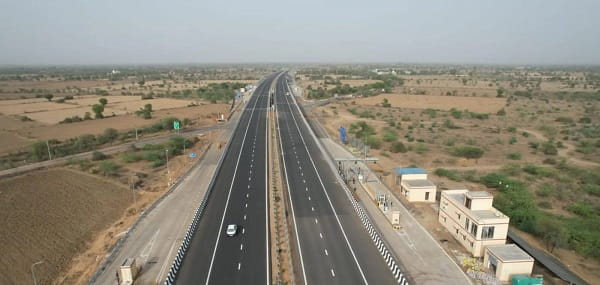
Delhi Jaipur Expressway Overview
| Detail | Information |
| Existing Expressway | NH-48, Delhi-Jaipur Highway — 242 km, 8-lane, Gurugram to Jaipur |
| New Super Expressway | NH-352B (Delhi-Jaipur Super Expressway) — 195 km, 6-lane greenfield |
| Maintained By | NHAI |
| New Expressway Route | Kherki Daula Toll Plaza (Gurugram) to Chandwaji, Jaipur |
| New Expressway Cost | ₹6,530 crore (construction) + ₹5,000 crore (land/rehabilitation) |
| Current Status | Land acquisition phase (mid-2025); phased construction ongoing |
| Completion Target | 2027 |
| Distance Saving (New) | ~40 km shorter than existing NH-48 |
| Travel Time (New) | 2–3 hours (vs current 5 hours) |
| Districts (New) | Gurugram, Jhajjar, Rewari, Mahendragarh, Alwar, Sikar, Jaipur |
| Villages Covered | 423+ villages across 7 districts |
| Industrial Zones | Manesar, Bhiwadi, Neemrana — key manufacturing corridors |
| Connects To | NH-48 (Kherki Daula); Chandwaji (Jaipur ring approach) |
| NH-48 Upgrade | 155-km stretch Jaipur-to-Shahjahanpur resurfaced 2024 |
| Existing Expressway Toll | Closed tolling based on distance, NH-48 |
Route and Location
The existing NH-48 corridor begins at Kherki Daula in Gurugram and runs southwestward through Dharuhera, Rewari, Behror, Kotputli, and Shahpura before entering Jaipur district and terminating at Daulatpura. The new NH-352B greenfield alignment starts from the same Kherki Daula area but takes a different trajectory — westward through Jhajjar, Rewari, and Mahendragarh before entering Rajasthan’s Alwar and Sikar districts and joining NH-48 at Chandwaji on the northern approach to Jaipur.
Connectivity
At Gurugram’s Kherki Daula junction, the Dwarka Expressway (fully operational since August 2025) connects toward central Delhi. The Delhi-Mumbai Expressway’s Sohna end is accessible from the NH-48 corridor, and the 67-km Bandikui-Jaipur spur under construction will further strengthen Delhi-Jaipur expressway-level access. Jaipur airport is approximately 11 kilometres from the city center on the southern side, accessible from both the existing NH-48 and the Chandwaji approach.
Nearby Areas
Neemrana — the heritage town with its 15th-century stepped-pyramid fort converted into one of Rajasthan’s most celebrated hotels — sits on the existing NH-48 corridor and has become a benchmark for heritage hospitality on the Delhi-Jaipur route. The Alwar district on the new NH-352B alignment has the Sariska Tiger Reserve — Rajasthan’s second major tiger reserve after Ranthambore. Jaipur’s Amber Fort, Hawa Mahal, Jantar Mantar, and the City Palace form the heritage circuit that draws millions of tourists annually through this expressway corridor.
Frequently Asked Questions (FAQs)
Q1. What is the Delhi Jaipur Expressway?
A: Two overlapping projects — the existing NH-48, a 242-km, eight-lane highway from Gurugram to Jaipur; and the upcoming NH-352B (Delhi-Jaipur Super Expressway), a 195-km greenfield corridor targeting completion by 2027.
Q2. How much will the new Delhi-Jaipur Super Expressway reduce travel time?
A: From 5 hours to approximately 2 to 3 hours — cutting distance by 40 km on a new alignment through 7 districts.
Q3. What is the current status of the new Delhi-Jaipur Expressway (NH-352B)?
A: Land acquisition phase as of mid-2025 — surveys, soil testing, and environmental assessments done; phased construction underway; expected operational by 2027.
Q4. How much does the Delhi-Jaipur Super Expressway cost?
A: ₹6,530 crore in construction costs plus approximately ₹5,000 crore in rehabilitation and resettlement expenses for privately owned land.
Q5. Which districts does the new Delhi-Jaipur Expressway pass through?
A: Gurugram, Jhajjar, Rewari, and Mahendragarh in Haryana; Alwar, Sikar, and Jaipur in Rajasthan — covering over 423 villages.