
If you trace the Delhi-Mumbai Expressway from its DND Flyway start in Delhi to Vadodara — covering Haryana, Rajasthan, Madhya Pradesh, and Gujarat — you travel approximately 844 kilometres before reaching the Baroda crossing where the expressway connects to the Ahmedabad-Vadodara Expressway and onward to Gujarat’s southern coastal industrial belt. That 844-kilometre Sohna-to-Vadodara stretch is the most advanced section of the Delhi-Mumbai Expressway in terms of construction completion and operational access — the section that has been progressively opening since February 2023 and whose Vadodara end represents the geographic midpoint of India’s commercial spine.
The Delhi-to-Vadodara journey on the Delhi-Mumbai Expressway, when fully operational, will cover the 844-kilometre Sohna-Vadodara stretch as the primary long-haul component of the Delhi-Vadodara road corridor. Currently, this section is approximately 82 to 94 percent complete, with multiple operational packages including Sohna-Dausa, Dausa-Sawai Madhopur, Vadodara-Bharuch, Kota-Laban, Bharuch-Kharel, and Vadodara-Godhra among the sections already opened. The Rajasthan section alone is 373 kilometres, covering Alwar, Dausa, Bandikui, Sawai Madhopur, Bundi, and Kota — traversing the Hadoti plateau and the Ranthambore wildlife corridor with dedicated animal underpasses protecting the tiger movement patterns of the Sawai Madhopur zone.
Vadodara’s position as the anchor city of the expressway’s Gujarat entry gives it significant commercial importance. The Delhi-Mumbai Expressway connects directly to the Ahmedabad-Vadodara Expressway (NE-1) at Vadodara, creating a high-speed chain from Delhi through Vadodara to Ahmedabad — Gujarat’s two largest commercial cities accessible on a continuous expressway for the first time. The Vadodara-Godhra section opened April 13, 2026, marking the latest opening on this key corridor.
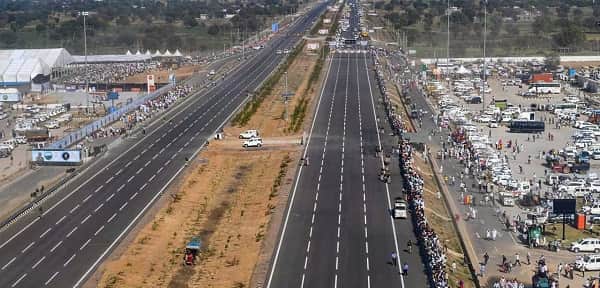
Delhi Vadodara Expressway Overview
| Detail | Information |
| Name | Delhi-Vadodara Expressway (Delhi-Mumbai Expressway, Section 1+2) |
| Full Name | Delhi-Mumbai Expressway (NE-4), Delhi to Vadodara |
| Maintained By | NHAI |
| Length (Delhi–Vadodara) | Approx. 844 km (Sohna-Vadodara) |
| Lanes | 8-lane (expandable to 12) |
| From | DND Flyway / Sohna Elevated Corridor, Delhi / Haryana |
| To | Vadodara, Gujarat |
| Haryana Section | 129 km |
| Rajasthan Section | 373 km |
| Madhya Pradesh Section | 244 km |
| Gujarat (Delhi-Vadodara section) | ~100 km (up to Vadodara) |
| Sohna-Dausa Section Opened | February 12, 2023 |
| Vadodara-Bharuch Section Opened | February 2024 |
| Vadodara-Godhra Section Opened | April 13, 2026 |
| Design Speed | 120 km/h |
| Key Cities | Delhi, Sohna, Alwar, Dausa, Sawai Madhopur, Kota, Ratlam, Vadodara |
| Wildlife Features | Animal underpasses near Ranthambore; Mukundra wildlife protection |
| Connects To | NE-1 (Baroda Expressway) at Vadodara; ongoing to JNPT Mumbai |
Route and Location
The Delhi-Vadodara stretch runs from Delhi’s DND Flyway southwestward through Sohna and the Haryana Aravalli foothills, crosses into Rajasthan for 373 kilometres through the Hadoti plateau, crosses into Madhya Pradesh through Mandsaur and Ratlam, and enters Gujarat at Dahod district before reaching Vadodara. The Madhya Pradesh section includes a 600-metre elevated bridge through Jhawda — one of the expressway’s distinctive engineering elements.
Connectivity
At Vadodara, the expressway joins NE-1 (Ahmedabad-Vadodara Expressway) — giving Ahmedabad direct expressway access to Delhi. At Kota, the Chambal Expressway (in-principle approved January 2026) will eventually branch eastward. At Sawai Madhopur, the Ranthambore tiger corridor requires the expressway to maintain dedicated wildlife crossing infrastructure.
Nearby Areas
Ranthambore National Park — India’s most visited tiger reserve — is on the expressway’s Rajasthan section in Sawai Madhopur. Chittorgarh Fort — the largest fort in India and a UNESCO World Heritage Site — is in Rajasthan accessible from the expressway’s approach zone. Vadodara’s Lakshmi Vilas Palace, Sayaji Baug, and Museum of Baroda make the Gujarat terminus a significant cultural destination.
Frequently Asked Questions (FAQs)
Q1. What is the Delhi Vadodara Expressway?
A: The 844-km Sohna-to-Vadodara section of India’s longest expressway (Delhi-Mumbai Expressway, NE-4) — progressively opening since February 2023, approximately 82-94% complete as of May 2026.
Q2. Which states does the Delhi-Vadodara Expressway pass through?
A: Four — Haryana (129 km), Rajasthan (373 km), Madhya Pradesh (244 km), and Gujarat up to Vadodara.
Q3. What is the latest section to open on the Delhi-Vadodara stretch?
A: Vadodara-Godhra section — opened April 13, 2026.
Q4. How does the Delhi-Mumbai Expressway connect to the Baroda Expressway at Vadodara?
A: The Delhi-Mumbai Expressway connects directly to NE-1 (Ahmedabad-Vadodara Expressway) at Vadodara — making Ahmedabad directly accessible from Delhi on a continuous expressway chain.
Q5. What wildlife protection features are on the Delhi-Vadodara stretch?
A: Dedicated animal underpasses near Ranthambore Tiger Reserve (Sawai Madhopur) and special eco-friendly construction near Mukundra Hills Wildlife Sanctuary in Rajasthan.