
Maharashtra spent ₹55,332 crore and seven years building Samruddhi Mahamarg — and on June 5, 2025, the last invoice came due when Chief Minister Devendra Fadnavis inaugurated the final 76-kilometre stretch between Igatpuri and Amane in Thane district. The expressway was now complete. All 701 kilometres. Every district from Nagpur to the Mumbai Metropolitan Region now connected by a continuous six-lane corridor that cuts the Mumbai-Nagpur journey from 18 hours on old highways to approximately eight.
The official name — Hindu Hrudaysamrat Balasaheb Thackeray Maharashtra Samruddhi Mahamarg — carries the political and cultural weight that Maharashtra’s government attached to this project. The more commonly used Samruddhi, meaning prosperity, captures the economic ambition behind it: a corridor designed to activate the agricultural and industrial potential of Maharashtra’s interior districts by plugging them into the Mumbai MMR’s enormous commercial economy. Ten districts, 26 talukas, 392 villages — the expressway passes through or near all of them. The Igatpuri-to-Amane ghat section was the last and most technically demanding — climbing through the Sahyadri’s Western Ghat terrain required engineering investments that the flatter Vidarbha sections did not demand, explaining why this stretch was the final one to be completed.
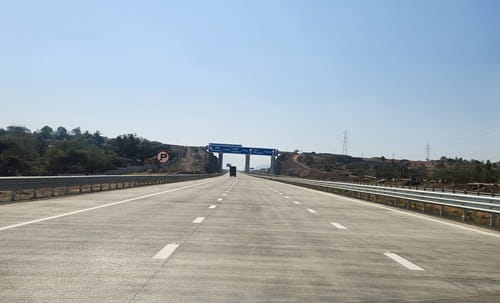
Mumbai Nagpur Expressway Overview
| Detail | Information |
| Official Name | Hindu Hrudaysamrat Balasaheb Thackeray Maharashtra Samruddhi Mahamarg |
| Common Name | Samruddhi Mahamarg / Mumbai-Nagpur Expressway |
| Current Status | Fully Operational since June 5, 2025 |
| Route | Shivmadka Village, Nagpur → Amane Village, Bhiwandi, Thane (MMR) |
| Total Length | 701 km |
| Districts Covered | Nagpur, Wardha, Amravati, Washim, Buldhana, Jalna, Chhatrapati Sambhajinagar, Ahmednagar, Nashik, Thane |
| Lanes | 6 lanes (expandable to 8) |
| Speed Limit | 120 km/h (cars); 80 km/h (heavy vehicles) |
| Toll — Cars/Jeep (One-Way) | ₹1,212 |
| Toll — Light Commercial Vehicles | ₹1,955 |
| Toll — Two-Axle Trucks/Buses | ₹4,100 |
| Toll — Three-Axle Vehicles | ₹4,472 |
| Toll — Heavy Construction Machinery | ₹6,435 |
| EV Toll Policy | EVs toll-exempt under Maharashtra EV Policy 2025 (5 years) |
| Toll Plazas | 26 toll booths across the corridor |
| Toll Payment | FASTag, cash, card |
| Governing Authority | MSRDC (Maharashtra State Road Development Corporation) |
| Project Cost | ₹55,332 crore |
| Travel Time | Mumbai to Nagpur: approx. 8 hours (versus 18 hours previously) |
Route and Location
The expressway begins at Shivmadka village on the eastern outskirts of Nagpur — where it connects to the Nagpur Ring Road and the MIHAN aerospace and IT special economic zone — and runs westward through Maharashtra’s interior. Wardha, Amravati, Washim, and Buldhana form the Vidarbha section, crossing the Orange City hinterland through cotton and soybean cultivation zones. Entering Marathwada through Jalna and Chhatrapati Sambhajinagar, it continues westward into Ahmednagar and Nashik before climbing into the Igatpuri ghat section of the Western Ghats and descending to Amane near Bhiwandi in Thane district.
Phase-wise opening history: Nagpur to Shirdi (520 km) opened December 2022, the Shirdi to Bharvir section in May 2023, Bharvir to Igatpuri in March 2024, and the final ghat section Igatpuri to Amane on June 5, 2025.
Speed Limits and Toll
The 120 km/h speed limit is enforced via speed cameras and regular patrolling — Maharashtra has maintained strict enforcement on this expressway since the Nagpur-Shirdi section opened in 2022. The revised toll rates of ₹1,212 one-way for cars represent a significant revision from the earlier ₹2.06-per-kilometre rate that was in effect from April 1, 2025. The Maharashtra EV Policy 2025 grants toll exemption to electric vehicles on this expressway for five years — one of the strongest EV incentives on any Indian expressway corridor. FASTag is the primary payment mode at all 26 toll plazas.
Nearby Areas
MIHAN, Nagpur: The Multi-modal International Hub Airport at Nagpur — a major aerospace and IT special economic zone adjacent to the expressway’s eastern terminus — has been one of the biggest beneficiaries of improved Mumbai connectivity for investor confidence. Shirdi: The Sai Baba pilgrimage town near the expressway’s mid-section interchange has seen a significant increase in pilgrimage traffic from the Mumbai MMR since the expressway opened, demonstrating how road infrastructure directly translates into religious tourism growth. Chhatrapati Sambhajinagar (Aurangabad): The gateway to the Ajanta and Ellora UNESCO World Heritage cave sites is directly accessible from the expressway’s central section, and the improved connectivity toward both Nagpur and Mumbai has meaningfully boosted heritage tourism traffic through this corridor.
Frequently Asked Questions (FAQs)
Q1. Is Mumbai Nagpur Expressway fully open?
Yes — the final Igatpuri-to-Amane stretch was inaugurated June 5, 2025 by CM Devendra Fadnavis. The full 701 km is operational.
Q2. What is the toll fee on Samruddhi Mahamarg for cars?
₹1,212 one-way for cars and jeeps. EVs are toll-exempt under Maharashtra EV Policy 2025 for five years. FASTag, cash, and card are accepted.
Q3. What is the speed limit on Samruddhi Mahamarg?
120 km/h for cars and 80 km/h for heavy vehicles, enforced via speed cameras throughout the corridor.
Q4. How many districts does Samruddhi Mahamarg pass through?
Ten districts — Nagpur, Wardha, Amravati, Washim, Buldhana, Jalna, Chhatrapati Sambhajinagar, Ahmednagar, Nashik, and Thane.
Q5. How much travel time does Samruddhi Mahamarg save between Mumbai and Nagpur?
It reduces the journey from approximately 18 hours on older highways to 8 hours — more than halving the travel time for the 701 km corridor.