
Fruits and vegetables are essential components of a healthy diet, providing vitamins, minerals, fiber, and antioxidants that support overall well-being. However, many commercially grown produce items may contain pesticide residues used to protect crops from insects, weeds, and plant diseases. While regulatory authorities set safety limits for pesticide residues and monitor food quality, many consumers prefer to reduce any remaining residues before eating fresh produce.
The good news is that simple household practices such as washing, peeling, and proper handling can help remove dirt, bacteria, and some pesticide residues from fruits and vegetables. Understanding the right cleaning methods can help you prepare produce safely while preserving its nutritional value.
Why Are Pesticides Used?
Farmers use pesticides to protect crops from pests, fungal diseases, and weeds that can damage harvests. These products help improve crop yield and food quality. However, small amounts of pesticide residues may remain on the surface of fruits and vegetables after harvesting.
Washing produce before eating is an important food safety step because it also removes soil, dust, and microorganisms in addition to reducing some surface residues.
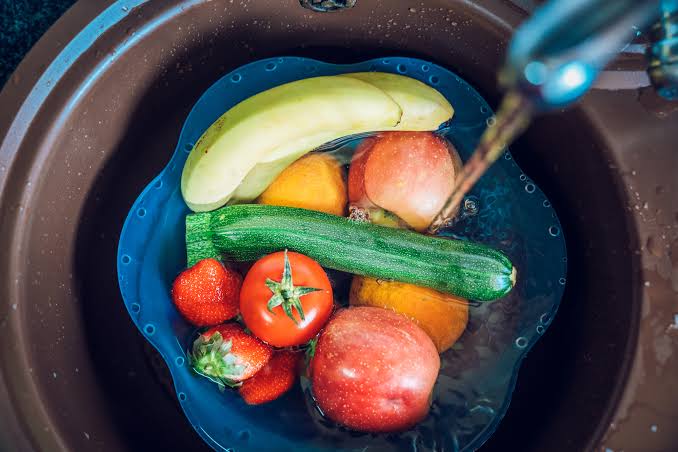
Wash Under Running Water
One of the simplest and most effective ways to clean fruits and vegetables is by rinsing them under clean running water.
For best results:
- Hold each fruit or vegetable under running water for 20–30 seconds.
- Rub the surface gently with your hands.
- Rotate the produce while washing to clean all sides.
This method helps remove dirt, dust, and a portion of surface pesticide residues.
Use a Vegetable Brush
Firm fruits and vegetables with thick skins benefit from gentle scrubbing.
Examples include:
- Apples
- Potatoes
- Carrots
- Cucumbers
- Sweet potatoes
Use a clean vegetable brush while rinsing under running water to remove dirt trapped in tiny surface crevices.
Soak in Baking Soda Solution
Research suggests that a baking soda solution can help remove some pesticide residues from the surface of certain fruits and vegetables.
To prepare the solution:
- Mix about 1 teaspoon of baking soda in 2 cups (about 500 ml) of clean water.
- Soak fruits or vegetables for 10–15 minutes.
- Rinse thoroughly under running water afterward.
This method is suitable for many fruits with edible skins, such as apples, grapes, and pears.
Vinegar Solution
Some people use diluted vinegar to clean produce.
A simple mixture is:
- One part white vinegar
- Three parts clean water
Soak produce for a few minutes, then rinse thoroughly with clean water.
Although vinegar may help remove some dirt and microorganisms, it is not proven to remove pesticide residues more effectively than proper washing with water in all cases.
Peel When Appropriate
Peeling fruits and vegetables removes residues that may remain on the outer skin.
Examples include:
- Mangoes
- Oranges
- Bananas
- Pineapples
- Papayas
For vegetables such as cucumbers or carrots, peeling may also reduce surface residues. However, remember that many nutrients and dietary fiber are found in or just beneath the skin, so peeling is not always necessary if the produce is thoroughly washed.
Remove Outer Leaves
Leafy vegetables such as lettuce, cabbage, and spinach may collect dirt and residues on their outer leaves.
Before washing:
- Remove damaged or wilted outer leaves.
- Separate individual leaves if possible.
- Rinse each leaf under clean running water.
This helps improve cleanliness and reduces the chance of consuming contaminants.
Wash Before Cutting
Always wash fruits and vegetables before peeling or cutting them.
If you cut unwashed produce, your knife can transfer dirt or pesticide residues from the outer surface to the edible inside.
Cleaning produce first helps reduce this risk.
Avoid Using Soap or Detergent
Household soaps, dishwashing liquids, and detergents are not recommended for washing fruits and vegetables.
These products are not designed for food and may leave chemical residues that are not safe to consume.
Plain running water or a baking soda solution is generally a better choice.
Buy Seasonal and Fresh Produce
Choosing fresh, seasonal fruits and vegetables from reliable sources may help improve overall quality.
Whenever possible:
- Buy from trusted vendors.
- Select produce that appears fresh and undamaged.
- Avoid fruits or vegetables with visible mold or decay.
Fresh produce is easier to clean and generally retains better flavor and texture.
Store Produce Properly
Proper storage helps maintain freshness after washing.
General tips include:
- Refrigerate leafy greens and many vegetables.
- Store fruits according to their specific needs.
- Keep washed produce dry before refrigeration unless immediate use is planned.
- Use clean storage containers.
Good storage practices help reduce spoilage and maintain food quality.
Consider Organic Produce
Organic farming follows specific standards regarding pesticide use. However, organic fruits and vegetables can still contain dirt, bacteria, or naturally approved pesticide residues.
Therefore, even organic produce should always be washed thoroughly before eating.
Common Mistakes to Avoid
To clean produce effectively, avoid these common mistakes:
- Skipping washing because the fruit will be peeled.
- Using soap or bleach on fruits and vegetables.
- Washing produce and leaving it wet before long-term storage.
- Assuming organic produce does not need cleaning.
- Ignoring damaged or spoiled portions.
Following proper cleaning methods is safer and more effective.
Additional Food Safety Tips
To further improve food safety:
- Wash your hands with soap and water before handling produce.
- Use clean knives and cutting boards.
- Separate raw produce from raw meat, poultry, and seafood.
- Refrigerate cut fruits and vegetables promptly.
- Consume fresh produce before it spoils.
These habits help reduce the risk of foodborne illness.
Conclusion
Removing pesticide residues from fruits and vegetables is an important part of safe food preparation. Washing produce thoroughly under running water, gently scrubbing firm fruits and vegetables, using a baking soda solution when appropriate, removing outer leaves, and peeling certain produce can help reduce surface residues, dirt, and microorganisms. Avoid using soap or harsh chemicals, and always wash produce before cutting or eating it. Combined with proper storage and good kitchen hygiene, these simple practices help you enjoy fresh, nutritious fruits and vegetables with greater confidence as part of a healthy, balanced diet.