
A vehicle repair garage running without proper registration isn’t operating in a quiet gray area the way some service businesses do — it’s directly violating environmental and municipal law, given that every garage handles used engine oil, battery waste, paint fumes, and wastewater that pollution control authorities treat as seriously regulated hazardous material. Multiple garages across Indian cities have had their electricity disconnected, equipment seized, or operations sealed entirely after inspections revealed they were running without the required municipal trade license and pollution board consent — not because of some obscure technicality, but because these specific approvals exist precisely to control the environmental risks a repair workshop genuinely creates.
Unlike sectors such as skill training or yoga instruction, where registration is often optional, a vehicle repair garage sits at the intersection of several mandatory regulatory requirements, even though no single central “garage license” law exists to unify them.
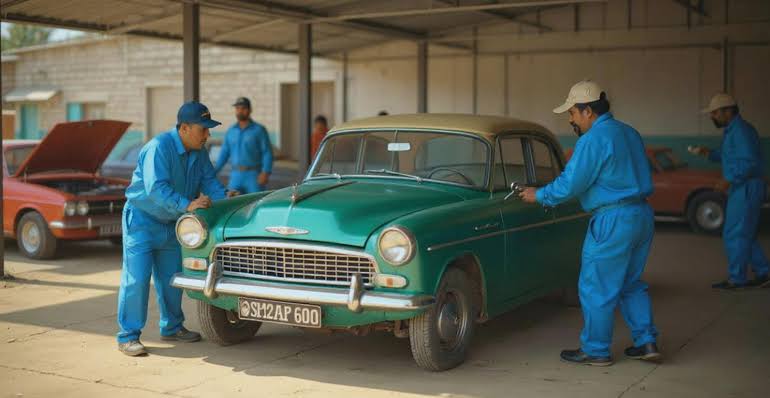
Why Garages Face More Regulation Than a Typical Retail Business
Understanding why this sector draws stricter oversight than many other small commercial establishments starts with what a repair garage actually handles day to day.
- Used engine oil, brake fluid, and coolant generated through routine servicing are classified as hazardous waste under Indian environmental law, requiring specific handling and disposal procedures rather than casual disposal.
- Battery waste, containing lead and acid, falls under its own hazardous waste category, with improper disposal creating genuine soil and water contamination risk.
- Paint booths and spray operations, common in bodywork and accident repair garages, release air pollutants that fall under air quality regulation, distinct from the general waste concerns of a mechanical-only workshop.
- Wastewater from vehicle washing and workshop floor cleaning can carry oil, grease, and chemical residue into drains, which is precisely why pollution control boards specifically regulate this discharge rather than treating it like ordinary commercial wastewater.
These aren’t hypothetical concerns — pollution control committees in multiple states, including Delhi, have taken direct enforcement action against unregistered garages found operating without proper environmental consent, in some cases disconnecting electricity supply and directing municipal authorities to seize equipment on the spot.
The Municipal Trade License: The Baseline Requirement
Before any environmental compliance comes into play, a vehicle repair garage needs the same foundational municipal approval any commercial establishment operating from a physical premises requires.
- A municipal trade license, issued by the local municipal corporation, nagar nigam, or municipal council depending on the city, certifies that the specific premises is permitted to operate a vehicle servicing and repair trade at that location.
- This license is typically one of the earliest approvals a garage owner needs to secure, often required before other registrations can even be completed, since several subsequent approvals reference the trade license as supporting documentation.
- Operating without this license, as several enforcement cases have shown, exposes a garage owner to direct municipal action, including potential closure orders, independent of whatever environmental compliance status the business holds.
- Trade license renewal is typically an annual or periodic requirement, meaning this isn’t a one-time approval but an ongoing compliance obligation tied to continued legal operation.
Pollution Control Board Consent: Consent to Establish and Consent to Operate
This is the layer of regulation that most distinctly separates a vehicle repair garage from many other small businesses, and it’s mandatory rather than optional.
- Under the Water (Prevention and Control of Pollution) Act, 1974, and the Air (Prevention and Control of Pollution) Act, 1981, any establishment generating pollution — which includes automobile service and repair workshops — must obtain “Consent to Establish” before setting up operations and “Consent to Operate” before actually running the business.
- Vehicle repair and servicing typically falls under an “orange category” classification in most state pollution control frameworks, reflecting a moderate pollution risk level that requires this consent process, with the specific category sometimes shifting to a higher classification if the garage includes a paint booth or bodywork operation generating additional air pollutant concerns.
- The consent process generally involves submitting an application detailing the garage’s operations, waste generation, and pollution control measures, followed by an inspection from pollution board technicians to verify that appropriate precautions — oil traps, proper drainage isolation, waste storage — are actually in place.
- Garages found operating without this consent have faced direct enforcement action from state and Delhi-specific pollution control authorities, including formal notices, penalties, and in documented cases, coordinated action with municipal authorities to disconnect utilities and seal the premises.
Hazardous Waste Authorization for Used Oil and Batteries
Beyond the general pollution consent, garages generating hazardous waste face a specific, separate compliance layer under India’s hazardous waste management framework.
- Used engine oil is classified as Schedule I hazardous waste, meaning it cannot be disposed of casually or sold informally to scrap dealers — it must be transferred to registered recyclers, typically documented through a formal waste transfer manifest system.
- Selling or disposing of used oil outside these registered channels — including the common informal practice of selling it to local scrap buyers — constitutes a violation of hazardous waste rules, regardless of whether the garage otherwise holds valid pollution consent.
- Waste batteries require separate handling given their lead and acid content, generally needing to be routed through authorized battery recyclers rather than general waste disposal.
- This hazardous waste authorization is typically issued alongside or as part of the broader pollution board consent process, rather than as a completely separate application, though it carries its own specific compliance obligations around record-keeping and proper waste manifest documentation.
GST, Shop and Establishment Act, and Other General Business Compliance
Layered on top of the environmental and municipal requirements, a vehicle repair garage still needs to meet the same general business compliance any commercial service establishment requires.
- GST registration is mandatory once the garage’s annual turnover crosses the applicable threshold, following standard tax compliance rules for any service business.
- Shop and Establishment Act registration, covering staff employment conditions and business operating hours, applies to a garage employing mechanics and other staff in the same way it would to any similar commercial establishment.
- Fire safety compliance, particularly relevant given the fuel, lubricants, and flammable materials typically stored on a garage premises, is often a specific consideration during municipal license approval, sometimes requiring a separate fire safety NOC depending on the local fire department’s requirements and the garage’s size.
- Insurance and liability considerations, while not strictly a licensing requirement, are practically essential given the value of vehicles and equipment a garage handles on behalf of customers.
Additional Authorization for Specific Services
Certain services a garage might offer beyond basic mechanical repair trigger their own additional, specific regulatory requirements.
- PUC (Pollution Under Control) testing centres, if a garage wants to offer this as an add-on service, require separate state transport department authorization, distinct from the garage’s general operating registrations, along with compliance with specific equipment and fee-capping requirements set by the state.
- CNG or LPG kit fitting and retrofitting, where offered, typically requires specific authorization tied to Motor Vehicles Rules compliance, given the safety implications of fuel system modifications.
- Insurance-empanelled cashless service arrangements, while a common and valuable business relationship, operate as a contractual arrangement with individual insurers rather than a government license, meaning this is a business development step rather than a legal registration requirement.
- Authorized manufacturer service centre status — becoming an officially recognized service point for a specific vehicle brand — is likewise a private contractual arrangement with that manufacturer, separate from the government registrations discussed above.
Penalties for Operating Without Proper Registration
The consequences for non-compliance in this sector are genuinely serious, reflecting real enforcement activity across multiple states rather than a rarely-invoked legal technicality.
- Municipal closure orders are a common consequence when a garage is found operating without a valid trade license, with documented cases showing municipal authorities directed to seize equipment and machinery from non-compliant operations.
- Pollution control board penalties, including formal notices, fines, and directives to cease operations, apply when a garage lacks the required Consent to Establish and Consent to Operate, with escalation to utility disconnection in cases involving persistent non-compliance.
- National Green Tribunal intervention has occurred in multiple documented cases, with the tribunal directing pollution control committees and municipal authorities to take coordinated action against garages operating without proper environmental consent.
- Hazardous waste violations carry their own specific penalty framework, given the more serious environmental and health risk associated with improper disposal of used oil, batteries, and other regulated waste streams.
What This Means for Anyone Planning to Open a Vehicle Repair Garage
For someone genuinely considering this as a business venture, the layered nature of this regulation has clear, practical implications for how the business needs to be planned from the outset.
- Securing the municipal trade license first generally makes sense given how other approvals often reference it, establishing the foundational legal basis for the premises before pursuing environmental consent.
- Budgeting time and cost for the pollution control board consent process, including the physical inspection component, is essential, since this isn’t a quick formality but a genuine assessment of the garage’s waste handling and pollution control setup.
- Building proper waste management infrastructure — oil traps, segregated hazardous waste storage, proper drainage isolation — into the physical setup from day one avoids both compliance failures during inspection and the more serious risk of enforcement action after operations begin.
- Establishing a relationship with a registered hazardous waste recycler for used oil and battery disposal, rather than relying on informal disposal channels, protects the business from a violation that’s entirely separate from and in addition to general pollution consent compliance.
Frequently Asked Questions
Q1. Does a very small, one-or-two-mechanic garage still need pollution control board consent, or is that only for larger service centres?
The consent requirement generally applies based on the nature of the activity (generating pollution through oil changes, washing, or repairs) rather than purely on garage size, so even small operations are technically expected to comply, though in practice enforcement intensity and how strictly this is checked can vary considerably between larger cities with active pollution monitoring and smaller towns with less consistent oversight.
Q2. Can I sell my garage’s used engine oil to a local scrap dealer or kabadiwala instead of a registered recycler?
No, this is explicitly a violation of Hazardous Waste Management Rules, since used oil is classified as Schedule I hazardous waste requiring proper documented transfer to a registered recycler, and this rule applies regardless of whether the garage otherwise holds valid trade and pollution licenses.
Q3. If I only do mechanical repairs and never paint vehicles, does that reduce my regulatory requirements at all?
Yes, somewhat — a purely mechanical workshop without a paint booth generally avoids the additional air pollution consent conditions that painting and bodywork operations trigger, though the core requirements around municipal trade license, general pollution consent for water and waste, and hazardous waste authorization for used oil and batteries still apply regardless of whether painting services are offered.
Q4. What should I do if I suspect a garage near me is operating without proper registration and causing pollution, like dumping oil into drains?
Reporting this to the local municipal corporation and the state or regional pollution control board is the appropriate channel, since both authorities have documented history of coordinated enforcement action against unregistered garages, including inspections, penalties, and in serious cases, closure of the operation.