
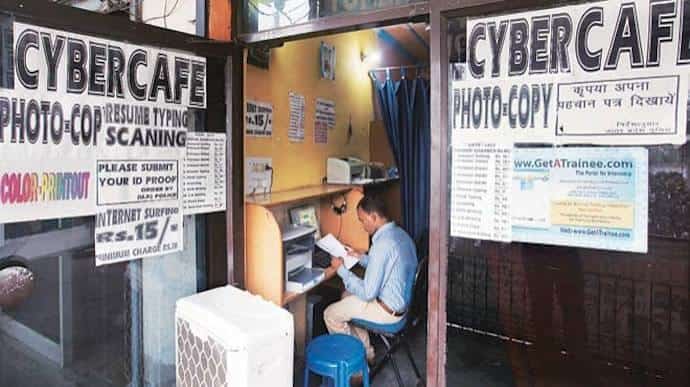
Unlike many of the small businesses covered in this series — yoga studios, skill training centres, electronics repair shops — a cyber cafe in India isn’t operating in a regulatory gray area at all. Running one without registration is a direct violation of a specific, dedicated central law: the Information Technology (Guidelines for Cyber Cafe) Rules, 2011, notified under the Information Technology Act, 2000. Every cyber cafe in India is legally required to register with a designated state agency before it can operate, and this requirement comes with a detailed, mandatory set of operational rules covering everything from user identification to physical layout, making cyber cafes one of the more clearly and specifically regulated small business categories in the country.
The Legal Foundation: A Dedicated Central Rule, Not a Patchwork
Cyber cafes stand apart from several other small business categories covered in this series precisely because a single, specific national framework governs them directly.
- The Information Technology (Guidelines for Cyber Cafe) Rules, 2011, were notified by the central government under Section 87 read with Section 79 of the Information Technology Act, 2000, creating a uniform national legal basis for cyber cafe regulation.
- Unlike sectors where regulation varies dramatically by state (yoga centres, skill training), this framework applies as a consistent baseline across India, though states designate their own specific registration agency to implement it locally.
- The rules define a cyber cafe broadly, covering any facility offering the public access to the internet or computer resources for a fee, meaning the requirement applies whether the establishment is called a “cyber cafe,” an “internet cafe,” or operates under some other name while providing the same core service.
- This makes the legal position here notably clearer than for many small businesses — there’s no ambiguity about whether registration is mandatory, only about which specific agency handles it in a given state.
Why Cyber Cafes Face This Level of Specific Regulation
The rationale behind such a detailed regulatory framework reflects genuine concerns specific to public internet access points.
- User anonymity risks at unregulated internet access points create a genuine law enforcement and cybersecurity concern, since untracked public internet access can facilitate everything from cybercrime to more serious offenses without any identifiable trail.
- Access to illegal or harmful content, including pornography and other prohibited material, is a specific concern the rules directly address through mandatory content filtering and physical layout requirements.
- Protection of minors using cyber cafes is addressed specifically through rules restricting unsupervised access to more private cubicle spaces, reflecting concern about what unsupervised minors might access or be exposed to in a semi-private internet browsing environment.
- General law enforcement and investigative needs benefit from mandatory record-keeping, since a properly maintained user log gives authorities a starting point when investigating any illegal activity traced back to a public internet access point.
The Registration Process: What’s Actually Required
Registration under these rules follows a defined structure applicable to every cyber cafe operating in India.
- Every cyber cafe must register with a Unique Registration Number (URN), obtained through a registration agency specifically notified by the relevant state government for this purpose.
- The registration application requires basic establishment details, including the name of the establishment and full address with contact details, including an email address, forming the core identifying information the agency maintains.
- Registration isn’t a one-time formality disconnected from ongoing operation — cyber cafes remain subject to inspection by officers authorized by the registration agency, who can check compliance with the rules at any time, and cafe owners are legally required to provide relevant documents, registers, and information on demand during such inspections.
- Since each state notifies its own registration agency, the specific department or authority handling this varies by location, making it worth confirming the correct local agency rather than assuming a single national body handles registration uniformly.
Mandatory User Identification Requirements
Beyond the cafe’s own registration, the rules impose a specific, detailed obligation to verify every individual user’s identity before granting access.
- Every user must produce valid identification before being allowed to use the cyber cafe’s services, with the rules specifying an accepted list of documents.
- Accepted identification includes a school or college-issued identity card, a bank or post office-issued photo credit or debit card, a passport, a voter identity card, a PAN card, an employer or government-issued photo identity card, a driving license, or an Aadhaar (UID) number.
- This isn’t optional or left to the cafe owner’s discretion — verifying identity through one of these specified documents before granting access is a core, mandatory obligation under the rules, not a best practice suggestion.
- For any additional person accompanying or jointly using the computer resource with the primary user, that associated person’s identity also needs to be established under the same framework.
The Log Register: A Mandatory, Long-Term Record
Cyber cafes carry a specific record-keeping obligation that goes well beyond what most small businesses are required to maintain.
- After identifying a user, the cyber cafe must register and maintain the required user information in a log register, and critically, this record must be preserved for a minimum period of one year.
- The log register needs to be maintained in a secure manner, reflecting the sensitivity of the personal identification data being collected and stored.
- This requirement applies to every user session, meaning cyber cafes are expected to build and consistently maintain a genuine operational habit of identity verification and logging, not treat it as an occasional formality.
- Failure to maintain this register properly, or maintaining it inconsistently, represents a direct violation of the rules, separate from and in addition to the basic registration requirement itself.
Physical Layout and Operational Requirements
The rules go further than registration and record-keeping, specifying exactly how a cyber cafe’s physical space and computer systems must be configured.
- Partitions or cubicles, if installed inside the cafe, are restricted to a maximum height of four and a half feet from the floor, preventing fully enclosed, visually isolated browsing spaces.
- Computer screens outside of cubicles or partitions must face outward, toward the common open space of the cafe, ensuring general visibility rather than private, unmonitored screen use.
- Minors are not permitted to use cubicles or partitioned spaces unless accompanied by a parent or guardian, directly addressing the child protection concern behind much of this framework.
- All computer system clocks must be synchronised with Indian Standard Time, ensuring that timestamped log records are accurate and consistent for any future investigative purposes.
- Commercially available filtering or safety software is expected to be installed to help prevent access to pornographic or similarly prohibited content, alongside a clearly visible notice board informing users that viewing such content or downloading prohibited material is not permitted.
- Cafes must also incorporate reasonable preventive measures to stop users from tampering with computer system settings, and are required to maintain staff records for a minimum of one year, mirroring the user log retention requirement.
Consequences of Operating Without Proper Compliance
Given how specific and detailed this framework is, non-compliance carries real, well-defined consequences rather than existing in an ambiguous enforcement zone.
- Operating without registration with the designated state agency is a direct violation of the Cyber Cafe Rules, exposing the business to regulatory action independent of any other issue that might arise.
- Failing to maintain proper user identification and log records — even at a registered cafe — represents a separate compliance failure, particularly significant given how central this record-keeping obligation is to the rules’ underlying purpose.
- Non-compliant physical layout — cubicles taller than permitted, screens not properly oriented, absence of required notices — can be flagged during an authorized inspection, since inspecting officers have explicit legal authority to check for these specific conditions.
- Given that these rules operate under the broader Information Technology Act framework, non-compliance can intersect with broader IT Act provisions and penalties, particularly in cases where a cyber cafe’s failure to maintain proper records or oversight is connected to illegal activity conducted through its facilities.
What This Means for Anyone Planning to Open a Cyber Cafe
For someone considering this as a business venture, the clarity of this regulatory framework actually makes planning more straightforward than for many other small business categories, provided the requirements are taken seriously from the outset.
- Identifying the correct state-notified registration agency early is the essential first step, since this varies by state and the registration process needs to be completed before or very early in the business’s operation.
- Building the log register and identity verification process into daily operations from day one, rather than treating it as paperwork to catch up on later, avoids both compliance risk and the practical difficulty of retroactively reconstructing a year’s worth of user records.
- Designing the physical layout to meet the cubicle height and screen orientation requirements from the initial setup avoids costly retrofitting later if an inspection identifies non-compliance.
- Installing content filtering software and displaying the required notices as part of the initial setup, alongside the general business registrations (GST, Shop and Establishment Act, trade license) that apply to any commercial premises, completes the core compliance picture for a properly operating cyber cafe.
Frequently Asked Questions
Q1. Does a small internet cafe with just two or three computers still need to register under these rules, or is this only for larger establishments?
The Cyber Cafe Rules apply based on the nature of the activity — providing public internet or computer resource access for a fee — rather than the number of computers or the scale of the establishment, so even a small setup with just a few systems is technically required to register and comply with the same identification, logging, and layout rules as a larger cafe.
Q2. Can I refuse a customer who doesn’t have any of the accepted identification documents?
Yes, and in fact the rules require this — since verifying identity through one of the specified documents (school/college ID, bank card, passport, voter ID, PAN, employer ID, driving license, or Aadhaar) is a mandatory precondition for granting access, a cyber cafe operating in compliance with the rules should not provide service to someone unable to produce acceptable identification.
Q3. How long do I actually need to keep the user log register, and can I switch to a digital record instead of a physical one?
The rules require maintaining the log register for a minimum of one year, and while the original rules were framed with a physical register in mind, many cyber cafes today maintain this information digitally in a secure system, provided the record genuinely captures the required user identification details and remains accessible and intact for the required retention period.
Q4. What happens during a cyber cafe inspection, and what should I have ready?
An officer authorized by the registration agency can inspect the cafe and its computer resources at any time to check compliance, and as the owner, you’re required to provide all relevant documents, registers, and information on demand — meaning your registration certificate, your maintained user log register, and evidence of the required physical layout and content filtering measures should all be readily available and up to date rather than assembled reactively.