
The Delhi-Amritsar-Katra Expressway — commonly called the Delhi-Katra Expressway — is perhaps India’s most emotionally invested infrastructure project. The two destinations it connects from Delhi carry a weight that goes well beyond commercial or commuter significance: the Golden Temple in Amritsar and the Vaishno Devi shrine at Katra are among the most visited religious sites in Asia, drawing tens of millions of pilgrims annually from across the country. A 670-kilometre expressway connecting Delhi to both simultaneously is not just road infrastructure — it is the physical expression of a promise to make these journeys faster, safer, and more dignified for the millions of people who make them every year.
The project has been under construction since 2020 and its deadline has been revised multiple times. As of May 2026, the expressway is substantially complete in Haryana and progressing significantly in Jammu and Kashmir, but the Punjab section has faced slower progress. Full commissioning across all 670 kilometres is expected by March 2027 with sections in Haryana and J&K opening progressively.
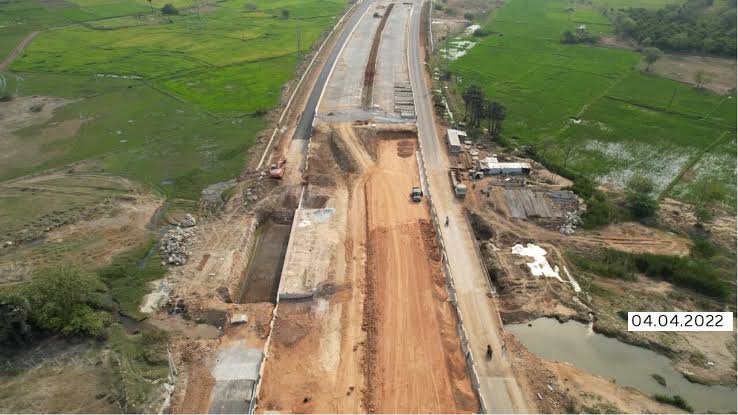
Current Status: Under Construction — Partially Operational. Haryana sections 80–90% complete. Punjab approximately 43–60% complete. J&K sections targeted for completion by March 2026. Full expressway expected by March 2027.
Overview Table
| Detail | Information |
| Official Name | Delhi-Amritsar-Katra Expressway (National Expressway 5 / NE-5 and NE-5A) |
| Current Status | Under Construction — Partially Operational in Haryana sections |
| Full Commissioning Expected | March 2027 (revised from earlier 2025 target) |
| Route | Nilauthi Village (near Bahadurgarh, Delhi border) → Katra, Reasi District, J&K |
| Spur Route | Nakodar (Punjab) → Sri Guru Ram Das Ji International Airport, Amritsar (99 km) |
| Total Length | 670 km (main expressway + Amritsar spur) |
| States Covered | Haryana, Punjab, Jammu and Kashmir |
| Lanes | 4 lanes (expandable to 8) |
| Speed Limit | 120 km/h (cars); 80 km/h (heavy vehicles) |
| Estimated Toll (Cars — Delhi to Katra) | Approx. ₹800–1,100 one-way (GPS-based tolling — distance dependent) |
| Toll System | GPS-based boothless tolling planned |
| Governing Authority | NHAI |
| Project Cost | Approx. ₹35,000 crore |
| Travel Time After Completion | Delhi to Katra: 6 hours; Delhi to Amritsar: 4 hours |
| Notable Feature | 1,300 m cable-stayed bridge over Beas River; animal overpasses |
Route and Location
The expressway starts from Nilauthi village near Bahadurgarh at the Delhi-Haryana border — connecting to the KMP Expressway’s western end — and runs northward through Haryana covering Jhajjar, Rohtak, Sonipat, Jind, Kaithal, Karnal, and Ambala districts before entering Punjab near Patiala. Passing through Ludhiana, Jalandhar, Kapurthala, and Gurdaspur districts of Punjab, the main alignment continues northward into Jammu and Kashmir, climbing toward Katra in Reasi district — the base point for the Vaishno Devi pilgrimage.
At Nakodar in Punjab, a 99-kilometre spur corridor (designated NE-5A) branches westward toward the Sri Guru Ram Das Ji International Airport in Amritsar, ensuring that the Golden Temple is served by the expressway network without requiring the full main alignment to divert toward the city.
The Haryana stretch covers 135 kilometres and the J&K section spans approximately 144 kilometres through demanding Himalayan foothills terrain that includes tunnels and the remarkable 1,300-metre cable-stayed bridge over the Beas River.
Speed Limits and Toll
The design speed limit of 120 km/h for cars reflects the expressway’s ambition as a high-performance corridor. The GPS-based boothless tolling system — distinct from traditional FASTag barrier plazas — calculates charges based on exact distance traveled between entry and exit points. Estimated toll for the full Delhi-to-Katra run for cars is approximately ₹800 to ₹1,100 one-way, though these rates will be formally notified closer to full commissioning. The boothless GPS system eliminates queuing at toll plazas entirely once implemented.
Nearby Areas
Vaishno Devi Shrine, Katra: The famous cave shrine of Mata Vaishno Devi in the Trikuta Mountains above Katra draws over eight million pilgrims annually. The expressway will make the Delhi-to-Katra journey of approximately 700 kilometres achievable in six hours versus the current eight-plus hours. Amritsar and the Golden Temple: The holiest site in Sikhism draws devotees from across the globe, and the Nakodar spur’s direct airport connection adds both pilgrimage and international passenger convenience to the corridor. Ludhiana Industrial Belt: Punjab’s largest industrial city along the expressway alignment is expected to benefit significantly from improved freight logistics connectivity toward Delhi NCR and Jammu.
Frequently Asked Questions (FAQs)
Q1. Is Delhi Katra Expressway open?
Partially. Haryana sections are largely complete. Punjab is approximately 43–60% done. Full opening expected March 2027.
Q2. What is the total length of Delhi Katra Expressway?
670 kilometres from the Delhi border to Katra, plus a 99 km spur to Amritsar’s airport.
Q3. What is the estimated toll on Delhi Katra Expressway?
Approximately ₹800–1,100 one-way for cars on the full Delhi-Katra journey via GPS-based distance tolling. Final rates will be announced at commissioning.
Q4. What is the speed limit on Delhi Katra Expressway?
120 km/h for cars and 80 km/h for heavy vehicles.
Q5. How much time will Delhi Katra Expressway save?
Delhi to Katra will reduce to approximately 6 hours; Delhi to Amritsar to 4 hours — significant savings over current road travel times.