
There are a handul of roads in India that changed the real estate market around them so completely that it is difficult to remember what the landscape looked like before they were built. The Noida-Greater Noida Expressway is one of them. Before this road, Greater Noida was an ambitious planning concept with excellent master planning and insufficient connectivity — a city that the Noida Authority was trying to develop into a self-sufficient satellite urban center but whose distance from Delhi made it a hard sell for residential buyers accustomed to measuring address value in metro minutes from Connaught Place.
The expressway compressed that distance from psychological and practical inaccessibility into a genuinely reasonable 25-kilometre commute corridor, and the residential development that followed was extraordinary. Sectors along the expressway — Knowledge Park, Techzone, the Yamuna Expressway zones beyond — were transformed from vacant land into dense residential townships within a decade of the road opening. The Metro’s subsequent arrival along the same corridor turned this from a good real estate corridor into one of the NCR’s most rapidly urbanising belts. For the hundreds of thousands of residents who now live in Greater Noida’s sectors and commute toward Noida and Delhi daily, this expressway is the geographic and economic backbone of their daily life.
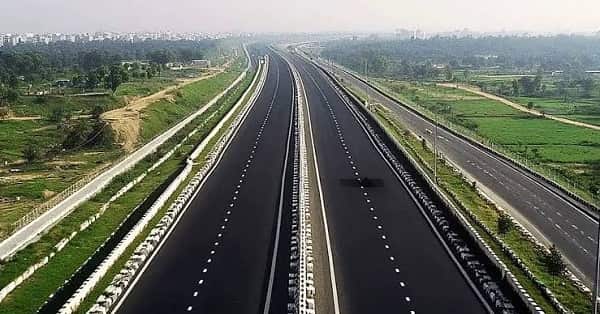
Noida-Greater Noida Expressway Overview
| Detail | Information |
| Location | Noida and Greater Noida, Gautam Buddh Nagar, Uttar Pradesh |
| Route | Mahamaya Flyover (Noida) to Knowledge Park / Pari Chowk (Greater Noida) |
| Total Length | Approx. 24–25 km |
| Highway Classification | Expressway (6 lanes) |
| Starting Point | Mahamaya Flyover / Sector 37, Noida |
| Ending Point | Pari Chowk, Greater Noida |
| Lanes | 6 lanes (3 in each direction) with service roads |
| Speed Limit | 100 km/h (cars); 60 km/h (heavy vehicles); 60 km/h (near populated zones) |
| Toll Fee | Approx. ₹45–75 for cars; commercial vehicles proportionally higher |
| Toll Collection | FASTag-enabled; multiple toll plazas |
| Governing Authority | New Okhla Industrial Development Authority (NOIDA), GNIDA |
| Metro Connectivity | Aqua Line (Noida-Greater Noida Metro) runs parallel to expressway |
| Key Connections | DND Flyway, Yamuna Expressway, FNG Expressway zone, Delhi border via DND |
| Significance | Primary connectivity corridor between Noida city and Greater Noida township |
Route and Location
The Noida-Greater Noida Expressway begins at the Mahamaya Flyover junction in Noida’s Sector 37 area, where it receives traffic from the DND Flyway connecting Delhi’s Ashram zone to Noida’s northern entry point. From this starting node, the expressway runs southeastward through Noida’s developed sector belt — passing Sector 37, Sector 96, Sector 126, Knowledge Park zones — before transitioning into Greater Noida’s planned city grid and terminating at the Pari Chowk interchange that serves as Greater Noida’s primary northern gateway.
The expressway’s southeast alignment follows a remarkably straight path through the Yamuna floodplain’s developed zone, which allowed the planners to achieve the kind of high-speed corridor geometry that more complex urban alignments cannot maintain. Service roads on both sides of the expressway have become significant commercial and residential arteries in their own right — the sectors fronting the service roads have developed the specific commercial character of expressway-adjacent development across India.
Length and Speed Limits
At approximately 24 to 25 kilometres, the Noida-Greater Noida Expressway falls into the medium-distance urban expressway category — long enough to make a meaningful difference to travel times but compact enough that the entire journey from Mahamaya to Pari Chowk takes under 20 minutes under good traffic conditions. The 100 km/h limit for cars is the standard expressway speed designation, though the 60 km/h restriction near the various sector entry and exit points acknowledges the expressway’s urban character and the weaving traffic movements that sector access creates.
The speed limit enforcement near the mid-expressway sections where Amity University, Sharda University, and the educational institution belt generates significant pedestrian and vehicle crossing activity has been a consistent road safety management focus for the NOIDA Authority.
Toll Fee
Cars pay approximately ₹45 to ₹75 per crossing depending on the specific toll plaza and whether the full expressway length or a partial stretch is used. The toll structure was designed to be affordable enough to ensure the expressway achieves its traffic diversion function rather than pushing commuters back onto the old Noida-Greater Noida road. FASTag has been mandatory for several years and the toll plazas are among the more efficiently managed in UP’s expressway network. Multi-trip passes are available for daily commuters, significantly reducing the per-trip cost for residents who use the expressway consistently.
Connectivity
The Noida-Greater Noida Metro Aqua Line runs parallel to the expressway for its entire length — one of the most complete road-rail corridor pairings in any Indian metropolitan area. The 29-kilometre metro line with 21 stations serves almost every major residential and commercial cluster along the expressway, providing a genuine alternative to the road for commuters comfortable with the metro’s fixed schedule. The expressway’s connection to the Yamuna Expressway at the Greater Noida end opens a direct corridor toward Agra, Mathura, and the entire western UP highway network. The DND Flyway connection at the northern end provides the primary Delhi access.
Nearby Areas
Knowledge Park: Greater Noida’s educational and institutional belt along the expressway houses several universities, engineering colleges, and research institutions whose combined student and faculty population of hundreds of thousands makes them among the largest generators of daily expressway traffic.
Sector 126-128 Noida: The premium residential sectors fronting the expressway have become some of Noida’s most sought-after addresses — the combination of expressway access and metro proximity has driven significant premium apartment development here.
Yamuna Expressway Interchange at Pari Chowk: The connection to the 165-kilometre Yamuna Expressway opens the Noida-Greater Noida corridor toward Agra and represents the most ambitious long-distance connectivity enhancement in the broader expressway network.
Surajpur Industrial Area: The industrial estates of Greater Noida accessible from the expressway service roads house significant IT and light manufacturing operations whose workforce uses the corridor daily for their Noida and Delhi commutes.
Frequently Asked Questions (FAQs)
Q1. How long is the Noida-Greater Noida Expressway?
A: Approximately 24 to 25 kilometres from the Mahamaya Flyover in Noida to Pari Chowk in Greater Noida.
Q2. What is the toll fee on Noida-Greater Noida Expressway?
A: Approximately ₹45 to ₹75 for cars, with FASTag as the mandatory payment mode at all toll plazas.
Q3. What is the speed limit on this expressway?
A: 100 km/h for cars under standard conditions, reduced to 60 km/h near sector entry points and populated zones along the corridor.
Q4. Is there metro along the Noida-Greater Noida Expressway?
A: Yes — the Aqua Line metro runs parallel to the expressway for its full length with 21 stations serving the corridor’s residential and commercial developments.
Q5. Which expressway does Noida-Greater Noida Expressway connect to at its southern end?
A: The Yamuna Expressway at the Pari Chowk interchange, opening connectivity toward Agra, Mathura, and the broader western UP highway network.