
The road from Ambala to Chandigarh is one of northern India’s most travelled short highway corridors — a 35-kilometre gap between the army cantonment city at the Haryana-Punjab border and the planned capital of two states that draws civilian and defence movement, government officials, pilgrims heading northward to Himachal Pradesh and Jammu, students at the universities of both cities, and the substantial commercial freight flowing between the industrial estates of Ambala and the Chandigarh-Mohali-Panchkula tri-city. It is, by traffic density per kilometre, among the most intensely used corridors in the country.
The original Ambala-Chandigarh Expressway — a four-lane, 35-kilometre access-controlled section on NH-152 and NH-5 — was completed in 30 months at a cost of ₹2.98 billion and has been operational since December 2009, constructed by the GMR Group. It runs on the NH-21 and NH-22 corridor and handles one of India’s highest traffic density highway volumes. The expressway has a 12-lane toll plaza for electronic toll collection at the midpoint.
The existing four-lane corridor is now being replaced and supplemented by a new greenfield six-lane expressway. The Chandigarh-Ambala Greenfield Corridor being built at a cost of ₹3,167 crore is a 61.23-kilometre expressway covering 395 hectares across two packages. Package-2 from IT City Chowk in Mohali to Kurali on the Kurali-Siswan road was 95% complete as of August 2025 and scheduled for inauguration by September 30, 2025. Package-1 from Devinagar village on the Ambala-Hisar road to IT City Chowk in Mohali was 65% complete and slated for opening by March 2026. The new greenfield corridor will ease congestion across Chandigarh, Zirakpur, Panchkula, Mohali, and Kharar — the entire tri-city agglomeration that has been struggling with the traffic volumes generated by two decades of rapid urban expansion.
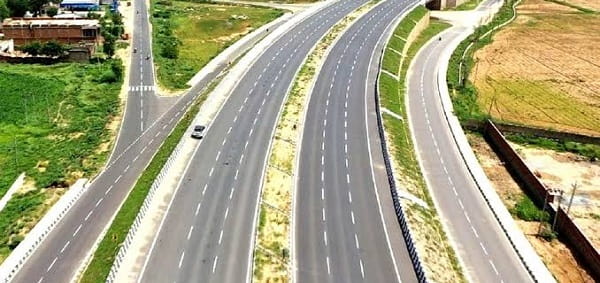
Ambala Chandigarh Expressway Overview
| Detail | Information |
| Existing Expressway | 4-lane, 35 km, NH-152 / NH-5, operational since December 2009 |
| Built By (Existing) | GMR Group |
| Existing Project Cost | ₹2.98 billion |
| New Greenfield Corridor | 61.23 km, six-lane, Chandigarh-Ambala Greenfield Corridor |
| New Project Cost | ₹3,167 crore |
| New Corridor Maintained By | NHAI |
| From | Ambala (Devinagar village, Ambala-Hisar road) |
| To | Chandigarh / Kurali (Kurali-Siswan road) |
| Package 1 | Devinagar (Ambala) to IT City Chowk, Mohali — 30 km; 65% done; target March 2026 |
| Package 2 | IT City Chowk (Mohali) to Kurali — 31.23 km; 95% done; target Sept 2025 |
| Lalru Spur | Included — connects to Lalru for regional access |
| Airport Connectivity | Direct link to Mohali International Airport Chowk |
| Key States | Haryana, Punjab |
| Key Cities Served | Ambala, Mohali, Chandigarh, Panchkula, Zirakpur, Kharar, Kurali |
| Connects | Delhi and Haryana to Punjab, Himachal Pradesh, and Jammu & Kashmir |
Route and Location
The new greenfield corridor starts at Devinagar village near Ambala on the Ambala-Hisar road — bypassing the congested NH-152 approach — and runs northward through a new alignment across the Ghaggar River plain before reaching Mohali’s IT City Chowk and extending further to Kurali. The bypass alignment avoids Mohali’s Kharar and Zirakpur congestion zones that have developed into major bottlenecks as the tri-city’s western and northern residential expansion accelerated over the past decade.
Connectivity
The expressway is the primary connection linking the Delhi-Panipat-Ambala corridor on NH-44 to the Chandigarh tri-city and onward toward Himachal Pradesh’s Shimla-Manali tourist belt and Jammu and Kashmir’s Jammu highway. The Mohali International Airport connection — a direct link included in the new greenfield corridor’s design — gives the road both commercial passenger and freight dimensions absent from the original expressway.
Nearby Areas
Chandigarh: Le Corbusier’s planned capital — with the Capitol Complex (a UNESCO World Heritage Site since 2016), Rock Garden, Sukhna Lake, and the precision of Sector grid planning — is the northern terminus of the expressway and one of India’s most consistently liveable planned cities. Pinjore Gardens (Yadavindra Gardens): The 17th-century Mughal-inspired terraced gardens approximately 15 kilometres from Chandigarh on the Ambala road are one of Haryana’s finest historical gardens accessible from the expressway zone. Morni Hills: Haryana’s only hill station, in the Panchkula district accessible from the Chandigarh zone, is a weekend leisure destination for the tri-city population that uses this expressway daily.
Frequently Asked Questions (FAQs)
Q1. What is the Ambala Chandigarh Expressway?
A: Two overlapping projects — the existing 35-km four-lane expressway (operational December 2009, GMR Group, ₹2.98 billion) and the new 61.23 km six-lane Greenfield Corridor (₹3,167 crore, NHAI, nearing completion 2025-26).
Q2. When will the new Chandigarh-Ambala Greenfield Corridor open?
A: Package-2 (Mohali to Kurali, 31.23 km) targeted September 2025. Package-1 (Ambala to Mohali, 30 km) targeted March 2026. Both were in advanced construction as of August 2025.
Q3. How much does the new Ambala Chandigarh Greenfield Corridor cost?
A: ₹3,167 crore, covering 395 hectares across two packages.
Q4. Which cities benefit most from the new Ambala Chandigarh Expressway?
A: Chandigarh, Mohali, Panchkula, Zirakpur, Kharar, and Kurali — the entire tri-city agglomeration whose congestion problems the new bypass alignment specifically targets.
Q5. Does the new Ambala Chandigarh Expressway connect to an airport?
A: Yes — Package-1 includes a direct link to Mohali International Airport Chowk, improving airport access for the tri-city and Delhi-bound travelers.