
Two pilgrimages define the spiritual geography of northern India for hundreds of millions of Hindus and Sikhs. Vaishno Devi at Katra in the Trikuta Mountains of Jammu and Kashmir — where the Mata Vaishno Devi shrine draws 8 to 12 million devotees annually, making it India’s second most visited pilgrimage site after Tirupati. And the Golden Temple in Amritsar — Sikhism’s holiest shrine, drawing 100,000 visitors daily under normal conditions. Both were previously served by the same congested, slow NH-44 Grand Trunk Road corridor from Delhi, with journey times of 8 to 10 hours for Amritsar and 12 to 14 hours for Katra. The Delhi-Amritsar-Katra Expressway resolves this with a 670-kilometre, four-lane greenfield access-controlled corridor that cuts Delhi-to-Katra travel time to 6 hours and Delhi-to-Amritsar to 4 hours.
Designated National Expressway 5 (NE-5), the expressway starts at Nilauthi village near Jasaur Kheri in Jhajjar district, Haryana — at the KMP Expressway junction — and terminates at Katra in Reasi district, Jammu and Kashmir, near the Vaishno Devi base camp. A 99-kilometre spur designated NE-5A branches off at Nakodar in Punjab toward Sri Guru Ram Dass Jee International Airport in Amritsar. The project was announced in 2016, DPR finalised in 2019, construction started after PM Modi laid the foundation stone on April 22, 2022, and the estimated cost is approximately ₹47,000 crore.
The expressway’s 18 construction packages are distributed across three states — 5 in Haryana, 8 in Punjab, and 5 in Jammu and Kashmir. As of early 2026, Haryana and J&K sections are 80 to 90 percent complete. Punjab’s progress has been slower — approximately 43 to 50 percent as of late 2024 — due to land acquisition protests. The J&K section (144 km across 5 packages) has a revised completion deadline of March 2026. The full expressway is expected to be fully functional by 2026-27. It also features a 1,300-metre cable-stayed bridge over the Beas River — one of the most visually dramatic engineering elements on any Indian expressway currently under construction.
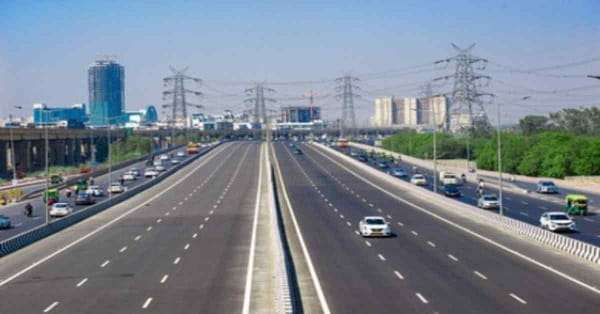
Katra Expressway Overview
| Detail | Information |
| Official Name | Delhi-Amritsar-Katra Expressway (National Expressway 5 / NE-5) |
| Maintained By | NHAI |
| Length | 670 km (NE-5) + 99 km Amritsar Spur (NE-5A) |
| Lanes | 4-lane (expandable to 8) |
| South End | Nilauthi, Jhajjar District, Haryana (KMP Expressway Junction) |
| North End (Katra) | Katra, Reasi District, Jammu and Kashmir |
| Amritsar Spur End | Sri Guru Ram Dass Jee International Airport, Amritsar |
| Spur Junction | Nakodar, Punjab |
| Foundation Stone | April 22, 2022 (PM Narendra Modi) |
| Estimated Cost | ₹47,000 crore |
| Packages | 18 total — 5 (Haryana), 8 (Punjab), 5 (J&K) |
| Haryana/J&K Progress | 80–90% complete (early 2026) |
| Punjab Progress | ~43–50% (September 2024) |
| J&K Completion Target | March 2026 (revised) |
| Full Completion Expected | 2026–2027 |
| Speed | 120 km/h |
| Travel Time Delhi–Katra | 6 hours (vs current 12–14 hours) |
| Travel Time Delhi–Amritsar | 4 hours (vs current 8–10 hours) |
| Special Feature | 1,300 m cable-stayed bridge over Beas River |
| Strategic Linkage | Connects to Ludhiana-Delhi-Kolkata Industrial Corridor |
Route and Location
The expressway begins at the KMP Expressway’s Nilauthi interchange in Haryana, runs northward through Sonipat and Panipat districts, crosses the Punjab border, passes through Ludhiana, Jalandhar, and Nakodar — where the Amritsar spur diverges — and continues through Gurdaspur toward Pathankot, where it enters Jammu and Kashmir’s Kathua and Udhampur districts before reaching Katra in the Trikuta Mountain foothills. The alignment broadly follows the Grand Trunk Road’s historic north-south spine while avoiding the congested urban cores of Ludhiana, Jalandhar, and other Punjab cities through bypass alignments.
Connectivity
The KMP Expressway at the Haryana end connects the corridor to Delhi NCR, the Eastern Peripheral Expressway, and the Trans-Haryana Expressway — making it one node in a comprehensive Delhi orbital and radial system. At the Nakodar spur, the 99-kilometre NE-5A connects to Amritsar Airport — positioning this expressway as an airport access road for both pilgrims and commercial aviation users. Separately, the corridor aligns with the Ludhiana-Delhi-Kolkata Industrial Corridor — one of India’s 11 national industrial corridor programmes.
Nearby Areas
Amritsar’s Golden Temple — Sikhism’s holiest shrine and India’s most visited tourist destination ahead of the Taj Mahal by some counts — is the northern spiritual anchor of this expressway. The Wagah Border ceremony between India and Pakistan, 28 kilometres from Amritsar, is accessible from the NE-5A Amritsar spur. Katra’s Vaishno Devi shrine — the Trikuta Mountain temple drawing up to 12 million pilgrims annually — is the expressway’s ultimate destination and the transformative pilgrimage connection that makes this project a genuinely national priority.
Frequently Asked Questions (FAQs)
Q1. What is the Katra Expressway (Delhi-Amritsar-Katra Expressway)?
A: NE-5, a 670-km, four-lane greenfield expressway from Jhajjar (Haryana) to Katra (J&K), with a 99-km Amritsar spur (NE-5A). Estimated cost ₹47,000 crore.
Q2. How much will the Katra Expressway reduce travel time from Delhi?
A: Delhi to Katra from 12 to 14 hours to 6 hours. Delhi to Amritsar from 8 to 10 hours to 4 hours.
Q3. When will the Katra Expressway be fully complete?
A: J&K section targeted March 2026. Full expressway expected operational 2026-27, subject to Punjab section delays.
Q4. What is the special engineering feature on the Katra Expressway?
A: A 1,300-metre cable-stayed bridge over the Beas River in Punjab — one of the most architecturally significant features on any Indian expressway currently under construction.
Q5. Where does the Amritsar spur (NE-5A) connect?
A: From Nakodar junction in Punjab for 99 km to Sri Guru Ram Dass Jee International Airport, Amritsar.