
Choosing the wrong tile doesn’t reveal itself at installation — it reveals itself in cracks, stains, and premature replacement a year or two down the line. Between ceramic and vitrified tiles, the difference isn’t really about which one looks nicer on a showroom wall. It’s about a manufacturing process that determines exactly how each tile behaves once it’s dealing with real daily wear, water, and foot traffic in your actual home.
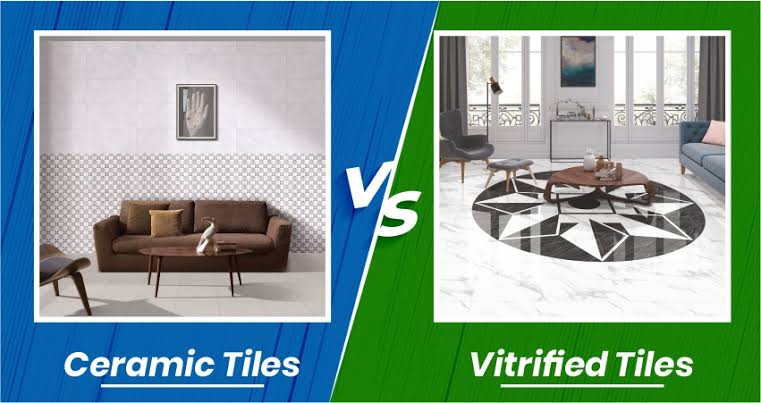
What Actually Separates Them
Ceramic tiles are made from natural clay, sand, and water, fired at relatively lower temperatures, typically finished with a glaze for a smooth, shiny, or matte appearance. Vitrified tiles go through an additional process entirely — made from a blend of clay, silica, quartz, and feldspar, fired at very high temperatures until the tile body actually vitrifies into a dense, glass-like structure. That vitrification step is the entire reason these two tiles perform so differently, even though they start from broadly similar raw materials.
Water Absorption: The Single Biggest Practical Difference
This is where the two materials diverge most dramatically. Ceramic tiles are more porous and absorb noticeably more water, particularly if unglazed or unsealed, making them less suited to consistently wet or heavy-use areas unless properly sealed. Vitrified tiles are almost non-porous, with water absorption rates that can run as low as 0.1% — a genuinely dramatic difference that makes vitrified tiles the clear choice for kitchens, bathrooms, and balconies where standing water and moisture exposure are a daily reality.
Strength and Durability Under Daily Wear
Vitrified tiles are naturally stronger and denser, handling foot traffic, furniture movement, and impact considerably better than ceramic. They’re genuinely resistant to scratches, stains, and chipping in a way that makes them the clear choice for high-traffic areas — living rooms, hallways, and commercial spaces where daily wear accumulates fastest.
Ceramic tiles remain quite resilient for their intended use, but they’re more susceptible to chipping and cracking under concentrated pressure, particularly at edges and corners. This makes them a better fit for medium- and low-traffic areas rather than the busiest zones of a home.
Finish Options and Aesthetic Range
Ceramic tiles offer genuinely endless design possibilities — glossy finishes, matte options, and intricate hand-painted patterns that suit a warm, traditional aesthetic particularly well. If you’re drawn to earthy, classic interiors, ceramic’s design flexibility genuinely shines here.
Vitrified tiles have expanded considerably beyond their earlier, more limited aesthetic range. Modern vitrified options include polished, textured, matte, high-gloss, and even convincing stone-like finishes, giving them a genuine edge for anyone wanting a sleek, modern, seamless look. Digitally glazed vitrified tiles can now replicate natural materials with impressive accuracy while retaining vitrified’s superior durability underneath.
Cost Considerations
Ceramic tiles are generally the more budget-friendly option, being lighter, easier to manufacture, and simpler to cut and install. Vitrified tiles carry a premium price compared to standard ceramic, reflecting their more intensive manufacturing process and superior performance characteristics — a cost that many homeowners find justified given the tile’s considerably longer practical lifespan in demanding areas.
Installation Complexity
Ceramic tiles are lighter and easier to cut, making them somewhat more forgiving during installation, particularly for smaller-scale or DIY-adjacent projects. Large-format vitrified tiles, by contrast, require genuinely skilled installation given their density and weight — a factor worth budgeting for in both cost and finding a qualified installer, particularly for bigger-format tiles increasingly used in modern flooring designs.
Maintenance and Long-Term Upkeep
Vitrified tiles are considerably easier to maintain long-term, since their low porosity resists staining and doesn’t require the periodic sealing that unglazed or lower-quality ceramic tiles may need to maintain their water resistance over time. Ceramic tiles, particularly unsealed varieties, require more attentive care to prevent moisture absorption from gradually degrading the tile or the surface beneath it.
Which One Actually Suits Your Space?
Vitrified tiles are the stronger choice for kitchens, bathrooms, balconies, and any high-traffic or moisture-prone area where durability and water resistance genuinely matter for long-term performance. Ceramic tiles remain a genuinely excellent, more affordable choice for bedrooms, walls, and other low-traffic areas where their warmer aesthetic and lower cost outweigh vitrified’s durability advantages. For most Indian homes specifically, vitrified tiles have become the practical default for flooring throughout the house, with ceramic reserved more for budget-conscious wall applications.
The Bottom Line
Vitrified tiles offer genuinely superior water resistance, strength, and long-term durability, making them the better investment for high-traffic and moisture-heavy areas, while ceramic tiles remain a more affordable, aesthetically warm option well-suited to lower-traffic spaces and wall applications. The right choice ultimately depends on matching the tile’s genuine strengths to where it will actually be installed, rather than assuming the pricier, more durable option is automatically necessary for every room in the house.
FAQs
Q1. Can I use ceramic tiles in my bathroom if I make sure they’re properly sealed?
Yes, properly sealed and glazed ceramic tiles can work reasonably well in bathrooms, though they still won’t match vitrified tiles’ near-zero water absorption, so ongoing attention to seal integrity over time becomes genuinely important. For bathroom floors specifically, where standing water is more common, vitrified tiles remain the more worry-free long-term choice even if ceramic works acceptably on walls.
Q2. Why do vitrified tiles cost more, and is the price difference actually worth it?
The higher cost reflects a more intensive manufacturing process involving higher firing temperatures and additional materials that create the dense, near-non-porous structure driving vitrified’s durability advantage. For high-traffic or moisture-prone areas, this premium is generally worth it given vitrified’s considerably longer practical lifespan and lower long-term maintenance needs; for low-traffic bedrooms or walls, ceramic’s lower cost may be the more sensible choice.
Q3. Is it difficult to install large-format vitrified tiles myself, or should I hire a professional?
Large-format vitrified tiles are genuinely denser and heavier than ceramic, requiring skilled installation to avoid cracking, uneven surfaces, or improper adhesion, making professional installation considerably safer for anything beyond small or standard-sized tiles. Attempting a DIY installation with large-format vitrified tiles without proper experience risks costly mistakes that could require redoing the entire job.
Q4. Can vitrified tiles be used on walls, or are they only suitable for flooring?
Vitrified tiles can absolutely be used on walls, and their durability and low porosity make them a strong choice for kitchen backsplashes or bathroom walls specifically, though their weight means proper installation support matters more than it does for lighter ceramic wall tiles. Many homeowners mix both — using vitrified for flooring and wet-area walls while choosing lighter, more design-flexible ceramic for decorative or low-moisture wall applications elsewhere in the home.