
Every ceramic and porcelain tile starts life the same way — clay, formed and fired in a kiln. What happens after that determines everything else. Porcelain uses a denser, more refined clay fired at considerably higher temperatures, while standard ceramic uses a coarser mix fired at lower heat. That single manufacturing difference cascades into nearly every practical distinction between the two, and understanding it makes the rest of this decision considerably easier.
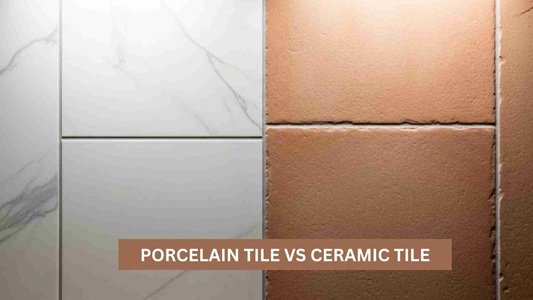
What Actually Separates Them
In essence, all porcelain is ceramic, but not all ceramic is porcelain — porcelain is really a specialized, higher-performing subset within the broader ceramic tile category. Ceramic tile is typically made from red or white clay along with other minerals, while porcelain tile uses a denser, finer clay containing more feldspar and silica, fired at significantly higher kiln temperatures. This is what gives porcelain its greater density, strength, and reduced porosity compared to standard ceramic.
Durability and Resistance to Chips and Cracks
Porcelain’s higher density makes it considerably more resistant to impact, scratches, and general wear than ceramic. While a backsplash isn’t subject to the same foot traffic a floor experiences, it does regularly encounter bumps from pots, pans, and cleaning tools — situations where porcelain’s added toughness genuinely matters. Ceramic, being softer and less dense, remains strong for typical backsplash use but is somewhat more prone to chipping or cracking under sharper impacts.
Water and Moisture Absorption
This is one of the more practically significant differences for a kitchen environment. Porcelain tile barely absorbs any water at all, making it close to genuinely waterproof, while ceramic tile absorbs somewhat more moisture due to its higher porosity. That said, properly glazed ceramic tile is well-suited to backsplash use specifically — it’s unglazed ceramic, like quarry tile, that struggles most in consistently wet environments. For most kitchen backsplashes, both materials offer sufficient water resistance, though porcelain provides a genuinely stronger margin if your cooking style involves a lot of steam and splashing.
Cost Differences Are Real and Consistent
Ceramic tile is consistently the more budget-friendly option, since it’s less expensive to manufacture and install than porcelain. Porcelain’s higher cost reflects its denser composition, more refined manufacturing process, and enhanced durability — a premium that many homeowners find justified by the tile’s longer-lasting performance, though it’s a genuine consideration for anyone working within a tighter renovation budget.
Installation and Cutting Considerations
Ceramic’s softer composition makes it considerably easier to cut and shape, which matters both for professional installers working around outlets, corners, and irregular spaces, and for DIY homeowners using basic tile cutters. Porcelain’s greater hardness and density make it more challenging to cut precisely, particularly for intricate cuts around outlets or unusual backsplash shapes, sometimes requiring more specialized tools or professional installation to avoid cracking during the cutting process.
Design Range and Aesthetic Flexibility
Both materials offer genuinely wide design variety, but they lean toward different strengths. Ceramic tile is particularly well-suited to hand-painted designs, colorful patterns, and playful, distinctive looks, making it a strong choice for kitchens wanting a bright, personality-driven backsplash. Porcelain tile, meanwhile, can convincingly mimic stone, wood, or marble textures, giving it an edge for homeowners wanting a sleek, modern, high-end appearance without the cost or maintenance of natural stone.
Grout Compatibility and Long-Term Cleaning
Porcelain’s smoother, less porous surface means it doesn’t absorb grout as readily during installation, which translates into somewhat easier long-term cleaning and maintenance. Ceramic tile, being more porous, can be slightly more prone to grime buildup around grout lines over time, though regular cleaning and proper sealing largely mitigate this difference for typical residential use.
Which One Actually Suits Your Kitchen?
Porcelain tends to be the stronger choice for busy kitchens with heavy daily cooking and cleaning activity, higher moisture exposure, or a preference for a sleek, stone-like modern aesthetic — and it’s worth the investment for homeowners planning to stay in their home long enough to benefit from its superior longevity. Ceramic remains a genuinely excellent choice for backsplashes specifically, since this application doesn’t experience the same wear as flooring, making its lower cost and design flexibility a smart, practical fit for most kitchens, especially those wanting vibrant colors, patterns, or a lower renovation budget.
The Bottom Line
Ceramic and porcelain tiles share the same basic clay-and-kiln origin, but porcelain’s denser composition and higher firing temperature give it a genuine edge in durability, moisture resistance, and long-term performance, while ceramic offers a more budget-friendly, design-flexible option that performs perfectly well in the relatively low-wear environment of a backsplash. Neither is universally “better” — the right choice depends on your specific kitchen’s usage intensity, budget, and aesthetic goals rather than assuming porcelain’s superior specs always justify its higher cost for every application.
FAQs
Q1. Is porcelain tile really necessary for a backsplash, or is that durability advantage wasted there?
Since a backsplash doesn’t experience the foot traffic or heavy wear that flooring does, porcelain’s superior durability is genuinely less critical there than it would be for a kitchen floor, making ceramic a perfectly practical and more budget-friendly choice for most backsplash applications. Porcelain still makes sense if your kitchen sees heavy daily cooking activity with frequent splashes and steam, but it’s not a strict requirement the way it might be for high-traffic flooring.
Q2. Can I mix ceramic and porcelain tiles in the same kitchen for different areas?
Yes, this is a common and practical approach — many homeowners use more durable, water-resistant porcelain for flooring or areas with heavy moisture exposure while choosing ceramic for the backsplash, where its lower cost and wider color and pattern variety can shine without sacrificing meaningful durability. Just make sure the tile thickness and installation methods are compatible if the two materials meet at a transition point.
Q3. How do I know if a ceramic tile is properly glazed and suitable for a wet kitchen environment?
Ask your tile retailer specifically whether the ceramic tile is glazed rather than unglazed, since glazed ceramic tiles are considerably less porous and well-suited to backsplash and other moderate-moisture applications, while unglazed options like quarry tile are better reserved for lower-moisture uses. A tile professional can help confirm the specific product’s water absorption rating if you want a precise comparison before purchasing.
Q4. Will porcelain tile’s higher cutting difficulty make my installation significantly more expensive?
It can add some cost, particularly if your backsplash design involves intricate cuts around outlets, switches, or unusual angles, since porcelain’s hardness sometimes requires more specialized tools or additional installer time compared to the easier-to-cut ceramic. For straightforward, simple backsplash layouts with minimal custom cutting, this cost difference tends to be relatively minor compared to the overall project budget.