
Most homeowners assume solid oak is the undisputed gold standard for premium flooring, but in a modern home dealing with central heating, humidity swings, and concrete subfloors, that “premium” choice can actually be the more expensive mistake. That’s not an anti-solid-wood argument — it’s a reminder that “better” depends entirely on your specific home’s conditions, not on which material sounds more prestigious on paper.
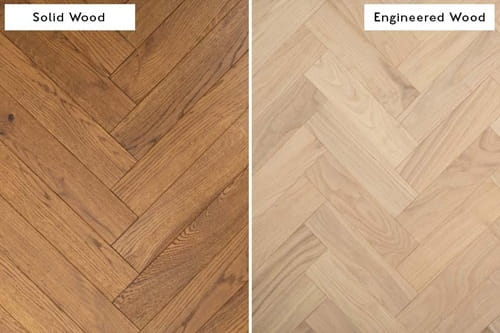
Construction: The Core Difference
Solid wood is made from a single, solid piece of lumber, typically around ¾-inch thick, milled directly from a tree with no layered construction underneath. Engineered wood, by contrast, is built in layers — a real hardwood veneer on top, bonded over cross-layered plywood or high-density fiberboard beneath. This cross-ply construction is deliberate: one layer wants to expand in one direction, while the layer beneath it is anchored to move in another, and they effectively cancel each other out. That single engineering decision is the reason engineered wood behaves so differently from solid wood in practice.
Moisture and Climate Stability
This is where the two materials diverge most significantly. Solid wood is genuinely more vulnerable to humidity and temperature changes — boards can shrink, expand, or gap during dry winters or humid summers, and many manufacturers actively caution against installing solid wood in below-grade or highly humid spaces. Engineered wood’s layered construction gives it real dimensional stability, resisting warping, cupping, and gapping considerably better when exposed to fluctuating humidity or temperature.
This stability advantage is also why engineered wood is compatible with installations solid wood simply can’t handle — concrete slabs, basements, and radiant underfloor heating systems, none of which solid wood tolerates reliably.
Lifespan and Refinishing Potential
Solid wood holds a genuine, meaningful edge here. Because the entire plank is solid timber all the way through, it can be sanded and refinished multiple times over its lifespan — with proper care, solid hardwood can last 50 to 100 years, and most families find that two or three refinishing cycles are more than enough across their entire homeownership.
Engineered wood’s lifespan depends heavily on the thickness of its top veneer layer. Depending on that wear-layer thickness, engineered wood may only allow for one or two sandings across its lifetime before the veneer is worn through to the structural layer beneath. This is a genuinely important distinction — a thin-veneer engineered floor and a thick-veneer engineered floor perform very differently over the decades, even though they look identical when new.
Installation Flexibility
Engineered wood offers considerably more installation flexibility. It can be manufactured in much wider plank widths — commonly 10 to 12 inches — without the cupping or shifting risk that limits solid wood planks to roughly 5 inches maximum. Many engineered products also use click-lock systems that install faster and less invasively, making them genuinely more DIY-friendly than the nail-down installation solid wood typically requires over a wooden subfloor.
Cost Comparison
Pricing has converged considerably in recent years — high-quality engineered hardwood can now be similarly priced to solid hardwood at the material level, though engineered options often deliver genuine savings in installation and subfloor preparation costs. The advice worth following here is comparing total project cost rather than just the per-square-foot material price, since installation complexity and subfloor requirements can shift the real cost balance considerably.
Resale Value Perception
For decades, solid hardwood carried a clear prestige advantage in buyers’ minds. That perception has genuinely shifted — modern engineered planks with thick wear layers and strong structural integrity now often rival solid wood in practical lifespan, and many buyers today focus more on overall appearance, condition, and design trends than on the specific construction method underneath. In markets with significant humidity fluctuation, engineered hardwood is increasingly viewed as the smarter, more resilient investment rather than a lesser substitute. From an appraisal standpoint, both are typically categorized simply as “hardwood flooring” as long as the surface features genuine wood veneer, with minimal valuation difference in most cases.
Species Matters as Much as Construction Type
It’s worth remembering that wood species significantly affects durability regardless of whether you choose solid or engineered construction. Oak remains an industry standard specifically because it’s naturally dense and handles impact well, while softer woods like walnut will dent under pressure whether installed as solid or engineered planks. If you’re worried about pet claws or heavy furniture, the species matters at least as much as the construction method.
Which One Actually Suits Your Home?
Engineered wood is the stronger choice for basements, homes with concrete subfloors, radiant heating systems, or regions with significant humidity swings — situations where dimensional stability genuinely matters more than maximum refinishing potential. Solid wood remains the better choice for above-grade rooms in climate-stable homes, traditional narrow-strip aesthetic preferences, and homeowners planning to stay long enough to benefit from multiple refinishing cycles over many decades.
The Bottom Line
Solid wood offers a longer theoretical lifespan and more refinishing potential, but genuine vulnerability to humidity and temperature swings limits where it can be reliably installed. Engineered wood offers considerably better dimensional stability, wider plank options, and installation flexibility, with modern high-quality products now closing much of the durability gap that once separated the two. The right choice depends far more on your specific home’s subfloor, climate conditions, and installation location than on which material carries the more prestigious reputation.
FAQs
Q1. Can I install engineered wood in a basement, and is it actually a good idea?
Yes, engineered wood’s dimensional stability makes it genuinely well-suited to basement installations over concrete slabs, a location where solid wood is generally not recommended due to moisture exposure and the lack of a proper wooden subfloor. It’s still worth managing basement humidity levels reasonably, since even engineered wood has limits if moisture exposure becomes severe or persistent.
Q2. How do I know how many times my engineered wood floor can actually be refinished?
This depends entirely on the thickness of the top wood veneer layer, which varies significantly between products — thicker veneers support one or two sandings, while thinner veneers may not support refinishing at all. Checking the specific veneer thickness listed by the manufacturer before purchasing gives you a realistic expectation of the floor’s long-term refinishing potential.
Q3. Does choosing engineered wood over solid wood hurt my home’s resale value?
Generally not significantly — buyer perception has shifted considerably, and high-quality engineered wood with a genuine hardwood veneer is typically categorized the same way as solid hardwood in appraisals, with overall condition and appearance mattering more than construction type. In select markets, particularly those with humidity challenges, engineered wood may actually be viewed as the more practical, buyer-appealing choice.
Q4. Is it worth paying more for solid wood if I live in a climate with stable humidity year-round?
If your home genuinely has minimal humidity fluctuation and sits above grade with a proper wooden subfloor, solid wood’s longer refinishing lifespan can make the higher investment worthwhile, particularly if you’re planning to stay in the home for many decades. That said, it’s still worth maintaining recommended indoor humidity levels and using area rugs in high-traffic zones, since even climate-stable regions can experience seasonal swings that affect solid wood over time.