
Gujarat has always moved fast — in business, in industry, and increasingly, on its roads. The Ahmedabad Vadodara Expressway is one of the clearest expressions of that momentum, a high-quality controlled-access highway that connects two of the state’s most economically significant cities with a directness and efficiency that older road alignments between them simply could not match. For anyone who remembers the congested, signal-heavy drive between Ahmedabad and Vadodara on the old NH-48 alignment, the expressway feels like a different era entirely — and in many ways, it is.
Stretching between Gujarat’s largest city and its cultural capital, this expressway is not merely a road. It is a commercial corridor that carries the daily weight of industrial freight, executive commuters, passenger buses, and logistics vehicles supporting some of India’s most productive manufacturing and petrochemical belts. The towns and industrial estates that line the expressway’s corridor — Anand, Nadiad, Kheda — are not incidental; they are the reason this road matters as deeply as it does to Gujarat’s economic fabric. For a state that consistently ranks among India’s top performers in industrial output and investment attraction, having a world-class expressway connecting its two primary urban anchors is not a luxury. It is a fundamental infrastructure necessity that the road fulfills with considerable effectiveness.
Whether you are a daily commuter, a business traveler, a truck operator running freight between Ahmedabad’s commercial markets and Vadodara’s petrochemical complex, or a traveler passing through Gujarat on a longer journey, understanding this expressway — its route, length, speed limits, and toll structure — equips you to use it smartly and confidently.
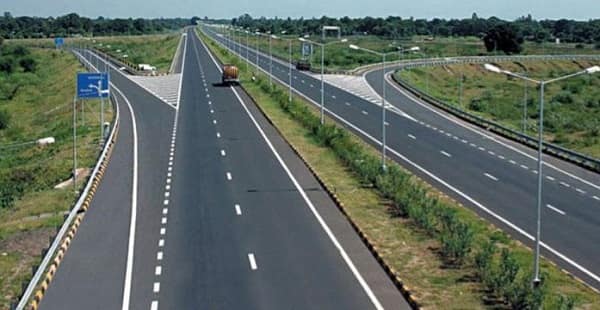
Ahmedabad Vadodara Expressway Overview
| Detail | Information |
| Full Name | Ahmedabad Vadodara Expressway |
| Also Known As | Vadodara-Ahmedabad Expressway / NH-48 Expressway Segment |
| Total Length | Approx. 93 km |
| States Covered | Gujarat |
| Starting Point | Ahmedabad (Maninagar / Vatva end) |
| Ending Point | Vadodara (Makarpura end) |
| Highway Classification | National Highway — NH-48 |
| Number of Lanes | 6 lanes (expandable to 8 lanes) |
| Speed Limit | 120 km/h for cars; 80 km/h for buses; 60 km/h for heavy vehicles |
| Toll Plazas | Multiple FASTag-enabled toll plazas |
| Car Toll Fee (One Way) | Approx. ₹130–₹155 per trip |
| Truck / HCV Toll Fee | Approx. ₹430–₹500 per trip depending on axles |
| Governing Authority | National Highways Authority of India (NHAI) |
| Passes Near | Anand, Nadiad, Kheda, Vatva, Makarpura |
Route and Location
The Ahmedabad Vadodara Expressway runs in a broadly north-south direction through the heart of central Gujarat, tracing a path along one of the state’s most industrially dense and agriculturally productive corridors. The expressway begins at the southern edge of Ahmedabad — near the Maninagar and Vatva industrial zones — and heads southward through the Kheda district agricultural belt before passing through the Anand and Nadiad urban areas and ultimately terminating at the Makarpura industrial zone on the northern outskirts of Vadodara.
The route passes through or in close proximity to several important Gujarat towns. Nadiad, the headquarters of Kheda district and a significant educational and commercial center, sits along the corridor. Anand — famous nationally as the birthplace of India’s cooperative dairy movement and home to Amul’s headquarters — is another major urban node within the expressway’s catchment zone. The Vatva industrial estate near Ahmedabad’s southern end is one of Gujarat’s most important chemical and pharmaceutical manufacturing clusters, and the Makarpura industrial area near Vadodara houses heavy engineering and precision manufacturing units — both directly served by the expressway’s termini.
The expressway runs broadly parallel to the old NH-48 alignment but on a straighter, wider, and faster corridor that eliminates the at-grade intersections, village road crossings, and urban congestion points that slowed the older alignment considerably. The entire stretch stays within Gujarat throughout, making this a single-state corridor with uniform toll regulations and traffic enforcement protocols.
Length and Road Specifications
At approximately 93 kilometres, the Ahmedabad Vadodara Expressway is one of the most heavily used highway stretches in Gujarat and among the most productive per-kilometre freight corridors in western India. The road is built to six-lane divided carriageway standards with structural provisions for future expansion to eight lanes as traffic density along this corridor — already very high — continues to grow with Gujarat’s expanding industrial output.
The expressway is a fully access-controlled highway, meaning vehicles enter and exit only at designated interchange points. There are no traffic signals, no pedestrian crossings, and no at-grade intersections along the main carriageway. This controlled-access design is what enables the high speed limits the road carries and the consistently fast travel times it delivers even during periods of moderate traffic volume.
The road surface is built to National Highways Authority of India specifications with high-quality bituminous and cement concrete sections depending on sub-soil conditions, and regular maintenance schedules are enforced by NHAI’s Gujarat project implementation units. Service roads run parallel to the main carriageway in several sections, providing access for local traffic and emergency service vehicles without disrupting expressway traffic flow.
Major interchanges connect the expressway to the old NH-48 service road, Anand city roads, Nadiad arterials, and the Vadodara Ring Road — ensuring that towns along the corridor can access the expressway without disrupting through traffic.
Speed Limit
The Ahmedabad Vadodara Expressway carries a maximum speed limit of 120 kilometres per hour for private cars and light motor vehicles, placing it among the faster permitted road speeds in Gujarat’s highway network. Buses and medium commercial vehicles are governed by an 80 kilometres per hour limit, while heavy commercial vehicles including multi-axle trucks and tankers are restricted to 60 kilometres per hour.
These differentiated speed limits reflect both the road’s engineering capability and the safety management requirements of a corridor that handles a very high proportion of heavy freight traffic alongside passenger vehicles. The speed differential between cars and trucks is significant on this expressway, and lane discipline — keeping slower vehicles to the left lanes — is strongly advised and increasingly enforced.
Speed surveillance on the expressway is managed through a combination of fixed speed cameras at regular intervals, mobile speed checking units operated by Gujarat traffic police, and NHAI’s highway patrol vehicles. Night driving demands particular attention to speed limits as heavy vehicle movement peaks during nighttime hours on this corridor.
Toll Fee
The Ahmedabad Vadodara Expressway operates a fee-based tolling system at multiple toll plazas distributed along its length, managed under NHAI’s national toll policy framework. All toll plazas are FASTag-enabled, with electronic toll collection being the primary payment mode across all vehicle categories. Cash payment lanes exist at most plazas but queues are invariably longer, and NHAI strongly encourages all users to maintain active FASTag accounts for uninterrupted passage.
For private cars and jeeps, the one-way toll fee along the full expressway length is approximately ₹130 to ₹155 depending on the specific plaza and any applicable revisions under NHAI’s periodic toll rate review cycle. Return journey users can avail themselves of return trip rates at most plazas when travel in both directions occurs within a specified time window — typically 24 hours — which offers a modest but useful saving for same-day round-trip travelers.
Light commercial vehicles and mini-buses attract higher toll rates than private cars, typically in the range of ₹200 to ₹250 for a full one-way trip. Buses and two-axle trucks pay approximately ₹280 to ₹340 per one-way trip, while three-axle and multi-axle heavy commercial vehicles attract the highest toll fees, ranging from ₹430 to ₹500 and above depending on axle configuration and specific plaza rates.
Monthly pass and multi-trip FASTag arrangements are available for frequent commercial users — a facility that logistics companies and fleet operators running regular Ahmedabad-Vadodara routes utilize extensively to manage transport costs. Exemptions and concessions apply for certain vehicle categories under central and state government notifications, including defense vehicles and some categories of agricultural transport.
Frequently Asked Questions (FAQs)
Q1. What is the total length of the Ahmedabad Vadodara Expressway?
A: The expressway is approximately 93 kilometres long, connecting Ahmedabad’s southern end to Vadodara’s northern industrial zones entirely within Gujarat.
Q2. What is the speed limit for cars on this expressway?
A: Private cars can travel at up to 120 km/h, while buses are limited to 80 km/h and heavy commercial vehicles to 60 km/h.
Q3. How much is the toll fee for a car on the Ahmedabad Vadodara Expressway?
A: The approximate one-way toll for a private car is ₹130 to ₹155, subject to periodic NHAI revision.
Q4. Is FASTag mandatory on the Ahmedabad Vadodara Expressway?
A: FASTag is the primary payment mode at all toll plazas and is strongly recommended for all users to avoid longer cash lane queues.
Q5. Which major towns does the Ahmedabad Vadodara Expressway pass through?
A: The expressway passes near Nadiad, Anand, Kheda, Vatva near Ahmedabad, and Makarpura near Vadodara along its 93-kilometre route.