
The problem of a city too large for the roads built around it is a problem every metropolis eventually confronts. Delhi confronted it most visibly in the freight corridors — trucks and heavy commercial vehicles from Punjab heading to Rajasthan, or from UP heading to Haryana, were forced to navigate Delhi’s internal road network because there was no alternative route around the capital. The result was precisely what anyone could predict: congestion, pollution, accidents, and the kind of compounding urban gridlock that negates the purpose of national highways.
The Kundli-Manesar-Palwal Expressway, universally called the KMP Expressway, is the western half of the solution. Officially known as the Western Peripheral Expressway and maintained by HSIIDC (Haryana State Industrial and Infrastructure Development Corporation) under NH-148N, it is a 135.6-kilometre, six-lane access-controlled expressway running entirely within Haryana — from Kundli in Sonipat district in the north to Dholagarh in Palwal in the south. PM Modi inaugurated it on November 19, 2018. Together with the Eastern Peripheral Expressway (Kundli-Ghaziabad-Palwal, 135 km) that opened in May 2018, it forms the largest ring road around Delhi — a 270-kilometre orbital that allows vehicles to bypass the capital entirely while maintaining connectivity to every major national highway approaching it.
The KMP Expressway has delivered on its primary promise: it diverts over 50,000 heavy vehicles daily from Delhi, contributing directly to reduced traffic and reduced particulate pollution in the national capital. The toll rate is ₹1.35 per kilometre with FASTag and ₹2.70 per kilometre without — with FASTag now mandatory, vehicles without active FASTag pay the doubled rate automatically. The expressway has 10 entry and exit points — at Kundli, Kharkhoda, Bahadurgarh, Badli, Farrukhnagar, Panchgaon, Manesar, Taoru, Sohna, and Palwal — giving it comprehensive access to Haryana’s industrial and residential zones.
Infrastructure along the route includes 52 underpasses, 23 overpasses, a helipad, a medical center, SOS booths with CCTV surveillance every 5 kilometres, ambulances and police patrols every 20 kilometres, and wayside amenities including truck service centres and food courts at intervals. Speed limits vary by section and vehicle type — 120 km/h for cars on the Manesar-Palwal section, 80 km/h for cars on the Kundli-Manesar section (reduced due to historically higher accident rates on that stretch), with trucks at 100 km/h and 60 km/h respectively.
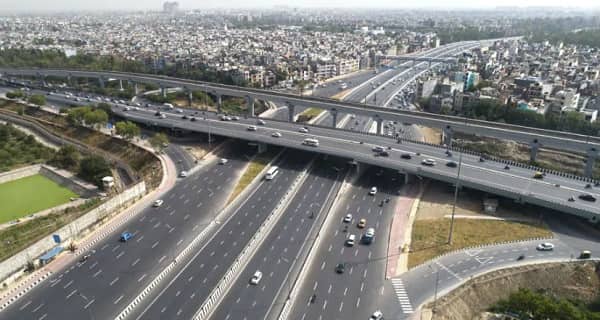
KMP Expressway Overview
| Detail | Information |
| Official Name | Kundli-Manesar-Palwal Expressway / Western Peripheral Expressway |
| Popular Name | KMP Expressway |
| Highway Number | NH-148N |
| Maintained By | HSIIDC (Haryana State Industrial and Infrastructure Development Corporation) |
| Length | 135.6 km |
| Lanes | 6-lane access-controlled |
| North End | Kundli, Sonipat District |
| South End | Dholagarh, Palwal |
| Inaugurated | November 19, 2018 (PM Narendra Modi) |
| Total Cost | Approx. ₹9,000 crore |
| Daily Traffic | 50,000+ heavy vehicles diverted from Delhi |
| Toll Rate | ₹1.35/km (FASTag); ₹2.70/km (without FASTag) |
| FASTag | Mandatory — double rate without it |
| Speed Limit (Cars) | 120 km/h (Manesar-Palwal); 80 km/h (Kundli-Manesar) |
| Entry/Exit Points | 10 — Kundli, Kharkhoda, Bahadurgarh, Badli, Farrukhnagar, Panchgaon, Manesar, Taoru, Sohna, Palwal |
| Infrastructure | 52 underpasses, 23 overpasses, helipad, medical centre, SOS booths |
| Two-Wheelers | Prohibited for safety reasons |
| Key Intersections | NH-1 at Kundli; NH-48 at Manesar; NH-10 at Bahadurgarh; NH-19 at Palwal |
| Companion Expressway | Eastern Peripheral Expressway (KGP) — forms Delhi ring road together |
| 2025 Status | Fully operational; integrated with Delhi-Mumbai Expressway at Khalilpur interchange |
Route and Location
The KMP runs entirely through Haryana, forming a western arc around Delhi. It passes through Sonipat, Kharkhoda, Bahadurgarh, Badli, and Jhajjar in the north and central sections, then through Manesar (Gurugram’s premier industrial zone), Nuh, Sohna, Hathin, and finally Palwal in the south. The expressway is bookended by two major national highway intersections — NH-1 at the Kundli northern end (toward Delhi and Chandigarh) and NH-19 at the Palwal southern end (toward Delhi and Agra).
Connectivity
At the Khalilpur interchange in Nuh district, the KMP now connects directly to the Delhi-Mumbai Expressway’s operational sections — integrating the Delhi orbital road with India’s longest expressway corridor. The DND-Faridabad-KMP Expressway (59 km) connects the eastern side, strengthening Delhi’s connectivity to the ring. The Delhi-Amritsar-Katra Expressway begins at the KMP’s Nilauthi point, extending the network northward toward Punjab and J&K.
Nearby Areas
Manesar Industrial Zone — Gurugram’s manufacturing belt housing Maruti Suzuki, Hero MotoCorp, Honda, and dozens of multinational automotive and component suppliers — is directly on the KMP corridor, making the expressway the daily logistics backbone for Haryana’s automobile economy. Bahadurgarh, an industrial town known for paper and packaging manufacturing, is connected via the NH-10 interchange. Sohna, the rapidly growing real estate and IT zone in southern Gurugram, sits on the expressway’s approach to the Delhi-Mumbai Expressway junction.
Frequently Asked Questions (FAQs)
Q1. What is the KMP Expressway in Haryana?
A: The 135.6-km Kundli-Manesar-Palwal (Western Peripheral) Expressway, NH-148N, connecting Kundli (Sonipat) to Palwal — the western half of Delhi’s ring road. Operational since November 2018.
Q2. How many vehicles does the KMP Expressway divert from Delhi daily?
A: Over 50,000 heavy vehicles daily — contributing to reduced traffic and lower particulate pollution in the national capital.
Q3. What is the KMP Expressway toll rate?
A: ₹1.35 per km with FASTag; ₹2.70 per km without FASTag. Vehicles without active FASTag pay double toll automatically.
Q4. Are two-wheelers allowed on the KMP Expressway?
A: No — two-wheelers are prohibited on the expressway for safety reasons.
Q5. What major expressway connects to KMP in 2025?
A: The Delhi-Mumbai Expressway joins the KMP at the Khalilpur interchange in Nuh district — integrating the Delhi orbital ring with India’s longest expressway corridor.