
India’s expressway story begins here. When the Mumbai-Pune Expressway opened in April 2002, it introduced the country to something it had never experienced on public roads: a six-lane, access-controlled tolled highway where traffic moved without grade-level intersections, without trucks cutting across lanes, and without the chaotic unpredictability of a conventional national highway. Officially named the Yashwantrao Chavan Expressway, it is India’s first access-controlled toll expressway — a 94.5 kilometre concrete corridor beginning at Kalamboli in Navi Mumbai and ending at Ravet near Pune, cutting travel time between the two cities to approximately 2.5 hours from the four to five hours the old highway demanded.
The expressway was built by MSRDC — the Maharashtra State Road Development Corporation — and operates under a Build-Operate-Transfer model with toll collection rights running until 2045. The engineering involved in building it was exceptional for its era: the highway crosses the Sahyadri mountain range through six tunnels and multiple viaducts, navigating the dramatic elevation change between the Konkan coast and the Deccan plateau. The 5.7 kilometres of tunnels combined keep traffic flowing through terrain that would otherwise demand hairpin bends and dangerously steep gradients.
The expressway’s most significant recent development is the Missing Link project — a new alignment through the Khandala-Lonavala ghat section to relieve the notorious congestion caused by heavy vehicles on the incline. Construction began in March 2019 and included two new tunnels, with the longest measuring 8.87 kilometres and a cable-stayed viaduct, passing below a Lonavala lake. The missing link opened on May 1, 2026, coinciding with Maharashtra Day.
On tolls, commuters received significant relief. MSRDC confirmed that toll charges on the Mumbai-Pune Expressway will remain unchanged until April 2030, overturning an earlier announcement of a rate hike. Current toll rates stand at ₹320 for cars and ₹495 for mini buses, last revised in April 2023. Around 1.4 lakh vehicles use the expressway daily.
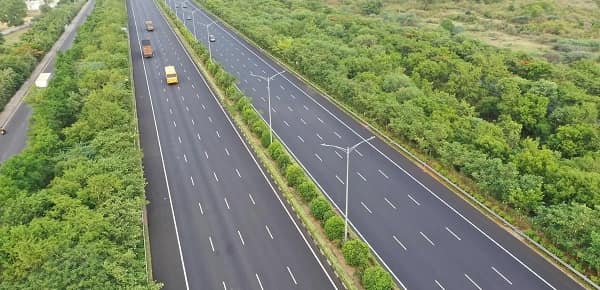
Mumbai Pune Expressway Overview
| Detail | Information |
| Official Name | Yashwantrao Chavan Expressway |
| Popular Name | Mumbai-Pune Expressway |
| Maintained By | Maharashtra State Road Development Corporation (MSRDC) |
| Length | 94.5 km |
| Lanes | 6-lane (expanded progressively to 4 lanes each side) |
| From | Kalamboli, Navi Mumbai, Raigad District |
| To | Ravet, Pune |
| Opened | April 2002 |
| Model | Build-Operate-Transfer (BOT) — toll rights until 2045 |
| Car Toll (One Way) | ₹320 |
| Toll Freeze | No hike until April 2030 |
| Daily Traffic | Approx. 1.4 lakh vehicles |
| Tunnels | 6 major tunnels; total 5.7 km |
| Missing Link | New 8.87 km longest tunnel + viaduct opened May 1, 2026 |
| Toll Plazas | Khopoli Toll Plaza; Talegaon Toll Plaza (Pune-Mumbai) |
| Key Districts | Raigad, Pune |
| Connects To | Sion-Panvel Expressway; NH-48 |
Route and Location
The expressway starts at Kalamboli in Navi Mumbai and ends at Ravet near Pune, crossing through the Sahyadri mountain range with six major tunnels and multiple viaducts en route. The ghat section between Khopoli and Khandala-Lonavala is the most scenically dramatic — the expressway rises sharply from the Konkan coastal plain to the Deccan plateau, with mist-covered valleys dropping away on either side during monsoon months.
Connectivity
The Sion-Panvel Expressway at Kalamboli connects Navi Mumbai’s port and logistics zones to the expressway’s western end. NH-48, India’s Delhi-Mumbai primary national highway, feeds into the expressway at Ravet on the Pune side. The Mumbai-Pune Expressway corridor is India’s most commercially significant short-distance highway, anchoring the supply chain, logistics, and commuter movement between Maharashtra’s two largest economic centres.
Nearby Areas
Lonavala and Khandala — the twin hill station towns perched on the Western Ghats at the expressway’s midpoint — are Maharashtra’s most popular weekend destinations from both Mumbai and Pune. Chikki and cheese fudge vendors at Lonavala draw tourists who exit the expressway for a commercial stop. Khopoli, the industrial town at the expressway’s Konkan base, houses several manufacturing facilities that benefit from fast highway connectivity to both port and market.
Frequently Asked Questions (FAQs)
Q1. What is the Mumbai-Pune Expressway’s official name?
A: Yashwantrao Chavan Expressway — India’s first access-controlled tolled expressway, 94.5 km, operational since April 2002.
Q2. What is the current car toll on the Mumbai-Pune Expressway?
A: ₹320 one way for cars. Toll frozen until April 2030 — no hike expected until then.
Q3. What is the Missing Link and when did it open?
A: A new tunnel (8.87 km, India’s longest road tunnel) and viaduct through the congested Khandala-Lonavala ghat section. Opened May 1, 2026.
Q4. How long does it take to travel Mumbai to Pune on the expressway?
A: Approximately 2.5 hours under normal traffic conditions.
Q5. How many vehicles use the Mumbai-Pune Expressway daily?
A: Approximately 1.4 lakh vehicles daily.