
The word Purvanchal translates roughly as the eastern region — and in the political and administrative geography of Uttar Pradesh, it carries a specific weight. The districts east of Lucknow — Barabanki, Amethi, Sultanpur, Ayodhya, Ambedkar Nagar, Azamgarh, Mau, and Ghazipur — constitute a zone that was for decades among the most infrastructure-deficient in the state despite being among the most politically significant. The Purvanchal Expressway — inaugurated by Prime Minister Narendra Modi on November 16, 2021 — was described at its launch as a statement of intent: a 340.8-kilometre, six-lane access-controlled expressway that connects Lucknow to Ghazipur at the Bihar border, giving eastern UP the kind of high-speed road infrastructure the western districts had possessed for years.
PM Modi laid the foundation stone on July 14, 2018 at Azamgarh. Construction was handled by UPEIDA (Uttar Pradesh Expressways Industrial Development Authority) with work beginning on October 10, 2018. The expressway was completed at a cost of approximately ₹22,494 to ₹22,500 crore — making it at the time of completion the most expensive UPEIDA project. Travel time from Lucknow to Ghazipur dropped from approximately 12 hours to about 3 hours — a transformation that the 9 districts and tens of millions of residents the expressway passes through have experienced directly.
One of the Purvanchal Expressway’s defining features is its emergency airstrip — a 3.2-kilometre landing strip near Akbarpur Karwat village in Sultanpur district, capable of handling Indian Air Force jets. The expressway’s inauguration on November 16, 2021 itself demonstrated this: PM Modi arrived on a military aircraft that landed on the expressway before the official opening ceremony — the second such IAF landing after the Agra-Lucknow Expressway’s similar feature. The Gorakhpur Link Expressway inaugurated June 20, 2025 connects to the Purvanchal Expressway at Salarpur, Azamgarh, extending the network’s reach to Gorakhpur and reducing that city’s travel time to Lucknow from 6 hours to 3.5 hours.
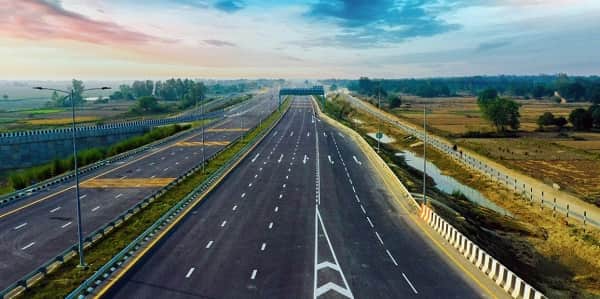
Modi Purvanchal Expressway Overview
| Detail | Information |
| Name | Purvanchal Expressway |
| Inaugurated By | PM Narendra Modi — November 16, 2021 |
| Foundation Stone | July 14, 2018 (PM Modi, at Azamgarh) |
| Maintained By | UPEIDA |
| Length | 340.8 km |
| Lanes | 6-lane (expandable to 8) |
| West End | Chand Saray village, Lucknow District (NH-731) |
| East End | Haydaria village, NH-31, Ghazipur District |
| Construction Start | October 10, 2018 |
| Project Cost | ₹22,494–₹22,500 crore |
| Travel Time Reduction | Lucknow–Ghazipur: 12 hours → 3 hours |
| Districts | Lucknow, Barabanki, Amethi, Sultanpur, Ayodhya, Ambedkar Nagar, Azamgarh, Mau, Ghazipur |
| Emergency Airstrip | 3.2 km IAF airstrip near Sultanpur — Modi’s aircraft landed here at inauguration |
| Gorakhpur Link | Gorakhpur Link Expressway joins at Salarpur, Azamgarh (inaugurated June 20, 2025) |
| Toll Rate | ₹2.60/km (approx.) |
| Design Speed | 120 km/h |
Route and Location
The expressway begins at Chand Saray village on Lucknow’s NH-731 approach and runs eastward through Barabanki, Amethi, Sultanpur, and Ayodhya before entering the Azamgarh zone where the Gorakhpur Link Expressway joins. It continues through Mau district and ends at Haydaria village on NH-31 in Ghazipur district — the point where the Bihar border and the Varanasi zone become the next destinations.
Connectivity
At Lucknow’s western end, the expressway connects to the Agra-Lucknow Expressway and through it to the Yamuna Expressway providing a continuous chain to Delhi. The Gorakhpur Link Expressway at Azamgarh connects northward to Gorakhpur (inaugurated June 20, 2025). The eastern end at Ghazipur connects to NH-31 toward the Bihar border.
Nearby Areas
Ayodhya — the sacred city of Ram Janmabhoomi and the site of the Ram Mandir consecrated January 22, 2024 — is on the expressway corridor, giving the road a permanent pilgrimage traffic dimension. Azamgarh — the literary and educational hub of eastern UP, birthplace of prominent poets, scholars, and political figures — has become a direct beneficiary of the expressway’s economic uplift. Sultanpur’s agricultural districts and Amethi’s industrial potential are both connected to Lucknow’s economy by this corridor.
Frequently Asked Questions (FAQs)
Q1. Who inaugurated the Purvanchal Expressway and when?
A: PM Narendra Modi on November 16, 2021. He laid the foundation stone on July 14, 2018 at Azamgarh.
Q2. How long is the Purvanchal Expressway?
A: 340.8 km, connecting Lucknow (Chand Saray, NH-731) to Ghazipur (Haydaria, NH-31). Cost ₹22,500 crore.
Q3. What is the emergency airstrip on the Purvanchal Expressway?
A: A 3.2-km IAF-capable airstrip near Akbarpur Karwat village, Sultanpur — PM Modi landed his aircraft on it during the inauguration.
Q4. How did Gorakhpur connect to the Purvanchal Expressway?
A: The Gorakhpur Link Expressway (91 km), inaugurated June 20, 2025, joins the Purvanchal Expressway at Salarpur, Azamgarh — cutting Gorakhpur-Lucknow time to 3.5 hours.
Q5. How much did the Purvanchal Expressway cost?
A: Approximately ₹22,500 crore — UPEIDA’s largest expressway project at the time of completion.