
The stretch between Delhi and Meerut has historically been one of the most punishing commutes in Uttar Pradesh — a daily ordeal for hundreds of thousands of people navigating NH-58’s congested towns, slow-moving truck columns, and unpredictable road conditions that made a 70-kilometre journey feel considerably longer than its geography suggested. The Delhi Meerut Expressway changed that calculus dramatically. Since its opening, what once took three to four hours on a bad traffic day now takes under an hour on the expressway — a transformation so significant that it has genuinely altered where people choose to live, work, and invest in the NCR’s eastern corridor.
The expressway is particularly meaningful because of the population it serves. Meerut is not a small or peripheral city — it is one of Uttar Pradesh’s largest and most historically significant urban centers, with deep commercial ties to Delhi through its sports goods manufacturing, sugarcane processing, and agricultural trade industries. The towns that line the expressway’s corridor — Ghaziabad, Dasna, Hapur Road — are themselves densely populated urban nodes whose residents have lived with inadequate road infrastructure for decades. For all of them, the expressway represents a long-overdue correction. It is also a technically impressive piece of engineering, featuring India’s first elevated wildlife corridor and a six-lane elevated highway over the congested Ghaziabad urban stretch that stands as one of the more visually striking pieces of NCR road infrastructure built in recent years.
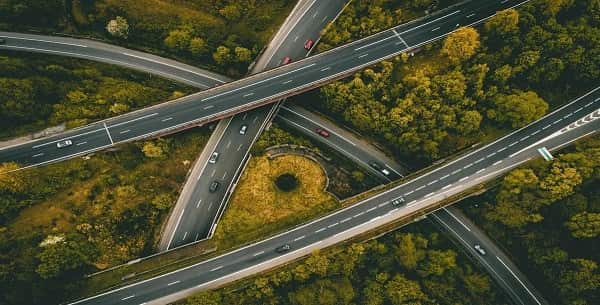
| Detail | Information |
| Full Name | Delhi Meerut Expressway |
| Also Known As | DME / NH-58 Upgrade Corridor |
| Total Length | Approx. 96 km |
| States Covered | Delhi, Uttar Pradesh |
| Starting Point | Nizamuddin Bridge, New Delhi |
| Ending Point | Partapur, Meerut, Uttar Pradesh |
| Highway Classification | National Highway — NH-334B |
| Number of Lanes | 14 lanes (widest expressway section in India) |
| Speed Limit | 100 km/h for cars; 60 km/h for heavy vehicles |
| Toll Collection | FASTag-enabled electronic toll plazas |
| Car Toll Fee (One Way) | Approx. ₹100–₹165 depending on section |
| Governing Authority | NHAI |
| Passes Through | Ghaziabad, Dasna, Hapur Road, Duhai |
| Unique Feature | 14-lane section; first elevated wildlife corridor in India |
Route and Location
The Delhi Meerut Expressway begins at the Nizamuddin Bridge in New Delhi — one of the capital’s most recognizable Yamuna crossings — and travels eastward and northeastward through Ghaziabad before entering Uttar Pradesh’s western district network and terminating at Partapur on Meerut’s southern outskirts. The route passes through some of the NCR’s most densely populated eastern urban fabric including the industrial and residential zones of Ghaziabad, the Dasna interchange which serves as a critical junction for traffic diverging toward Hapur and Greater Noida, and the rapidly developing residential corridors between Ghaziabad and Meerut that have seen significant real estate activity since the expressway’s opening.
What makes this expressway’s route particularly interesting is its multi-package construction approach. Different sections of the expressway were built under different engineering briefs — the Delhi stretch includes an elevated highway running above the existing NH-58 ground level through Ghaziabad’s congested urban core, while the Uttar Pradesh sections transition into a more conventional grade-level expressway design. The Dasna interchange is one of the expressway’s most important nodes, connecting it to the Eastern Peripheral Expressway heading toward Greater Noida and Faridabad, creating a critical multi-directional interchange that serves the entire eastern NCR’s transit grid.
The expressway also incorporates an elevated wildlife corridor near the Dasna area — a first-of-its-kind feature in Indian expressway construction that allows wildlife movement across the road without dangerous at-grade crossings, reflecting a growing awareness of ecological responsibility in national infrastructure planning.
Length and Road Specifications
At 96 kilometres, the Delhi Meerut Expressway is one of the more compact national expressways in terms of total length, but it compensates with an extraordinary cross-section. The widest section of the expressway features 14 lanes — making it the broadest expressway section in India and a reflection of the enormous traffic volumes this corridor is expected to handle as Delhi’s eastern urban sprawl continues growing toward Meerut. The road is built to fully access-controlled specifications with grade-separated interchanges, no at-grade crossings, and dedicated service roads parallel to the main carriageway in several sections.
The elevated section through Ghaziabad is approximately 8.9 kilometres long and six lanes wide, carrying expressway traffic above the congested NH-58 ground level below. This dual-deck arrangement is one of the more complex engineering solutions deployed on any Indian highway and allows both expressway-speed traffic above and local surface traffic below to coexist without interference.
Speed Limit
Private cars and light motor vehicles are permitted a maximum speed of 100 kilometres per hour on the Delhi Meerut Expressway. Heavy commercial vehicles including trucks, tankers, and buses are restricted to 60 km/h. Speed enforcement combines fixed surveillance cameras, patrol vehicles, and traffic police checkpoints particularly around the Ghaziabad urban section and the Dasna interchange. Night driving caution is advised as the corridor sees heavy freight movement during late hours.
Toll Fee
Tolling on the Delhi Meerut Expressway is structured across multiple plazas distributed along its length. For private cars, the toll fee for the full Delhi to Meerut journey ranges from approximately ₹100 to ₹165 across the various plaza points, depending on the specific entry and exit points used. The Dasna toll plaza is the primary collection point for the expressway’s midsection. FASTag is the mandatory electronic payment mode at all plazas. Heavy vehicles, buses, and multi-axle trucks are charged progressively higher rates based on axle configuration and vehicle category as per NHAI’s prevailing toll schedule.
Frequently Asked Questions (FAQs)
Q1. What is the total length of the Delhi Meerut Expressway?
A: The expressway is approximately 96 kilometres long, running from Nizamuddin Bridge in Delhi to Partapur in Meerut.
Q2. How many lanes does the Delhi Meerut Expressway have?
A: The widest section features 14 lanes, making it the broadest expressway section in India.
Q3. What is the speed limit on the Delhi Meerut Expressway?
A: Cars can travel at up to 100 km/h while heavy vehicles are restricted to 60 km/h throughout.
Q4. What is the approximate car toll for the full Delhi to Meerut journey?
A: The total one-way car toll is approximately ₹100 to ₹165 across all toll plazas on the route.
Q5. What is unique about the Delhi Meerut Expressway?
A: It features India’s first elevated wildlife corridor and the country’s widest 14-lane expressway section near Ghaziabad.