
Bundelkhand has been one of Uttar Pradesh’s most economically distressed regions for a long time — a plateau zone of seven districts between the Yamuna and Vindhya ranges whose irregular rainfall, rocky terrain, and relative infrastructural neglect created conditions that pushed agricultural families toward distress migration for generations. The Bundelkhand Expressway represents the most significant infrastructure investment this region has received in its modern history — a 296-kilometre access-controlled expressway that connects Chitrakoot in the south to Etawah in the north, plugging the region into UP’s expressway grid and through it to Delhi NCR and the broader national highway network.
Prime Minister Narendra Modi inaugurated the expressway on July 16, 2022, having laid its foundation stone in Chitrakoot in February 2020 — a construction timeline of approximately 28 months that is genuinely impressive for a project of this scale and geographic complexity. The expressway passes through seven districts — Chitrakoot, Banda, Mahoba, Hamirpur, Jalaun, Auraiya, and Etawah — collectively covering the heart of the Bundelkhand plateau. Beyond the connectivity it provides, the expressway has ambitions that go beyond road infrastructure: the UP government has designated 1,700 hectares along its corridor for solar panel installation, a project that could make it India’s first solar-powered expressway.
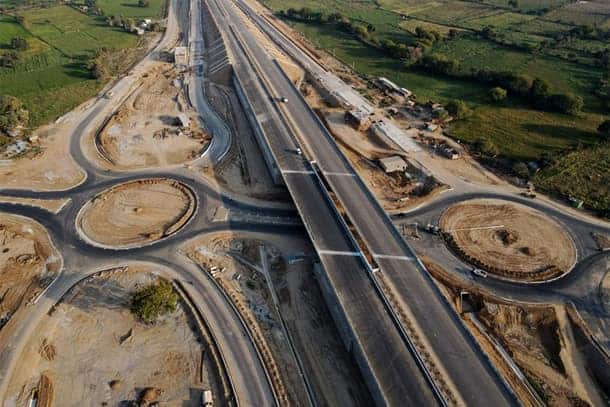
Current Status: Fully Operational since July 16, 2022.
| Detail | Information |
| Name | Bundelkhand Expressway |
| Also Known As | Atal Path |
| Current Status | Fully Operational since July 16, 2022 |
| Location | Bundelkhand Region, Uttar Pradesh |
| Route | Gonda Village, Chitrakoot (NH-35) → Kudrail Village, Etawah (Agra-Lucknow Expressway) |
| Total Length | 296 km |
| Districts Covered | Chitrakoot, Banda, Mahoba, Hamirpur, Jalaun, Auraiya, Etawah |
| Lanes | 4 lanes (expandable to 6) |
| Speed Limit | 100 km/h (cars); 60 km/h (heavy vehicles) |
| Toll Fee — Cars/Jeeps/Vans | ₹620 (full journey) |
| Toll Fee — Light Commercial | ₹990 |
| Toll Fee — Buses/Trucks | ₹1,995 |
| Toll Fee — Heavy Construction | ₹3,040 |
| Toll Fee — Multi-Axle (7+ wheels) | ₹3,895 |
| Toll Plazas | 6 across the corridor |
| Toll Collection | FASTag-enabled |
| Governing Authority | UPEIDA (Uttar Pradesh Expressways Industrial Development Authority) |
| Inaugurated By | Prime Minister Narendra Modi |
| Special Feature | India’s first solar expressway (solar installation under development) |
Route and Location
The Bundelkhand Expressway starts at Gonda village near Bharatkoop on NH-35 in Chitrakoot district — the religiously significant town associated with Lord Ram’s forest exile — and runs northward through the plateau landscape of the Bundelkhand region before terminating at Kudrail village in Etawah district where it meets the Agra-Lucknow Expressway. This connection is what makes the Bundelkhand Expressway genuinely powerful — from Etawah, travellers can continue northward on the Agra-Lucknow Expressway, connect to the Yamuna Expressway, and reach Delhi NCR. A journey from Chitrakoot to Delhi that previously took 14 hours now takes approximately 6 to 7 hours.
The route passes through the rocky plateau terrain of the Vindhya foothills, agricultural plains of the Betwa and Ken river valleys, and the transitional zone approaching the Ganga-Yamuna Doab near Etawah. The engineering challenges of the plateau section required significant investment in bridges, underpasses, and drainage infrastructure to handle the region’s variable monsoon hydrology.
Speed Limits and Toll
The speed limit of 100 km/h for cars reflects the expressway’s access-controlled design on the open plateau sections, with reductions enforced near toll plazas and entry/exit points. Two-wheelers and three-wheelers are prohibited from all UP expressways including this one. Six toll plazas are distributed across the 296-kilometre alignment. The toll rate of ₹2.09 per kilometre makes the full-journey car fare ₹620 — competitive by national expressway standards and significant for a region where per-capita income is below the state average, making the affordability question genuinely important for the local population the expressway was built to serve.
Nearby Areas
Chitrakoot: The deeply sacred pilgrimage town where the expressway begins is one of Uttar Pradesh’s most important religious tourism destinations — the place where Lord Ram, Sita, and Lakshmana are believed to have spent significant years during their forest exile. The expressway has meaningfully improved pilgrimage access. Mahoba and Banda: Historic towns of the Bundelkhand plateau with significant archaeological and heritage value — Mahoba was once a major Chandela dynasty capital — accessible from the expressway at interchange points. Kalpi and Jalaun: The trading towns of Jalaun district along the expressway corridor have seen improved commercial activity since opening, reflecting the expressway’s economic activation effect on the intermediate towns it serves.
Frequently Asked Questions (FAQs)
Q1. When was Bundelkhand Expressway inaugurated and what is its current status?
Inaugurated on July 16, 2022 by PM Narendra Modi. Fully operational across all 296 kilometres.
Q2. What is the toll fee on Bundelkhand Expressway for cars?
₹620 for the full journey for cars, jeeps, and vans. FASTag is the recommended payment mode at all 6 toll plazas.
Q3. What is the speed limit on Bundelkhand Expressway?
100 km/h for cars and 60 km/h for heavy vehicles. Two-wheelers and three-wheelers are prohibited.
Q4. Which districts does Bundelkhand Expressway pass through?
Seven districts — Chitrakoot, Banda, Mahoba, Hamirpur, Jalaun, Auraiya, and Etawah.
Q5. How does Bundelkhand Expressway connect to Delhi?
It connects at Etawah to the Agra-Lucknow Expressway, which links to the Yamuna Expressway toward Delhi NCR — reducing the Chitrakoot-Delhi journey from 14 hours to approximately 6 to 7 hours.