
Top 10 Historical Places in India 2026 span nearly 2,000 years of continuous history, from 2nd-century BCE Buddhist cave paintings to a 17th-century marble mausoleum still regarded as one of the finest architectural achievements on Earth. India currently holds 45 UNESCO World Heritage Sites, 36 of them cultural, making it one of the richest historical landscapes anywhere in the world for travellers genuinely interested in more than just a photo stop. Here’s a clear look at ten of the country’s most significant historical destinations.
1. Taj Mahal, Agra
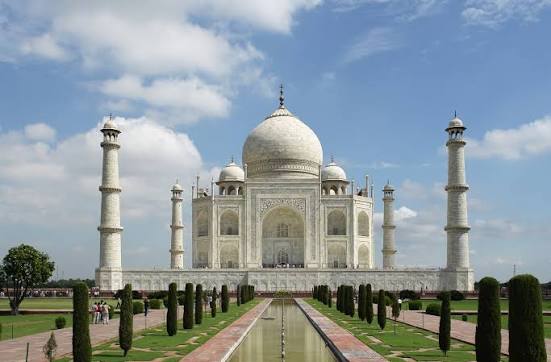
The Taj Mahal remains India’s undisputed architectural masterpiece, built by Mughal emperor Shah Jahan between 1632 and 1653 as a mausoleum for his beloved wife Mumtaz Mahal.
- A synthesis of Indo-Islamic, Persian, and Turkish architectural styles, widely regarded as the pinnacle of Mughal design
- Designated a UNESCO World Heritage Site in 1983
- Best visited at sunrise, when the white marble shifts through soft pink and gold tones
- Remains the single most-visited historical monument in the country by a considerable margin
2. Agra Fort, Agra
Agra Fort, also designated a UNESCO World Heritage Site in 1983, served as the primary residence of Mughal emperors before the capital shifted to Delhi.
- A red sandstone and marble palace-fort complex that witnessed power transitions from Akbar through Aurangzeb
- Offers a genuinely intimate view into Mughal court life, distinct from the more purely commemorative Taj Mahal
- Easily combined with a Taj Mahal visit given their close proximity within Agra
- Includes several distinct palace structures reflecting different phases of Mughal architectural evolution
3. Red Fort, Delhi
The Red Fort, a UNESCO World Heritage Site since 2007, stands as one of Delhi’s most significant Mughal-era monuments and continues to hold genuine national symbolic importance.
- Serves as the site of India’s annual Independence Day flag-hoisting ceremony each August 15th
- Built primarily from red sandstone, giving the fort its distinctive name and visual identity
- Combines massive defensive architecture with intricately designed palace interiors
- Represents the political and ceremonial heart of Mughal Delhi during the empire’s peak
4. Qutub Minar, Delhi
Qutub Minar, a UNESCO World Heritage Site since 1993, stands as the world’s tallest brick minaret, its construction spanning multiple dynasties and centuries.
- Construction began under Qutb-ud-din Aibak in the late 12th century and was completed by subsequent rulers
- Surrounded by a complex of other significant monuments, including the Iron Pillar of Delhi
- Represents some of the earliest and most significant Indo-Islamic architecture in North India
- Offers genuinely striking intricate carving work across its five distinct storeys
5. Humayun’s Tomb, Delhi
Humayun’s Tomb, a UNESCO World Heritage Site since 1993, is widely regarded as the architectural precursor to the Taj Mahal, built nearly a century earlier.
- Commissioned by Empress Bega Begum for her husband, Emperor Humayun, in the mid-16th century
- Introduced the char-bagh garden tomb design that would later define Mughal architecture, including the Taj Mahal itself
- Offers a genuinely peaceful, less crowded alternative to Delhi’s more heavily visited monuments
- Represents a crucial architectural link in understanding how Mughal tomb design evolved over generations
6. Fatehpur Sikri, Uttar Pradesh
Fatehpur Sikri, a UNESCO World Heritage Site since 1986, served as Emperor Akbar’s short-lived imperial capital between 1571 and 1585 before being abandoned.
- Home to the towering Buland Darwaza, one of the largest gateways in the world
- Abandoned reportedly due to water scarcity issues, leaving the entire city remarkably well-preserved
- Offers a genuinely unique experience of walking through an essentially frozen-in-time Mughal capital
- Represents one of the most architecturally cohesive Mughal-era sites given its brief period of active use
7. Ajanta and Ellora Caves, Maharashtra
The Ajanta and Ellora Caves, both UNESCO World Heritage Sites since 1983, represent some of the finest rock-cut architecture and ancient mural art found anywhere in the world.
- Ajanta comprises 30 rock-cut Buddhist caves dating from the 2nd century BCE through the 6th century CE, featuring the finest surviving ancient Indian murals
- Ellora spans 34 caves representing Buddhist, Hindu, and Jain traditions from the 6th to 11th centuries, including the extraordinary monolithic Kailasa Temple
- Together, the two sites offer an unparalleled window into over a thousand years of Indian religious and artistic evolution
- Best visited together given their relative proximity near Aurangabad, Maharashtra
8. Group of Monuments at Hampi, Karnataka
Hampi, a UNESCO World Heritage Site since 1986, preserves the sprawling ruins of the once-mighty Vijayanagara Empire across a genuinely striking boulder-strewn landscape.
- Represents the remains of one of medieval India’s largest and wealthiest empires before its 16th-century fall
- Combines temple complexes, royal structures, and market ruins spread across an unusual, dramatic terrain
- Offers a genuinely different visual and historical experience compared to India’s more monument-dense northern circuit
- Increasingly popular among travellers specifically seeking a less crowded, more atmospheric historical destination
9. Sun Temple, Konark, Odisha
The Sun Temple at Konark, a UNESCO World Heritage Site since 1984, represents Kalinga architecture at its absolute zenith, built as a colossal stone chariot dedicated to the sun god Surya.
- Constructed in the 13th century by King Narasimhadeva I of the Eastern Ganga dynasty
- Designed as a massive stone chariot complete with intricately carved wheels and horses
- Represents one of India’s most architecturally ambitious single-temple projects
- Offers exceptional stone carving detail that rewards slow, careful exploration rather than a rushed visit
10. Khajuraho Group of Monuments, Madhya Pradesh
The Khajuraho temples, a UNESCO World Heritage Site since 1986, are renowned worldwide for their intricate and often provocative sculptural artistry spanning both religious and secular themes.
- Built primarily by the Chandela dynasty between the 10th and 12th centuries
- Combines Hindu and Jain temple architecture within a single, relatively compact temple complex
- Famous specifically for detailed sculptural work depicting a wide range of human experience and mythology
- Represents one of medieval India’s most architecturally and artistically significant temple clusters
Frequently Asked Questions
Q1. Which historical site in India should a first-time visitor prioritise?
The Taj Mahal remains the essential first stop for most travellers, easily combined with Agra Fort and Fatehpur Sikri for a comprehensive Mughal architecture circuit.
Q2. How many UNESCO World Heritage Sites does India currently have?
India has 45 UNESCO World Heritage Sites as of 2026, comprising 36 cultural, 7 natural, and 1 mixed site, with 69 additional properties currently on the Tentative List.
Q3. Are these historical sites easy to combine into a single trip itinerary?
Yes, several cluster naturally — Agra Fort, Taj Mahal, and Fatehpur Sikri form one compact circuit, while Ajanta and Ellora Caves near Aurangabad form another.
Q4. Is photography allowed at all these historical monuments?
Most permit standard photography, though some sites like Ajanta Caves restrict flash photography specifically to protect ancient murals, so it’s worth checking individual site rules before your visit.