
Pune sits at the intersection of two major expressway stories — one already written and transformative, one still being built and expected to be equally so. The Mumbai-Pune Expressway (Yashwantrao Chavan Expressway) began India’s modern expressway era when it opened in April 2002, reducing the journey between India’s financial capital and its Oxford of the East from four to five hours to 2.5 hours. The Pune-Bangalore Expressway, when complete in 2028, will extend that high-speed corridor southward through Maharashtra’s western districts and Karnataka’s northern plateau — connecting Pune to Bengaluru in 6 to 8 hours rather than the current 12 to 14.
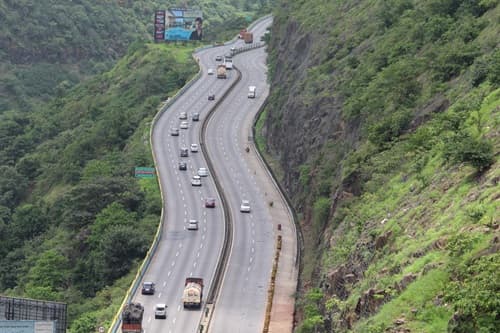
The Mumbai-Pune Expressway covers 94.5 kilometres from Kalamboli in Navi Mumbai to Ravet near Pune on NH-48, with six lanes across the Sahyadri mountain range through six tunnels and multiple viaducts. Built by MSRDC at ₹1,600 crore and operated under BOT until 2045, it carries approximately 1.4 lakh vehicles daily at ₹320 car toll (frozen until April 2030). The Missing Link — a 13.3-kilometre bypass through the Khandala-Lonavala ghat section including India’s longest road tunnel at 8.87 kilometres — opened on May 1, 2026, eliminating the expressway’s worst traffic bottleneck.
The Pune-Bangalore Greenfield Expressway is a 700-kilometre, 6 to 8-lane access-controlled corridor under Bharatmala Phase II at ₹40,000 to ₹50,000 crore. As of July 2025, land acquisition stands at 70 percent complete, environmental clearance is in final stages, construction is expected to begin in early 2026, and completion is targeted for 2028. The expressway will start from Pune’s ring road, pass through Satara, Kolhapur, Belagavi, Dharwad, Hubli, Davanagere, Chitradurga, Tumakuru, and Bengaluru Rural before terminating at Bengaluru’s Satellite Ring Road. Two emergency airstrips are planned — one each near Pune and Bengaluru.
| Detail | Information |
| Expressway 1 | Mumbai-Pune Expressway (Yashwantrao Chavan Expressway) |
| Expressway 1 — Official Name | Yashwantrao Chavan Expressway |
| Expressway 1 — Maintained By | MSRDC (BOT until 2045) |
| Expressway 1 — Length | 94.5 km |
| Expressway 1 — Opened | April 2002 |
| Expressway 1 — Toll (Car) | ₹320 one-way; frozen until April 2030 |
| Expressway 1 — Missing Link | 13.3 km bypass with 8.87 km tunnel; opened May 1, 2026 |
| Expressway 1 — Daily Traffic | Approx. 1.4 lakh vehicles |
| Expressway 2 | Pune-Bangalore Greenfield Expressway |
| Expressway 2 — Maintained By | NHAI |
| Expressway 2 — Length | Approx. 700 km |
| Expressway 2 — Route | Pune → Satara → Kolhapur → Belagavi → Hubli → Davanagere → Tumakuru → Bengaluru |
| Expressway 2 — Programme | Bharatmala Pariyojana Phase II |
| Expressway 2 — Cost | ₹40,000–₹50,000 crore |
| Expressway 2 — Land Acquisition | 70% complete (July 2025) |
| Expressway 2 — Construction Start | Early 2026 |
| Expressway 2 — Completion Target | 2028 |
| Expressway 2 — Travel Time | 6–8 hours (vs 12–14 hours on NH-48) |
| Expressway 2 — Emergency Airstrips | 2 (near Pune and Bengaluru) |
Route and Location
The Mumbai-Pune Expressway begins at Kalamboli in Navi Mumbai’s Raigad district and ends at Ravet near Pune, crossing the Sahyadri range at the Bhor Ghat. The Pune-Bangalore Expressway starts from Pune’s ring road and runs southward through Maharashtra’s western plateau before crossing the Karnataka border near Belagavi and traversing northern Karnataka’s agricultural plateau.
Connectivity
The Mumbai-Pune Expressway connects to the Sion-Panvel Expressway at Kalamboli and to NH-48 at Ravet. The new Chirle-to-Expressway Elevated Corridor (7.35 km, ₹1,100 crore, target February 2027) will connect the Atal Setu sea bridge’s Chirle terminus directly to the expressway — making South Mumbai-to-Pune signal-free travel possible. The Pune-Bangalore Expressway at its northern end connects to the Mumbai-Pune Expressway via Pune’s ring road.
Nearby Areas
Lonavala and Khandala at the Mumbai-Pune Expressway’s midpoint are Maharashtra’s most accessible hill stations. The Aga Khan Palace in Pune — the historic mansion where Mahatma Gandhi was imprisoned and where Kasturba Gandhi died — is near the expressway’s Pune terminus. On the Pune-Bangalore route, Kolhapur’s wrestling and silk traditions, Belagavi’s historic Belgian Fort, and Davanagere’s benne dose (butter dosa) — a Karnataka culinary signature — mark the cultural journey through the corridor.
Frequently Asked Questions (FAQs)
Q1. What is the Pune Expressway?
Pune is served by two expressways — the Mumbai-Pune Expressway (94.5 km, opened 2002, ₹320 car toll) and the upcoming Pune-Bangalore Greenfield Expressway (700 km, Bharatmala Phase II, construction from 2026, completion 2028).
Q2. What is the Missing Link on the Mumbai-Pune Expressway?
A 13.3-km bypass through the Khandala-Lonavala ghat with India’s longest road tunnel (8.87 km) — opened May 1, 2026. Saves 20 to 25 minutes and eliminates the expressway’s worst traffic point.
Q3. How long will the Pune-Bangalore Expressway be?
Approximately 700 km from Pune to Bengaluru, passing through Satara, Kolhapur, Belagavi, Hubli, and Davanagere. Travel time: 6 to 8 hours vs current 12 to 14 hours.
Q4. When will the Pune-Bangalore Expressway open?
Construction is expected to begin early 2026 with completion targeted for 2028.
Q5. What is the car toll on the Mumbai-Pune Expressway?
₹320 one-way — frozen until April 2030. The expressway handles approximately 1.4 lakh vehicles daily.