
The Delhi-Gurugram Expressway handles more daily stress than almost any 27 kilometres of road in India. Over 80,000 vehicles pass through the Kherki Daula toll plaza every day, making it one of the country’s busiest toll points. The expressway connects South Delhi to Gurugram’s corporate and industrial heart along the NH-48 corridor, carrying the daily ambitions of hundreds of thousands of office commuters, freight operators, airport travelers, and intercity travellers whose journeys between the capital and Haryana’s most productive city converge on this same stretch of tarmac every morning and evening.
Developed under the Golden Quadrilateral initiative as a brownfield upgrade of the existing NH-8 corridor, the expressway became fully operational on January 23, 2008 — the day the Rao Tula Ram-Palam flyover, the last remaining section, was inaugurated. What it replaced was a surface highway so congested that the 27-kilometre journey regularly took two hours during peak periods. The expressway reduced that to 20 to 25 minutes on a good day, which transformed not just the commute but the entire economic and real estate geography of Gurugram’s development.
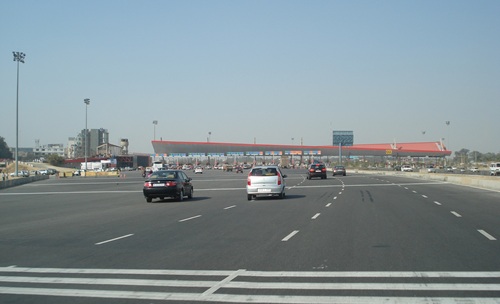
| Detail | Information |
| Name | Delhi-Gurgaon Expressway / Delhi-Gurugram Expressway |
| Highway Designation | NH-48 (formerly NH-8) — Delhi-Gurugram section |
| Current Status | Fully Operational since January 23, 2008 |
| Route | Rao Tula Ram Marg Junction, South Delhi → Kherki Daula Toll Plaza, Gurugram |
| Total Length | 27.7 km (Tollable length: 27.7 km from Km 11.060 to Km 42.000) |
| Lanes | 8 lanes in Delhi; 6 lanes in Haryana (with service roads) |
| Speed Limit | 100 km/h (cars); 80 km/h (heavy vehicles) |
| Toll Fee (Cars — 1 way) | ₹80 (Kherki Daula, effective April 1, 2025) |
| Toll — Same-Day Return | ₹145 for cars |
| Monthly Pass (Cars) | ₹930 |
| Local Resident Pass | ₹340/month (within 20 km of toll plaza) |
| Toll Operator | Millennium City Expressway Private Limited (MCEPL) |
| Toll Plazas | 4 plazas along the corridor |
| Daily Traffic | 80,000+ vehicles (2025) |
| Governing Authority | NHAI (BOT model) |
| Project Cost | Approx. ₹2,489 crore |
| Key Junctions | Dhaula Kuan, Shankar Chowk, IFFCO Chowk, Rajiv Chowk, Kherki Daula |
Route and Location
The expressway begins at the Rao Tula Ram Marg junction near Dhaula Kuan in South Delhi — the point where Delhi’s ring road system connects to the NH-48 corridor — and runs southwestward through the Delhi-Haryana boundary zone, passing the important junctions of Shankar Chowk, IFFCO Chowk, and Rajiv Chowk before terminating at the Kherki Daula toll plaza near Gurugram. From Kherki Daula, the road continues as the Delhi-Jaipur highway toward Manesar, Dharuhera, Rewari, and eventually Jaipur.
The expressway features 11 flyovers and 11 vehicular underpasses along its 27.7-kilometre alignment, managing the complex multi-directional traffic movements at the major junctions without ground-level signal interference. The service roads on both sides handle the local traffic that would otherwise create additional congestion on the main expressway lanes.
Speed Limits and Toll
The 100 km/h speed limit for cars and 80 km/h for heavy vehicles theoretically apply, though peak-hour congestion regularly reduces actual speeds to under 20 km/h at the worst sections near Kherki Daula and IFFCO Chowk. The toll rate of ₹80 one-way for cars effective from April 1, 2025 represents the latest annual revision. Commercial vehicles not permitted to use the two right-most lanes — a lane-discipline rule introduced to reduce merging bottlenecks and improve safety.
Nearby Areas
Cyber City and DLF Corporate Belt: The primary commercial destination for the expressway’s enormous daily corporate commuter traffic, Cyber City’s office towers house the MNC workforce that made the Delhi-Gurugram corridor the most economically significant 27 kilometres in Haryana. Indira Gandhi International Airport: IGI Airport’s proximity to the expressway makes it a primary airport approach road for millions of annual passengers. Manesar Industrial Belt: The IMT Manesar automotive manufacturing zone accessible beyond Kherki Daula makes the expressway a critical freight and logistics corridor alongside its commuter function.
Frequently Asked Questions (FAQs)
Q1. What is the toll fee on Delhi Gurgaon Expressway in 2025?
₹80 one-way for cars at Kherki Daula, effective April 1, 2025. Same-day return is ₹145. Monthly pass ₹930.
Q2. How long is the Delhi Gurugram Expressway?
27.7 kilometres from Rao Tula Ram Marg junction in South Delhi to Kherki Daula toll plaza in Gurugram.
Q3. What is the speed limit on Delhi Gurgaon Expressway?
100 km/h for cars, 80 km/h for heavy vehicles — though peak-hour congestion routinely reduces actual speeds significantly.
Q4. How many vehicles use the Delhi Gurugram Expressway daily?
Over 80,000 vehicles pass through Kherki Daula toll plaza daily as of 2025, making it one of India’s busiest toll points.
Q5. Is FASTag mandatory on Delhi Gurugram Expressway?
Yes. Vehicles without a valid FASTag pay double the toll rate. FASTag is essential for the daily commuter population using this corridor.