
Top 10 Beautiful Places in India 2026 stretch from a turquoise Himalayan lake so vivid photographers still can’t quite capture its true colour, to a living network of bridges woven from tree roots over centuries in India’s wettest region. Beyond the country’s famous monuments and cities lies a genuinely staggering range of natural landscapes — misty tea-covered hills, high-altitude lakes, flower-carpeted valleys, and coral-fringed islands — each offering an entirely different kind of beauty. Here’s a clear look at ten of India’s most breathtaking natural destinations this year.
1. Pangong Tso, Ladakh
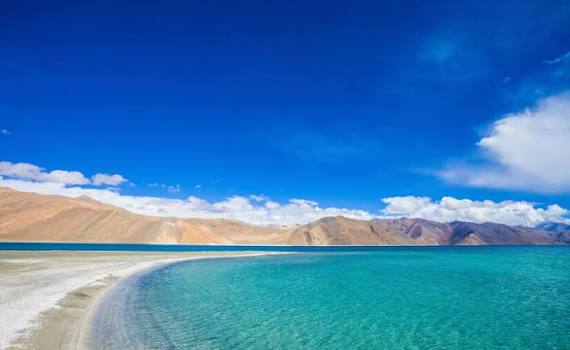
Pangong Tso stands as arguably India’s single most photographed natural lake, a vast high-altitude body of water that shifts through multiple shades of blue depending on the light and time of day.
- Sits at an altitude of over 14,000 feet, stretching across the India-China border into Tibet
- Surrounded by dramatic, barren Himalayan mountains that create a genuinely stark, striking contrast against the water’s blue
- Best visited during the summer months when high-altitude mountain passes remain accessible
- Widely cited by travel writers as the single most beautiful natural destination in the entire country
2. Munnar, Kerala
Munnar offers a completely different register of beauty — rolling, impossibly green tea plantations draped across misty hills in Kerala’s Western Ghats.
- Home to Eravikulam National Park, offering trekking trails alongside the endangered Nilgiri Tahr
- Cool, pleasant climate year-round makes it a genuinely comfortable escape from India’s hotter plains
- Combines scenic beauty with active tea plantation tours and waterfall visits
- Represents “God’s Own Country” Kerala’s signature hill station experience
3. Coorg, Karnataka
Coorg, often nicknamed the “Scotland of India,” offers verdant coffee plantations, cascading waterfalls, and scenic trails that feel genuinely distinct from India’s more crowded hill stations.
- Known specifically for its coffee estates rather than the tea plantations found in Munnar or Darjeeling
- Offers strong trekking and bird-watching opportunities across its forested terrain
- Cooler climate and lush greenery make it particularly appealing during and just after monsoon season
- Combines natural beauty with a distinctive Kodava cultural identity found nowhere else in India
4. Valley of Flowers, Uttarakhand
The Valley of Flowers, a UNESCO World Heritage Site, transforms into a genuinely surreal carpet of wildflowers during its brief blooming season each year.
- Located high in the Himalayas, accessible only via trekking during a limited summer window
- Hosts hundreds of flower species blooming in overlapping waves throughout the season
- Surrounded by snow-capped peaks that create a striking contrast against the colourful valley floor
- Requires genuine trekking commitment, making it a reward specifically for more adventurous travellers
5. Yumthang Valley, Sikkim
Yumthang Valley, often called the “Bowl of Flowers,” offers a genuinely different Himalayan experience compared to Ladakh’s stark, dry terrain.
- Bursts into vivid rhododendron blooms during spring, painting entire hillsides in deep reds and pinks
- Combines alpine meadows with hot springs and views of snow-capped peaks
- Represents Sikkim’s most celebrated natural attraction, drawing visitors specifically during bloom season
- Offers a genuinely lush, colourful alternative to the more barren high-altitude landscapes found further west
6. Dal Lake, Srinagar
Dal Lake remains the defining image of Kashmir’s natural beauty, its still waters framed by the Himalayas and dotted with traditional houseboats and floating gardens.
- Offers houseboat stays that have become synonymous with the classic Kashmir travel experience
- Surrounded by Mughal-era gardens that add historical depth to the natural scenery
- Best experienced via shikara boat rides, particularly around sunrise or sunset
- Continues drawing strong visitor interest specifically during Kashmir’s spring tulip season
7. Andaman and Nicobar Islands
The Andaman and Nicobar Islands offer India’s most pristine tropical escape, combining turquoise waters, coral reefs, and genuinely undisturbed beaches.
- Havelock Island and Neil Island rank among the archipelago’s most popular destinations for snorkelling and diving
- Home to Barren Island, India’s only active volcano, viewable from a safe distance
- Offers marine biodiversity and coral reef experiences unmatched elsewhere in mainland India
- Represents a genuinely different category of natural beauty compared to India’s mountain and hill-station destinations
8. Chandertal Lake, Himachal Pradesh
Chandertal, meaning “Moon Lake” for its distinctive crescent shape, sits high in Himachal Pradesh’s Spiti region, drawing trekkers with its dramatic, isolated beauty.
- Surrounded by stark, high-altitude desert mountains typical of the greater Spiti Valley landscape
- Accessible primarily via trekking, adding a genuine sense of earned reward to reaching the lake
- Offers camping opportunities along its shores for those seeking an immersive high-altitude experience
- Represents one of Himachal Pradesh’s most photographed and celebrated natural landmarks
9. Meghalaya’s Living Root Bridges, Cherrapunji
Meghalaya, one of the wettest places on Earth, offers something genuinely unique among India’s natural wonders — bridges grown, not built, from the roots of ancient rubber trees over generations.
- The living root bridges near Cherrapunji represent centuries of sustainable Khasi tribal engineering
- Surrounded by lush, perpetually green forests and dramatic waterfalls fed by the region’s exceptional rainfall
- Offers a genuinely unique trekking experience combining natural wonder with indigenous cultural heritage
- Best visited just after monsoon season, when waterfalls run at their fullest and most dramatic
10. Nubra Valley, Ladakh
Nubra Valley offers one of Ladakh’s most unexpected landscapes — a genuine cold desert complete with sand dunes and Bactrian camels roaming freely against a backdrop of snow-capped peaks.
- The Hunder sand dunes feature double-humped Bactrian camels, a genuinely rare sight anywhere in India
- Combines desert terrain with towering Himalayan mountains in a way found nowhere else in the country
- Often explored by motorbike from Leh, adding an adventure element to the natural scenery
- Represents one of Ladakh’s most dramatically varied and visually striking regions
Frequently Asked Questions
Q1. What’s the best time of year to visit most of these natural destinations?
It varies significantly by location — Ladakh and Himachal’s high-altitude sites are only accessible in summer, while Valley of Flowers blooms briefly between July and September, and Meghalaya is best just after monsoon.
Q2. Are these destinations suitable for family travel, or do they require serious trekking experience?
Munnar, Coorg, and Dal Lake are genuinely family-friendly with minimal physical demands, while Valley of Flowers, Chandertal Lake, and Pangong Tso require more effort and, in some cases, moderate trekking fitness.
Q3. Is it safe to visit the Andaman Islands’ Barren Island volcano up close?
No, visitors view Barren Island’s volcanic activity from a safe offshore distance via boat tours, since the island itself remains restricted for safety reasons.
Q4. Which destination offers the best combination of natural beauty and easy accessibility?
Munnar in Kerala is generally considered the most accessible, offering stunning scenery, comfortable weather, and well-developed tourist infrastructure without requiring high-altitude trekking or long, difficult journeys.