
Top 10 Tourist Places In South India 2026 span misty tea-covered hills where temperatures drop to a genuinely chilly 5°C, sun-drenched French colonial streets along the Bay of Bengal, and boulder-strewn ruins of a medieval empire that once rivalled anything in Europe. South India offers a fundamentally different travel experience from the north — fewer sprawling deserts and Mughal forts, more backwaters, temple towns, and coffee-growing hills wrapped in genuine year-round greenery. Here’s a clear look at ten of the region’s most rewarding destinations.
1. Munnar, Kerala
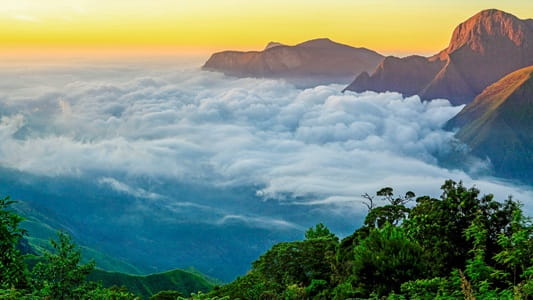
Munnar stands as South India’s most celebrated hill station, its endless rolling tea gardens and misty peaks earning it a reputation as the coolest, most consistently pleasant retreat in the entire region.
- Temperatures can drop as low as 5°C during winter, making it the coldest destination in South India
- Home to Eravikulam National Park, offering trekking opportunities alongside sightings of the endangered Nilgiri Tahr
- Best visited between October and May for the most comfortable weather conditions
- Particularly popular among honeymooners and families given its combination of scenery and manageable trekking terrain
2. Ooty, Tamil Nadu
Ooty, often called the “Queen of Hill Stations,” combines colonial-era charm with sweeping Nilgiri hill views and one of India’s most beloved heritage railways.
- Famous specifically for its toy train, the Nilgiri Mountain Railway, a UNESCO-recognised heritage attraction
- Best visited between October and June, offering a genuinely wide accessible window compared to many other hill destinations
- Botanical gardens and lake boating round out a family-friendly, easy-to-navigate itinerary
- Combines well with nearby Coonoor and Kodaikanal for a broader Nilgiri hill station circuit
3. Coorg, Karnataka
Coorg, nicknamed the “Scotland of India,” offers rolling coffee plantations and a genuinely distinctive Kodava cultural identity found nowhere else in South India.
- Best visited between October and May, avoiding the region’s heavy monsoon rainfall
- Coffee estate tours and homestays offer a more intimate, low-key alternative to Munnar’s tea-focused tourism
- Strong trekking and waterfall-viewing opportunities throughout the surrounding forested terrain
- Particularly popular for honeymoons and couples specifically seeking privacy and quiet natural surroundings
4. Hampi, Karnataka
Hampi, a UNESCO World Heritage Site, preserves the sprawling ruins of the once-mighty Vijayanagara Empire across a dramatically unusual boulder-strewn landscape.
- Best visited between October and March, avoiding the region’s intense summer heat
- Combines archaeological and historical interest with genuinely striking natural terrain unlike anywhere else in South India
- Particularly popular among backpackers and history enthusiasts seeking a less conventional travel experience
- Offers both temple complex exploration and boulder-climbing opportunities for more adventurous visitors
5. Mysore, Karnataka
Mysore offers South India’s richest single-city heritage experience, anchored by the magnificent Mysore Palace and its world-famous Dasara festival celebrations.
- Best visited between October and February, coinciding with the city’s most significant festival season
- Mysore Palace remains one of India’s most visited monuments by international travellers specifically
- Combines heritage sightseeing with a genuinely walkable, manageable city layout suited to shorter trips
- The Mysore Dasara festival transforms the city into one of India’s most spectacular cultural celebrations
6. Alleppey (Alappuzha), Kerala
Alleppey, often called the “Venice of India,” offers South India’s signature backwater experience through traditional houseboat cruises across a network of tranquil canals and lagoons.
- Overnight houseboat stays remain the defining experience, offering genuine tranquillity and privacy
- Best combined with nearby Kumarakom for a fuller Kerala backwater circuit
- Particularly popular among couples and wellness-focused travellers given the region’s Ayurvedic retreat offerings
- Offers a genuinely different pace and landscape compared to South India’s hill station and heritage-city destinations
7. Pondicherry (Puducherry)
Pondicherry offers a genuinely distinctive coastal experience, its French colonial architecture and beachside promenades earning comparisons to the French Riviera.
- Best visited between October and March, avoiding both monsoon rains and peak summer heat
- The French Quarter’s colourful colonial buildings and cafés offer a walking experience unlike anywhere else in India
- Suits couples and solo travellers specifically seeking a relaxed, culturally distinctive beach town atmosphere
- Combines well with nearby Auroville for travellers interested in the region’s spiritual community history
8. Madurai, Tamil Nadu
Madurai stands as one of South India’s most significant spiritual and cultural centres, anchored by the extraordinary Meenakshi Amman Temple.
- Best visited between October and March, avoiding the region’s intense summer heat
- The Meenakshi Temple’s towering, intricately sculpted gopurams rank among India’s most impressive religious architecture
- Offers a genuinely immersive pilgrimage and cultural experience distinct from South India’s hill station and beach destinations
- Suits travellers specifically interested in temple architecture and living religious tradition
9. Wayanad, Kerala
Wayanad offers Kerala’s most significant wildlife and adventure-focused destination, combining dense forests with prehistoric cultural sites.
- Home to the Edakkal Caves, featuring prehistoric cave engravings dating back roughly 8,000 years
- Chembra Peak offers trekking to Wayanad’s highest point, including its famous heart-shaped lake
- Best visited between October and May, offering strong wildlife viewing conditions
- Particularly popular among adventure and nature-focused travellers seeking a less commercialised Kerala destination
10. Kanyakumari, Tamil Nadu
Kanyakumari sits at India’s southernmost tip, offering the genuinely unique experience of watching the Arabian Sea, Bay of Bengal, and Indian Ocean meet at a single point.
- Best visited between October and March for the most comfortable coastal weather
- Offers striking sunrise and sunset views given its unique geographic position at the confluence of three seas
- Combines pilgrimage significance with scenic coastal beauty, appealing to both spiritual and leisure travellers
- Pairs well with nearby Rameswaram for a broader Tamil Nadu coastal and pilgrimage circuit
Frequently Asked Questions
Q1. What’s the best overall time of year to visit South India?
October through March offers the most consistently pleasant weather across the region, avoiding both monsoon rains and the harsher summer heat found in cities like Madurai and Mysore.
Q2. Which South Indian destinations are best specifically for a honeymoon?
Munnar, Wayanad, Coorg, Alleppey, and Kodaikanal are consistently recommended for couples, offering scenic beauty, privacy, and a relaxed pace suited to romantic getaways.
Q3. Does South India experience snowfall at any of its hill stations?
No, snowfall is essentially nonexistent in South India due to its proximity to the equator, even at cooler destinations like Munnar, which is instead known for its comparatively cold temperatures rather than snow.
Q4. Which South Indian city is best for a first-time visitor wanting both heritage and easy accessibility?
Mysore offers an excellent starting point, combining significant heritage sites like Mysore Palace with a compact, walkable layout well-suited to travellers new to the region.