
Cut calories, and your body doesn’t discriminate about where the weight comes from. Left unchecked, it’ll happily burn muscle right alongside fat — which is exactly why so many people who lose 10 kilos end up looking softer, not leaner. Protein is the one variable that changes that outcome.
It’s not a supplement gimmick or a bodybuilder-only concern. It’s the raw material your body uses to hold onto lean tissue while everything else gets smaller. Understand that, and half the confusion around “high protein diets” disappears.
The Real Job Protein Does
Every time you train — or even just move through a normal day — your muscle fibers experience tiny amounts of breakdown. Protein supplies the amino acids needed to repair and rebuild them, a process researchers call muscle protein synthesis (MPS). Skip enough protein, and that repair process stalls, regardless of how hard you’re training.
The RDA of 0.8 grams per kilogram of body weight gets tossed around a lot, but that number was set to prevent outright deficiency, not to support an active adult trying to build or preserve muscle. Most nutrition researchers now treat it as a floor, not a target.
Muscle Loss During a Calorie Deficit Isn’t Optional — Unless You Push Back
Here’s the part that surprises a lot of dieters: even during a “clean” fat-loss phase, roughly a quarter of the weight lost tends to come from lean mass rather than fat. Your body doesn’t know the difference between planned weight loss and starvation — it just senses reduced energy coming in and starts breaking down whatever tissue it can access, muscle included.
Protein interrupts that. Higher intake sends what researchers sometimes describe as a “preservation signal,” telling the body there’s no need to cannibalize muscle for fuel. Combined with resistance training, this is one of the few dietary levers that reliably protects lean mass while the scale still moves downward.
So How Much Do You Actually Need?
The numbers vary depending on your goal, but a rough map looks like this:
- General health and maintenance: somewhere around 1.2–1.6 g/kg of body weight covers most people better than the outdated RDA.
- Muscle building or athletic performance:6–2.2 g/kg is where most of the benefit shows up, with returns flattening out beyond that.
- Preserving muscle during active fat loss: intakes toward the higher end of that range, sometimes slightly above it, help offset the catabolic pressure of a calorie deficit.
For a 70 kg (154 lb) person, that translates to roughly 84–150 grams of protein a day, depending on which goal applies. It sounds like a lot until you spread it across three or four meals.
Timing Matters Less Than People Think — But Distribution Still Counts
The old idea of a narrow post-workout “anabolic window” has mostly been debunked. Your muscles don’t slam a door shut 30 minutes after a workout. What actually matters more is spreading protein intake fairly evenly across the day rather than loading almost all of it into one dinner.
A body that gets 20–30 grams of quality protein every few hours has a steadier supply of amino acids to draw from than one that gets 10 grams at breakfast and 70 at dinner. It’s less about precision timing and more about not leaving long stretches with nothing to work with.
What This Looks Like on a Plate
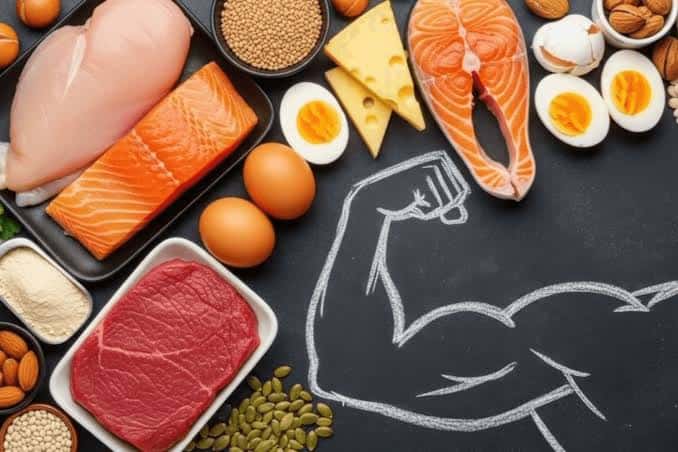
You don’t need powders or expensive supplements to hit these numbers — though they’re a convenient top-up if your schedule is tight. Eggs, Greek yogurt, paneer, lentils, chicken, fish, and tofu all get you there. The trick is building meals around a protein source first, then filling in carbs and fats around it, rather than the reverse.
A simple gut-check: if your plate doesn’t have an obvious protein source you could point to, you’re probably under-eating it.
One Thing Worth Noting
Older adults need more protein than younger adults to get the same muscle-preserving effect — their bodies respond less efficiently to the same dose of amino acids. This is one reason blanket protein advice aimed at 25-year-old gym-goers doesn’t always translate well to someone in their 60s trying to hold onto strength and mobility. If that’s you, leaning toward the higher end of the recommended range, alongside resistance training, tends to matter more, not less.
The Bigger Picture
Protein alone won’t build muscle or strip fat by itself — that still takes a calorie deficit for fat loss, adequate training stimulus for muscle, and consistency over months rather than days. But without enough protein, both goals become harder to hit and easier to sabotage. It’s less a “hack” and more a non-negotiable input, the way sleep or hydration is non-negotiable, just less talked about.
FAQs
Q1. Can I get too much protein, or does more always mean better results?
Past a certain point — generally above 2.2–3 g/kg for most people — additional protein stops producing extra muscle-building benefit. It’s not typically harmful for healthy individuals with normal kidney function, but it stops paying off, so there’s little reason to keep pushing past that ceiling unless you’re specifically trying to maximize satiety during a diet.
Q2. I’m vegetarian — can I actually hit these protein targets without meat?
Yes, though it usually takes a bit more planning. Combining sources like lentils, paneer, tofu, Greek yogurt, and eggs (if you eat them) across the day, rather than relying on one meal, makes the totals far more achievable. Plant proteins are often slightly less complete in amino acid profile, so variety matters more than it does with animal sources.
Q3. Does protein timing around workouts matter if I can’t eat right after training?
Not as much as older advice suggested. What matters far more is your total daily intake and reasonably even distribution across meals. If you can’t eat within that classic post-workout window, eating a protein-rich meal within a few hours on either side works just as well for most people.
Q4. Will eating more protein help me lose fat faster on its own?
Not directly — protein doesn’t burn fat by itself. What it does is help preserve muscle while you’re in a calorie deficit, and it tends to keep you fuller for longer, which can make sticking to that deficit easier. The fat loss still comes from the calorie gap; protein just protects what you don’t want to lose along the way.