
Veneer vs laminate is a choice between real wood and a very convincing picture of it. A veneer is a thin slice of natural timber, usually around 0.5 to 0.6 mm thick, pasted onto plywood or MDF and then polished. A laminate is a factory-made sheet of resin-soaked paper layers topped with a printed design and a protective coating, typically about 1 mm thick. Both turn a plain board into finished furniture, and both are used in almost every Indian home today. The right pick depends on how much daily wear a piece faces, how much upkeep you’re comfortable with, and how important the feel of real wood is to you.
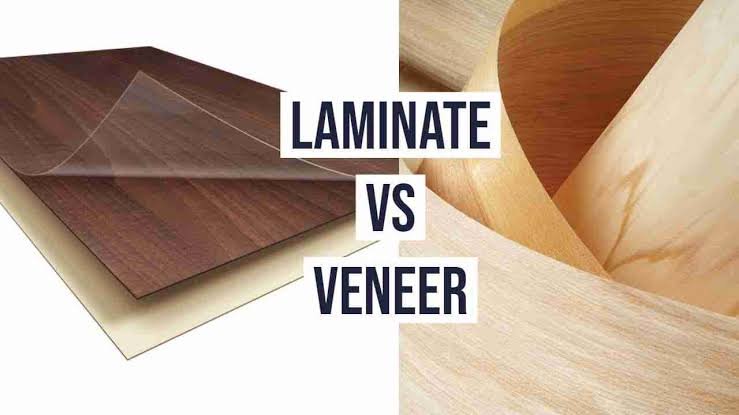
A Slice of Wood or a Pressed Sheet
Veneer is cut from logs of teak, walnut, oak, ash, sapele and other species, either by peeling or slicing. Because it’s real wood, every sheet has its own grain, knots and colour variation. Many furniture makers also use recon (reconstituted) veneers, made by re-forming fast-growing timber into consistent patterns at a lower price.
Veneer arrives raw. It needs a finish such as melamine or PU polish before it’s ready to use, which adds time and cost but also lets you choose the sheen, from a soft matte to a deep gloss.
Laminate, often called sunmica in India, is made under IS 2046. Kraft paper layers are soaked in phenolic resin, a decorative paper is placed on top, and a clear melamine overlay seals it. The whole stack is pressed under high heat and pressure. It comes ready to use, in wood grains, solid colours, stone looks, fabric textures and high gloss.
How They Look and Feel Up Close
Run your fingers across a polished veneer and you’ll feel the gentle texture of open grain, especially with oak or ash. In good lighting, the grain catches light differently from each angle. Skilled carpenters can book-match veneer sheets, mirroring the grain across two shutters for a striking pattern.
Modern laminates have come a long way. Synchronised-texture laminates line up the embossed grain with the printed pattern, so they feel remarkably close to wood. The pattern does repeat, though, and a long wall of wardrobes can reveal it.
One small detail: standard laminate shows a thin dark line at cut edges, where its brown kraft core is exposed. Matching edge-banding hides this neatly, and colour-core laminates avoid it altogether.
Living With Each Finish
Kitchen Heat and Spills
Laminate is a natural fit for kitchens. It handles turmeric stains, oil splashes and frequent wiping with ease and resists warm utensils well, though a trivet is wise for pans straight off the gas. Veneer with a good PU coat handles kitchen shutters too, but needs a little more care around the hob and sink.
Children and Pets
Laminate’s hard top layer resists crayon marks, scratches from toys and claws, and repeated cleaning. Veneer is a little softer and can show light scratches sooner, which is part of its lived-in charm for many families.
Sunlight
Natural wood changes colour with light over time. Teak veneer gently deepens, and some lighter woods turn warmer. A PU finish with UV protection slows this. Laminate holds its colour very steadily, making it practical near large windows.
Repairs and Refreshing
This is where veneer stands out. A worn veneer surface can be lightly sanded and re-polished every five to seven years, bringing furniture back close to new. Laminate needs very little upkeep, but a deep chip or burn usually means replacing the sheet on that panel.
Pricing a Wardrobe Front
Indicative 2026 market rates help with planning:
- Decorative laminate (1 mm): about ₹18 to ₹35 per sq ft for standard designs, higher for textured and acrylic ranges
- Basic veneer: about ₹80 to ₹150 per sq ft
- Mid-range veneer: about ₹150 to ₹300 per sq ft
- Premium species like walnut or teak: ₹300 and above per sq ft
- Melamine or PU polish on veneer: about ₹80 to ₹250 per sq ft
For a 7 ft × 6 ft wardrobe front of about 42 sq ft, a good laminate at ₹35 costs roughly ₹1,500. A mid-range veneer at ₹180 with PU polish at ₹150 comes to about ₹13,900. That ₹12,000-plus gap is why many homes save veneer for the pieces people notice most.
Where Each Finish Belongs
Veneer adds real character to:
- Living room TV units, wall paneling and display cabinets
- Main door and pooja room door shutters
- Bedroom wardrobe fronts and headboards in an adult’s room
- Dining sideboards and study units with a premium look
Laminate is the practical pick for:
- Kitchen shutters and counters near the cooking area
- Kids’ rooms, play areas and study tables
- Wardrobe interiors, drawers and lofts
- Rental homes, home offices and utility cabinets
A popular approach is veneer on visible fronts with laminate inside. A thin 0.8 mm liner laminate on the inner face keeps the panel balanced and easy to clean.
Tips for a Better Finish
- Choose PU over melamine polish on veneer in kitchens and humid cities for stronger water resistance.
- Ask to see the full veneer sheets before pressing, so grain and colour match across shutters.
- Pick laminates with E0 or E1 emission ratings for bedrooms.
- Use a matching edge-band for laminates to hide the dark core line.
- Wipe veneer with a soft dry cloth and avoid harsh cleaners.
FAQs
Q1. Which is more durable, veneer or laminate?
A: Laminate is more resistant to scratches, stains and moisture, while veneer can be refinished to extend its life.
Q2. Is veneer real wood?
A: Yes, veneer is a thin slice of natural wood bonded to a plywood or MDF base.
Q3. Can laminate look like real wood?
A: Modern textured laminates look and feel very close to wood, though the pattern repeats across large surfaces.
Q4. Is veneer good for kitchen cabinets?
A: Veneer with a PU finish works for kitchen shutters, though laminate is easier to maintain in heavy-use kitchens.
Q5. How often does veneer need polishing?
A: Veneer furniture generally benefits from a light re-polish every five to seven years.
Q6. Which is cheaper, veneer or laminate?
A: Laminate is much cheaper, often costing a fraction of polished veneer per square foot.