
Teak wood vs sheesham wood is the comparison most Indian families face the day a carpenter starts measuring for a main door or a new dining set. Both are native Indian hardwoods, and both last for decades. Both also cost far more than plywood or engineered board. The real difference lies in where each one belongs in the house. Teak (sagwan) holds up through monsoon damp because of the natural oil in its fibres. Sheesham (Indian rosewood) is harder and heavier, and it has a bolder, darker grain. Use each in the right room and the furniture will likely outlast the house’s paint, tiles and probably its owners.
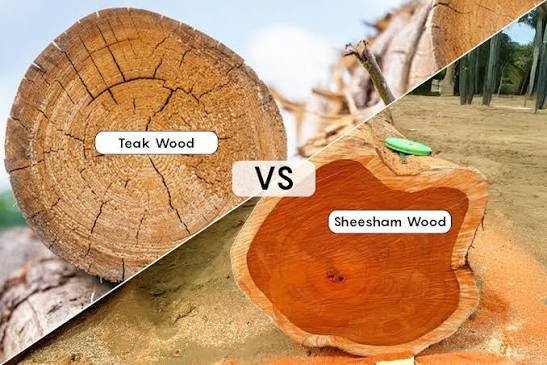
Two Timbers, Two Personalities
Teak comes from Tectona grandis, grown across Kerala, Karnataka, Madhya Pradesh and Maharashtra. Timber merchants still call central Indian stock “CP teak,” a name left over from the old Central Provinces. Kerala’s Nilambur, home to one of the world’s oldest teak plantations, dating to the 1840s, lends its name to some of the costliest logs sold in India. Fresh teak is golden brown with a fine, straight grain that deepens to honey over the years.
Sheesham, Dalbergia sissoo, grows along rivers and roadsides in Punjab, Haryana, Uttar Pradesh and Bihar. Jodhpur turns much of it into furniture for Indian and overseas buyers. Its colour runs from golden to deep reddish brown, with dark streaks that make every tabletop look a little different.
Strength, Weight and Daily Wear
On paper, sheesham is the tougher wood. It scores roughly 1,600 lbf on the Janka hardness test against about 1,000 for teak, and weighs around 770 kg per cubic metre compared with teak’s 650 or so. That’s why a sheesham dining chair dragged across marble for years shows only light marks.
Teak wins on stability. It barely shrinks or swells as humidity changes, so a teak door shuts just as cleanly in July as in January.
- Sheesham dents less and holds screws and joints firmly, which suits beds, sofa frames and dining sets.
- Teak resists warping, making it the safer pick for doors, window frames and anything with tight gaps.
- Sheesham’s weight keeps furniture steady, though shifting a king-size bed becomes a four-person job.
- Both carve well; Rajasthan’s carved furniture tradition leans heavily on sheesham.
How Each Handles Indian Weather
Climate matters more than budget here. In Mumbai, Chennai, Kolkata, Goa or Kerala, humidity stays high for months. Teak’s natural oils keep water and termites away, so it works well for main doors, bathroom doors, balcony seating and kitchen shutters near the sink.
Sheesham performs beautifully indoors across North India. Homes in Delhi, Jaipur, Lucknow and Chandigarh swing between dry winters and sticky monsoons, and kiln-dried sheesham at 10–12% moisture handles that swing comfortably.
- Teak can sit on a covered balcony with occasional oiling.
- Sheesham prefers indoor spots away from rain and wet-mop water; a good PU coat adds protection.
- For ground-floor flats with termite activity, teak frames need less chemical treatment.
What They Cost in 2026
Dealer listings this year put sheesham sawn timber mostly between ₹1,200 and ₹2,500 per cubic foot. Teak varies widely by origin. African teak from Ghana, Ivory Coast or Benin starts around ₹1,800–2,500, CP and Kerala teak usually sit between ₹2,500 and ₹5,500, and old Burma or Nilambur stock can cross ₹8,000.
Here’s a quick calculation. A 7 ft × 3.5 ft main door shutter, 40 mm thick, needs about 3.2 cubic feet of finished wood. After cutting and planing losses, you’ll buy roughly 5 cubic feet. At ₹3,500 for CP teak, that’s about ₹17,500 in timber. In sheesham at ₹1,800, it’s closer to ₹9,000. Labour, hardware and polish come on top either way.
Buying Smart at the Timber Market
- Ask which teak is being quoted. Burma, CP, Kerala and African teak all sit at different price points.
- Genuine teak feels slightly oily and smells faintly of leather when freshly planed.
- Look for mostly dark heartwood in sheesham, since the pale outer sapwood is softer.
- Ask for a moisture reading; good dealers keep a meter handy.
- Lift ready-made “sheesham” pieces. Real sheesham is noticeably heavy, while stained mango or acacia feels lighter.
- “Teak finish” usually means teak veneer over plywood, which is perfectly fine for interior doors at a lower cost.
Which One Suits Your Home?
Choose teak for main doors, pooja doors, windows, bathroom fittings, balcony furniture and almost anything in a coastal city. It costs more upfront and repays that through decades of steady, low-maintenance use.
Choose sheesham for beds, wardrobes, dining sets, coffee tables, TV units and bookshelves, especially in North and Central India. You get a harder, richer-looking piece for roughly half the timber cost of good Indian teak.
Many homes combine the two: teak for the main door and frames, sheesham for the furniture inside. Each wood ends up doing the job it handles best.
FAQs
Q1. Is teak or sheesham more durable?
A: Both can last 40 years or more when well made. Teak handles moisture and termites better, while sheesham resists dents and scratches better.
Q2. Which wood is best for a main door in India?
A: Teak, especially CP or Kerala teak, because it stays straight through monsoon humidity and needs little upkeep.
Q3. Is sheesham good for a bed?
A: Yes. Its hardness and weight make it a strong, stable choice for beds and dining sets.
Q4. Why is teak more expensive than sheesham?
A: Teak grows slowly and good Indian grades are limited, while demand for doors and windows stays high.
Q5. Which polish suits teak and sheesham?
A: Teak looks best with clear melamine or teak oil, while sheesham takes PU polish well in natural and darker shades.
Q6. Is African teak as good as Indian teak?
A: African teak is a solid budget option, though Indian CP and Kerala teak usually have denser grain and more natural oil.