
Marine plywood vs BWR plywood is, at its heart, a question about how long a sheet can sit in boiling water. Marine-grade plywood made to IS 710 is tested for bonding strength after 72 hours of boiling, while BWR (boiling water resistant) plywood is built for a shorter, less demanding test. Both are a big step up from ordinary MR plywood, and both handle Indian humidity far better than standard boards. The smart approach is to use each one where its level of water protection actually earns its cost, which in most homes means only a few specific spots.
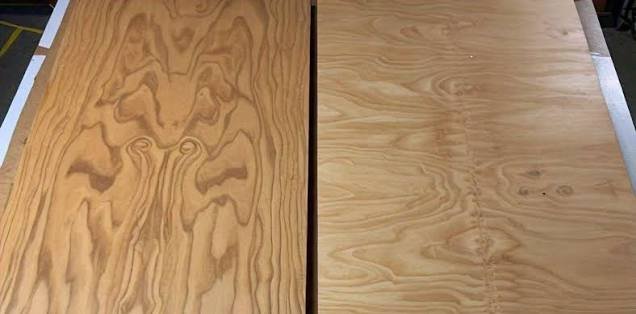
Two Grades, Two Standards
Plywood in India is graded by the Bureau of Indian Standards, and these two sheets come from different rulebooks.
BWR plywood is a grade under IS 303, the same standard that covers MR (moisture resistant) plywood. It’s bonded with phenolic resin and handles splashes, steam and high humidity comfortably. It’s the dependable all-rounder for kitchens and humid rooms.
Marine plywood follows IS 710, a separate and stricter standard originally written for boat building. The requirements go beyond glue. Marine sheets use selected hardwood veneers, allow very few gaps or overlaps in the core layers, carry preservative treatment against borers and fungus, and must keep their bond after prolonged boiling.
You’ll often hear “BWP” and “marine” used together. BWP (boiling waterproof) describes the glue quality, while marine describes the glue plus the construction and veneer quality. A genuine IS 710 sheet meets both.
Where Water Actually Reaches in an Indian Home
Not every room needs the same protection. Here’s where each grade fits best.
The Sink and Dishwashing Zone
The cabinet under a kitchen sink sees dripping utensils, occasional pipe leaks and daily wiping. In many Indian kitchens, utensils are also washed and stacked to dry beside the sink. Marine plywood is the strongest choice here, including the base panel, which takes the most standing water.
Bathrooms and Vanities
Bathroom vanities and mirror cabinets face steam every morning and direct splashes. Marine plywood suits these well, especially in homes where the bathroom floor is washed regularly.
Balcony, Utility and Washing Machine Area
Utility cabinets near washing machines, balcony storage and covered outdoor seating handle moisture from laundry and monsoon spray. Marine plywood performs comfortably here, sealed with a good laminate or exterior polish.
The Rest of the Kitchen
Overhead cabinets, tall units, the hob counter and pantry storage see steam and humidity but rarely standing water. BWR plywood handles all of these very well.
Bedrooms, Living Rooms and Entrances
Wardrobes, TV units, shoe racks and study units in coastal cities like Mumbai, Kochi or Visakhapatnam benefit from BWR plywood because of year-round humidity. In drier cities such as Delhi, Jaipur or Hyderabad, MR plywood is generally enough for these rooms.
Paying for Protection Only Where It Counts
Prices vary by brand and city, but branded 19 mm BWR plywood typically falls around ₹75 to ₹110 per square foot, while marine plywood of similar thickness usually ranges from about ₹95 to ₹150.
Consider a medium L-shaped kitchen using roughly 12 sheets. Only the sink unit, and perhaps the adjacent dish-drying cabinet, faces regular water. That’s about two to three sheets. Using marine ply for those and BWR for the remaining nine or ten keeps protection exactly where it’s needed.
At around ₹30 more per square foot for marine, upgrading three sheets (96 square feet) adds roughly ₹2,900. Making the whole kitchen marine would add closer to ₹11,500. The targeted approach gives the same practical benefit at a fraction of the extra cost.
Things to Check Before Buying
Sheets in both grades look alike once laminated, so careful buying matters.
- Look for the ISI mark with the correct standard printed on every sheet: IS 710 for marine, IS 303 BWR for BWR grade.
- Note the BIS licence number (CM/L) on the stamp and confirm it on the BIS website if you want extra assurance.
- Check the cut edge for even, tightly packed layers with no visible gaps.
- Ask for a small off-cut and boil it for two to three hours at home. Good BWR and marine samples stay firmly bonded.
- Buy from authorised dealers of established brands and keep the bill for warranty claims.
- Confirm the warranty period in writing; marine plywood from leading brands often carries longer cover.
Making Either Grade Last
Even the best plywood benefits from good installation.
- Seal every cut edge with PVC edge-banding or a waterproof sealer before fixing.
- Use stainless steel or anti-rust hinges and screws in wet zones.
- Fit an aluminium or PVC tray at the base of the sink cabinet to catch drips.
- Leave a small ventilation gap behind units fixed to bathroom or outer walls.
- Choose laminates on both faces, since a single-side laminate can make a sheet bow in humid rooms.
FAQs
Q1. Is marine plywood better than BWR plywood?
A: Marine plywood offers stronger water protection and stricter construction quality, so it’s better for wet areas, while BWR is excellent for humid but mostly dry zones.
Q2. Is marine plywood fully waterproof?
A: Marine plywood is highly water resistant and handles prolonged moisture well, though sealing its edges still adds years to its life.
Q3. Can BWR plywood be used for a kitchen?
A: Yes, BWR plywood is widely used for kitchen cabinets, with marine plywood recommended for the sink unit.
Q4. What is the difference between BWP and marine plywood?
A: BWP refers to waterproof glue, while marine plywood under IS 710 also requires selected veneers, a gap-free core and preservative treatment.
Q5. Which plywood is best for a bathroom vanity?
A: Marine plywood is the best choice for bathroom vanities because they face daily steam and splashes.
Q6. How can I check if plywood is genuine marine grade?
A: Check for the ISI mark with IS 710 and a BIS licence number printed on the sheet, and buy from an authorised dealer.