
A pipe rated for 82°C sounds perfectly fine on paper — until you remember that “continuous operating temperature” and “the temperature during an actual hot shower or dishwasher cycle” aren’t always the same number with much margin to spare. Choosing between CPVC and PPR for hot water plumbing isn’t just a materials question; it’s a question about how much thermal headroom your specific household actually needs, and that’s where these two materials genuinely diverge.
What CPVC and PPR Actually Are
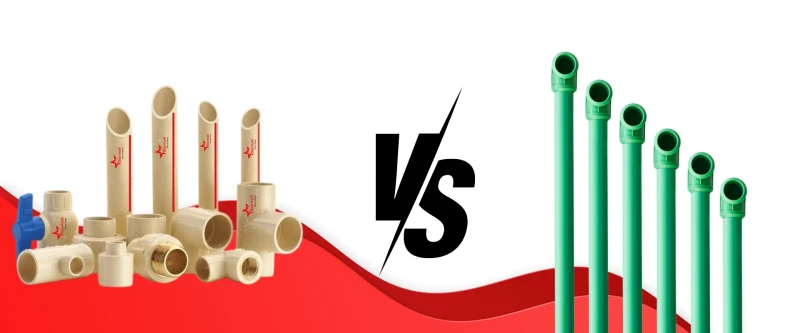
CPVC (Chlorinated Polyvinyl Chloride) is a rigid plastic pipe material widely used across residential and commercial hot water applications, known for solid chemical resistance and a long track record in plumbing systems, particularly in North America. PPR (Polypropylene Random Copolymer) pipes are designed specifically for both hot and cold water systems, and have become the dominant standard in much of the world for modern plumbing, particularly in regions building newer residential and commercial infrastructure.
Temperature Tolerance: The Core Comparison
This is the single most important factor for hot water applications, and it’s where the two materials show a genuine, meaningful gap. PPR pipes are generally rated to handle continuous operating temperatures up to around 70°C, with peak short-term tolerance reaching roughly 95°C. CPVC pipes are typically rated for continuous operation around 82°C (180°F), with short-term bursts tolerated up to roughly 93°C depending on the specific manufacturer and product line.
It’s worth noting that different manufacturers and sources report somewhat varying numbers for both materials, so checking the specific product’s rated specifications rather than relying on general figures is genuinely important before installation. Broadly speaking, though, PPR tends to offer a higher peak temperature ceiling, while CPVC delivers strong, reliable performance across the continuous operating range most residential hot water systems actually need.
Chemical and Chlorine Resistance
CPVC holds a genuine advantage here. It resists chlorine-related degradation better than PPR, which matters considerably for potable water systems where municipal water supplies commonly carry chlorine or chloramine disinfectants. This chemical resistance contributes directly to CPVC’s reliability in water supply applications where long-term exposure to treated water is a constant, unavoidable factor.
Lifespan and Long-Term Durability
PPR pipes generally offer a longer overall service life, commonly cited at over 50 years with relatively low maintenance requirements once properly installed. CPVC pipes typically have a somewhat shorter expected lifespan, often cited in the range of 20 to 30 years under normal conditions, and can be more prone to joint failures over time if installation quality isn’t consistently high.
This lifespan gap is worth weighing seriously for any installation you don’t expect to revisit or renovate for decades, though both materials can perform reliably well within their expected service windows when installed correctly.
Installation Methods and Practical Differences
CPVC installation relies on solvent cementing — a chemical welding process that requires proper technique, correct alignment, and adequate cure time to prevent joint failures down the line. PPR pipes are typically joined through heat fusion welding, which creates a genuinely seamless, homogeneous joint between pipe sections when done correctly, often regarded as producing a more leak-resistant connection than solvent-cemented joints.
PPR pipes also tend to have lower density, making them somewhat lighter and easier to handle during installation, while CPVC generally offers higher tensile strength, giving it a genuine edge in withstanding mechanical stress in high-pressure systems.
Pressure Handling at Elevated Temperatures
PPR pipes tend to maintain stronger pressure ratings at elevated temperatures compared to CPVC, which matters for systems combining both high heat and significant water pressure simultaneously — a combination CPVC handles somewhat less robustly as temperatures climb toward its upper limits.
Cost Considerations
CPVC generally carries a lower upfront material cost, making it an attractive choice for budget-conscious residential projects. PPR typically costs more initially but can offer better long-term value given its extended lifespan and reduced maintenance needs — the classic tradeoff between lower initial investment and lower total cost of ownership over the system’s full lifetime.
Cold Weather Performance
This is a less commonly discussed but genuinely relevant factor depending on your climate. PPR pipes handle cold temperatures reasonably well, remaining functional without becoming brittle in moderately cold conditions. CPVC pipes tend to remain flexible at even lower temperatures, giving it a slight edge in genuinely extreme cold climates where pipe brittleness during winter installation or exposure is a real practical concern.
Which One Actually Suits Your Hot Water System?
PPR tends to be the stronger choice for premium residential and commercial plumbing systems prioritizing maximum temperature headroom, longer service life, and heat-fused joint reliability, particularly in regions where it’s already the established standard and skilled installers are readily available. CPVC remains a genuinely solid choice for standard residential hot water applications, particularly where budget matters more than maximum temperature ceiling, and where chlorine resistance in municipal water supply is a specific priority.
The Bottom Line
Both CPVC and PPR handle hot water applications reliably within their rated specifications, but PPR generally offers a higher temperature ceiling, longer service life, and stronger pressure performance at elevated heat, while CPVC provides a lower upfront cost, solid chlorine resistance, and dependable performance for standard residential hot water needs. The right choice depends on weighing your system’s specific temperature demands, budget, and the installation expertise available in your region, rather than assuming one material is universally superior for every hot water application.
FAQs
Q1. Will either CPVC or PPR pipes fail if my water heater occasionally runs hotter than the rated continuous temperature?
Brief temperature spikes above the continuous rating are generally tolerated within each material’s documented short-term peak tolerance, but sustained operation beyond the continuous rating can degrade the pipe over time and shorten its effective lifespan. If your hot water system regularly runs close to or above a pipe’s continuous rating, it’s worth consulting a plumber about whether your specific installation has adequate thermal margin built in.
Q2. Is PPR pipe installation something I can do myself, or does it require a professional?
PPR installation uses heat fusion welding, which requires specific equipment and technique to create a properly sealed, leak-resistant joint — this is generally not a straightforward DIY task the way some plastic pipe fitting can be. Hiring an experienced installer familiar with heat fusion technique is genuinely important for PPR specifically, since improperly fused joints can fail even if the pipe material itself is rated for the application.
Q3. Does my local municipal water’s chlorine level matter when choosing between these two pipe materials?
Yes — if your area’s water supply carries notably high chlorine or chloramine levels, CPVC’s stronger chemical resistance to chlorine degradation becomes a genuinely relevant factor worth prioritizing over PPR’s higher temperature ceiling. Checking your local water quality report for disinfectant levels before choosing can help inform which material’s specific strengths matter more for your situation.
Q4. Can I mix CPVC and PPR pipes within the same plumbing system?
Generally, it’s not recommended to directly join CPVC and PPR without proper transition fittings specifically designed for connecting dissimilar pipe materials, since their different expansion characteristics and connection methods aren’t naturally compatible. If a renovation requires connecting an existing system in one material to new piping in the other, consulting a plumber about appropriate transition fittings is essential to avoid leaks or joint failures down the line.