
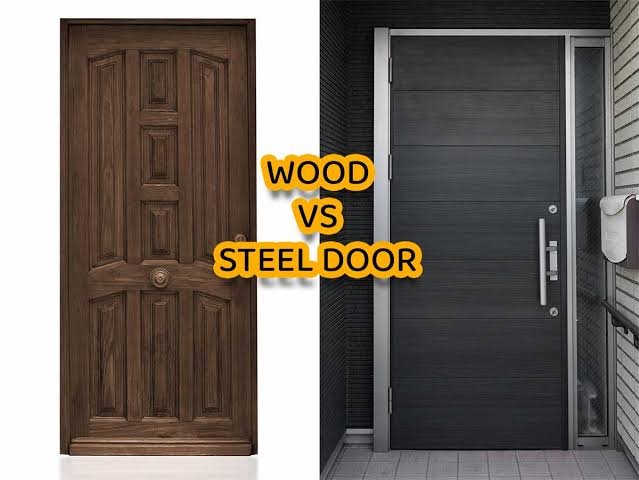
Wooden doors vs steel doors usually comes up first at the main entrance, the one opening in an Indian home that has to look welcoming, keep intruders out and get through twenty-five monsoons without sagging. For generations, that door was teak or sal, often carved, polished and blessed during the griha pravesh. Over the past decade, galvanised steel doors from brands like Tata Pravesh and Godrej have become a common sight in apartments and independent houses, many printed with such convincing wood grain that guests can’t tell the difference. Both make excellent doors. Each fits a different set of priorities around security, climate, upkeep and appearance.
What Today’s Steel Doors Are Made Of
A modern residential steel door isn’t a plain metal sheet. Two skins of galvanised or cold-rolled steel, usually 0.8 to 1.2 mm thick, are pressed over an internal steel-tube frame. The hollow inside is filled with paper honeycomb for stiffness or rockwool for sound and fire delay.
The outer surface is powder-coated or finished with a heat-transfer wood-grain print. Frames are pressed galvanised steel, made to IS 4351, with hinges welded rather than screwed. Most main-door models come with multi-point locks that bolt into the frame at several spots when you turn the key.
What Wood Brings to the Doorway
Wooden doors cover a wide range. Solid panel doors in teak, sal or other hardwoods suit main entrances and pooja rooms. Flush doors, with a timber or blockboard core and veneer or laminate faces, are the everyday choice for bedrooms and bathrooms.
Wood offers a warmth that’s hard to copy. It can be carved, inlaid with brass, fitted with glass panels or polished to any shade. A carpenter can plane a sticking door, refinish a faded one or replace a damaged panel. Many families also prefer wood at the main entrance for traditional and cultural reasons.
Head to Head on Indian Conditions
Security
Steel doors have a clear edge. Their tubular frame, steel skins and multi-point locking make forced entry far harder. A well-built solid teak door with a quality mortise lock is also very secure, especially when paired with a steel grille safety door outside, a combination seen in countless Indian apartments.
Termites and Monsoon
Steel is naturally termite-proof and doesn’t swell in humidity, which makes it a strong choice for ground-floor homes, terrace doors and coastal cities like Chennai, Mumbai or Visakhapatnam. Wooden doors handle the same conditions well when made from seasoned teak or treated sal with sealed edges and a good PU or melamine finish.
Fire Safety
Standard residential steel doors resist fire better than most wooden doors. For high-rise staircases and lobbies, fire-rated steel doors tested to IS 3614 are the norm. Fire-rated wooden doors also exist and are used in many premium apartments.
Heat and Sound
Wood is a natural insulator, so wooden doors stay comfortable to the touch in a Delhi or Nagpur summer and cut street noise well. Steel doors facing direct afternoon sun can get warm, though rockwool-filled models insulate noticeably better than honeycomb ones.
Upkeep
Steel doors need very little care: a wipe with a damp cloth and an occasional drop of oil on the hinges and lock. Wooden doors look best with a light re-polish every few years and a quick check on hinges after each monsoon.
Budgeting a Main Entrance
Indicative 2026 prices give a useful comparison.
A branded steel security door, sold as a complete set with frame and multi-point lock, typically falls between ₹12,000 and ₹45,000, with premium designs going higher.
A plain solid teak main door works out differently. At about ₹800 to ₹1,500 per square foot, a 7 ft × 3.5 ft shutter (24.5 sq ft) costs roughly ₹19,600 to ₹36,700. The teak frame adds around 17.5 running feet at ₹350 to ₹900 per foot, or about ₹6,100 to ₹15,700. Before hardware and polish, that’s roughly ₹26,000 to ₹52,000. Carved teak designs can climb well beyond ₹1 lakh.
For inner rooms, engineered flush doors with laminate or veneer stay far more economical than steel or solid wood.
Where Each Door Fits Best
Steel doors are a smart choice for:
- Main entrances in apartments and ground-floor homes where security is the top priority
- Terrace, utility and backyard doors exposed to rain and sun
- Coastal and termite-prone areas
- Rental properties and second homes that stay locked for long periods
- Homes where busy owners want almost no maintenance
Wooden doors work beautifully for:
- Bedrooms, study rooms and living areas
- Pooja room doors, where carved or glass-panelled designs add meaning
- Grand entrances in independent houses and villas
- Homes with traditional interiors and polished wood throughout
- Anyone who wants a door that can be refinished and customised over the years
Many Indian homes combine both: a steel main door or steel safety grille outside, with wooden or flush doors for every room inside.
Buying Pointers
- Check the steel skin thickness on the spec sheet; 0.8 mm and above suits main doors.
- Ask whether the core is honeycomb or rockwool, since rockwool improves sound and heat insulation.
- Confirm the lock type and the number of locking points.
- For wooden doors, ask for seasoned, termite-treated timber and a moisture-resistant finish.
- Check the warranty on both the door and the hardware.
- Make sure the installer grouts steel frames firmly with cement mortar.
FAQs
Q1. Are steel doors better than wooden doors for security?
A: Yes, steel doors with multi-point locks offer stronger resistance to forced entry than most wooden doors.
Q2. Do steel doors rust in coastal cities?
A: Galvanised steel doors with good powder coating resist rust well, even in humid coastal climates.
Q3. Can steel doors look like wood?
A: Yes, many steel doors use wood-grain finishes that look very close to teak or walnut.
Q4. How long does a wooden main door last?
A: A well-made teak or sal door can last 30 years or more with occasional polishing.
Q5. Are steel doors costlier than wooden doors?
A: Branded steel doors usually cost about the same as a plain solid wood door and less than carved teak.
Q6. Which door is best for an apartment main entrance?
A: A galvanised steel security door suits most apartments, while a wooden door with a steel grille safety door is also a popular choice.