
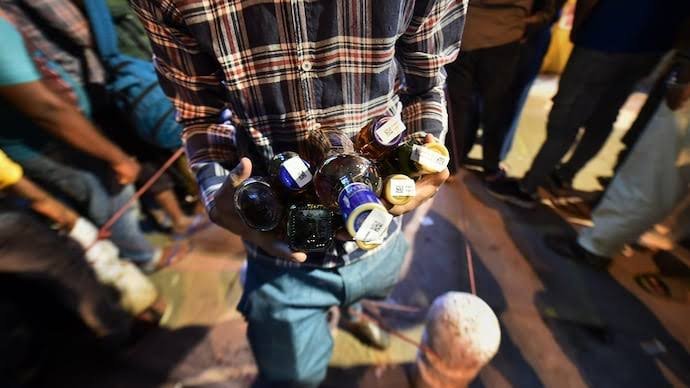
Is drinking alcohol in public places legal? In most of India, no. There’s no single national law banning it. State excise laws set the rules, and police add their own pressure through local drives. The result is a patchwork where a beer on a beach, in a park or beside a parked car can attract anything from a warning to a fine.
The Legal Picture in Brief
- General position: Public drinking is illegal in most Indian states, and rules vary by state.
- Drinking itself: Governed by state excise laws, including minimum drinking ages that differ from 18 in Karnataka to 25 in Delhi, Maharashtra, Punjab and Haryana.
- Drunken misconduct: BNS Section 355 punishes a drunk person who annoys others in a public place with up to 24 hours’ imprisonment, a fine up to ₹1,000, both, or community service.
- Goa: A 2019 amendment set a ₹2,000 fine or up to three months’ jail for drinking or cooking in public places.
- Recent enforcement: Gurugram Police detained 105 people in one drive on 29 September 2026.
Why There’s No Single National Answer
Alcohol is a state subject in India. Each state writes its own excise or prohibition act, sets its own drinking age and decides where drinking is allowed. A rule that applies on a Delhi street may not apply the same way in Karnataka.
I couldn’t verify every state’s exact public-drinking penalty, so treat the figures below as examples. Confirm the rule in the state you’re in.
Public Place Versus Licensed Premises
The line most laws draw is between licensed premises and everywhere else.
- Bars, pubs and licensed restaurants: Drinking is legal where the licence permits it.
- Parks, roadsides, parking areas and beaches: Drinking is generally treated as an offence.
- Liquor shops: Customers drinking on the premises can cost the shop its licence. Goa’s former chief minister said fines or licence cancellation would follow for shops that let people drink on their premises.
Goa’s tourism minister said at the time that bottles could be carried to beaches, but drinking there would be fined. The law targeted the act of drinking in the open, not possession.
BNS Section 355: The Drunk-and-Disorderly Rule
Section 355 of the Bharatiya Nyaya Sanhita replaced old IPC Section 510. It covers a person who, while intoxicated, appears in a public place, or a place they’re trespassing in, and behaves in a way that annoys someone.
- Penalty: Simple imprisonment up to 24 hours, or a fine up to ₹1,000, or both, or community service.
- Classification: Non-cognizable and bailable, triable by any magistrate.
- The surprise: The old IPC fine was ₹10. The BNS raised the ceiling to ₹1,000 and added community service.
Notice what Section 355 punishes. It isn’t drinking. It’s being drunk and annoying others in public. A quiet drinker in a park falls under state excise rules instead.
Goa: Banned, Then Banned Again
Goa is the best-known case, because its image depends on beach drinking.
- The ban: The state cabinet approved an amendment to the Registration of Tourist Trade Act in January 2019. Drinking or cooking in public places such as beaches would draw a ₹2,000 fine, or up to three months’ imprisonment if the fine went unpaid. One report said groups would face ₹10,000 each.
- The figures vary: Earlier statements by the then chief minister proposed a ₹2,500 fine. Treat the amounts as reported, not confirmed.
- The reason: Broken bottles on beaches, and incidents involving tourists, including harassment of women.
- Enforcement: North Goa police ordered a crackdown on open-beach drinking after complaints about glass, and said violators would be booked under a state police provision. The IANS report noted that drinking in the open was already banned, but action was rare.
Rules on paper and enforcement in practice can be miles apart.
Gurugram’s September 2026 Drive
Haryana Police said Gurugram Police took 105 people into custody on 29 September 2026 for allegedly drinking at public places, and initiated preventive action against them under the law. The special checking drive covered the West Police Zone: parks, parking areas, roadside locations and other open spaces.
The case shows how enforcement actually works. Police act in drives, often tied to crime control and security arrangements, so the risk of being stopped can jump suddenly in one area.
Staying Out of Trouble
- Drink only on licensed premises or private property.
- Don’t carry open bottles or cans into parks, beaches or roadside spots.
- Never drink and drive. That’s covered by separate motor vehicle law.
- If you’re a business owner, don’t let customers drink outside your licensed area.
- Check local rules when travelling, especially in beach states.
- If police stop you, stay calm and ask which law they’re invoking.
FAQs
Q1. Can I drink at a beach or park if I’m not causing trouble?
In most states, no. Public drinking is generally illegal regardless of behaviour, and Goa fines it separately on beaches. Drink only at licensed premises or private property.
Q2. What does BNS Section 355 punish?
A drunk person who appears in a public place and annoys others. The penalty is up to 24 hours’ simple imprisonment, a fine up to ₹1,000, both, or community service.
Q3. Can I be arrested for drinking in public?
The offence is non-cognizable and bailable. Police still detain people for preventive action, as Gurugram did, and separate state excise or police laws may apply.
Q4. Is drinking at a bar or restaurant a public place offence?
No. Drinking at licensed premises is legal where the licence permits it. Trouble starts when people carry drinks outside or when shops let customers drink on their premises.
Q5. What is the fine for public drinking in Goa?
A 2019 amendment set ₹2,000 or up to three months’ jail for drinking or cooking in public places, with ₹10,000 each reported for groups. Confirm current amounts locally.