
Search for a cat under ₹2,000 in India, and the honest picture looks quite different from a similar search for dogs — where India’s native dog breeds offer genuine variety at low budgets, the cat market at this price point is overwhelmingly dominated by a single category: the Indian Domestic Cat, commonly called the Desi cat, available almost entirely through adoption rather than purchase. This isn’t a limitation worth working around; it’s actually the most reassuring fact in this entire price bracket, since Desi cats are widely regarded by veterinarians as the healthiest, most naturally resilient cats available in India, and the different coat types, colors, and personalities within this single category give buyers far more genuine variety than the “breed” framing usually suggests.
This guide walks through the five most realistic types of cats you’ll genuinely encounter at or under ₹2,000 in 2026, what distinguishes each, and the important caution worth understanding before responding to any listing that claims otherwise.
Quick Comparison: Cats Available Under ₹2,000 in India
| Cat Type | Typical Cost Route | Price Range | Coat/Appearance | Best For |
| Indian Domestic Shorthair | Shelter/NGO adoption | ₹0-₹2,000 | Short, low-maintenance coat | First-time owners, apartments |
| Tabby-Pattern Desi Cat | Shelter/community adoption | ₹0-₹2,000 | Striped/marbled short coat | Owners wanting a distinctive look |
| Calico/Tricolor Desi Cat | Shelter/community adoption | ₹0-₹2,000 | Multi-colored patched coat | Owners seeking a specific pattern |
| Black Desi Cat | Shelter/community adoption | ₹0-₹2,000 | Solid black short coat | Low-shedding preference, striking look |
| Indian Domestic Longhair | Occasional shelter listing | ₹500-₹2,000 | Semi-long, fluffier coat | Owners wanting a Persian-like look |
Every option in this bracket is realistically an Indian Domestic Cat variant available through adoption. Any listing offering a distinct pedigree breed at this price should be treated with serious caution.
Why India’s Cat Market Looks So Different From the Dog Market at This Budget
Before covering the five specific types, it’s worth explaining directly why this list looks so different from a comparable dog-price guide, since understanding this shapes realistic expectations.
- Unlike dogs, India doesn’t have the same tradition of numerous distinct native cat breeds the way it has Rajapalayam, Mudhol Hound, or Chippiparai dogs — the Indian Domestic Cat is essentially the country’s one true native cat population, distinguished by coat pattern and color rather than separate breeds.
- Every recognized pedigree cat breed available in India — Persian, Siamese, Himalayan, British Shorthair, and others — is bred domestically from originally imported bloodlines, and even the most basic pet-quality kittens from these breeds typically start well above ₹10,000-12,000.
- This means that at ₹2,000, adoption isn’t just the cheapest option, it’s essentially the only legitimate one, and shelters or NGOs are overwhelmingly your realistic source rather than any kind of breeder.
- The variation within the Indian Domestic Cat category is genuinely significant, spanning different coat colors, patterns, and even occasional longer-haired individuals, giving adopters more real choice than the single “breed” label suggests.
1. Indian Domestic Shorthair: The Default, Healthiest Choice
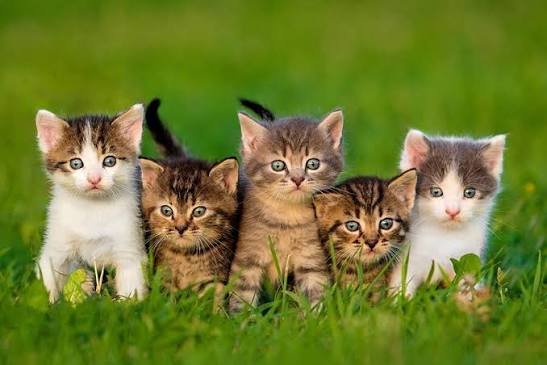
The most common type you’ll encounter at this budget, the Indian Domestic Shorthair represents the vast majority of adoptable cats and kittens across Indian shelters and rescue networks.
- These cats have evolved naturally alongside Indian households and climate for centuries, giving them exceptional heat tolerance, disease resistance, and general hardiness compared to imported pedigree breeds.
- Their short, low-maintenance coat requires minimal grooming, a genuine practical advantage over longer-haired breeds that demand daily brushing and are more prone to matting in India’s climate.
- Temperament varies individually rather than by any breed standard, but Desi cats are broadly known for being intelligent, adaptable, and capable of forming strong bonds with their families once settled.
- Where to be cautious: even at a shelter, ask specifically about the kitten’s vaccination status and whether it’s been checked for common issues like fleas, ear mites, or upper respiratory infections common in rescued street kittens.
- The Indian Domestic Shorthair suits nearly any household, making it the single most sensible starting point for anyone searching within this exact budget, regardless of any specific coat preference.
2. Tabby-Pattern Desi Cat: A Distinctive, Widely Available Look
Among Indian Domestic Cats, the tabby pattern — distinctive striped or marbled markings — is one of the most commonly available and specifically requested looks at shelters and rescue centers.
- The tabby pattern occurs naturally and frequently within the Desi cat population, meaning shelters regularly have tabby kittens and adults available, giving adopters genuine choice in appearance without needing to pay breed premiums.
- Beyond the striking coat pattern, these cats carry the same health and adaptability advantages as any other Indian Domestic Cat, since the tabby marking is a coat variation rather than a separate lineage.
- Tabbies are frequently described by shelter staff as having confident, curious personalities, though as with any individual cat, temperament should be assessed by spending time with the specific animal rather than assumed from the coat pattern.
- Where to be cautious: the same general shelter-adoption checks apply here as with any Desi cat — verify vaccination status and ask about the kitten’s health history before finalizing.
- A tabby-pattern Desi cat suits anyone who specifically likes this distinctive look while still wanting the practical health and low-maintenance advantages of India’s native domestic cat population.
3. Calico/Tricolor Desi Cat: A Popular Patched Coat Variation
Calico and tricolor-patterned cats — a mix of white, black, and orange patches — represent another naturally occurring and popular variation within the Indian Domestic Cat population, regularly found at this budget through shelters.
- This distinctive multi-colored coat pattern is genuinely eye-catching and specifically sought after by many adopters, and it occurs naturally within the Desi cat gene pool without requiring any specialized breeding.
- Like tabbies, calico Desi cats carry the full health and climate-adaptation benefits of India’s native domestic cat population, since the coloring is purely a coat variation.
- Calico cats are frequently associated with spirited, independent personalities in general cat-owner folklore, though this should be treated as a loose generalization rather than a reliable predictor for any individual cat.
- Where to be cautious: calico coloring is genetically linked to female cats in the vast majority of cases, so if sex-specific preference matters to your household, confirm this directly with the shelter.
- A calico or tricolor Desi cat suits adopters specifically drawn to this distinctive coat pattern, offering genuine visual variety within the same reliable, healthy Indian Domestic Cat category.
4. Black Desi Cat: The Striking, Low-Shedding Option
Solid black cats are widely available at Indian shelters, and despite occasional superstitions that reduce their adoption rates in some households, they remain a genuinely excellent choice within this budget.
- A solid black coat is a naturally common color variation within the Desi cat population, and black cats frequently make up a significant share of shelter populations, partly due to lingering adoption bias that has nothing to do with the cats’ actual health or temperament.
- Beyond the striking, sleek appearance, black Desi cats carry all the same hardiness and adaptability as any other Indian Domestic Cat.
- Because black cats are sometimes overlooked by adopters due to superstition, shelters and rescues are often especially eager to place them in good homes, occasionally making the adoption process even more straightforward.
- Where to be cautious: as with any Desi cat, confirm vaccination and general health status directly with the shelter rather than assuming based on appearance alone.
- A black Desi cat suits anyone drawn to this classic, striking look, and choosing one is also a genuinely meaningful way to support a cat that might otherwise wait longer for adoption due to unfounded superstition.
5. Indian Domestic Longhair: The Occasional Fluffier Find
Less common but genuinely available through shelters and community rescues, the Indian Domestic Longhair represents Desi cats carrying a naturally occurring longer-coat gene, giving them a fuller, fluffier appearance without any pedigree breeding involved.
- These cats occur when the naturally occurring longhair gene surfaces within the Desi cat population, giving them a noticeably fluffier coat reminiscent of breeds like the Persian, without the associated breeding costs or health complications.
- They carry the same underlying health and climate resilience as short-haired Desi cats, though the longer coat does require somewhat more regular brushing to prevent matting, particularly in humid regions.
- Because they’re less common than short-haired Desi cats, finding one specifically may take a bit more patience or checking with multiple shelters and rescue networks.
- Where to be cautious: don’t confuse an Indian Domestic Longhair with an actual pedigree Persian or Himalayan being sold informally at this budget — the coat can look superficially similar, but the underlying health profile and breed characteristics are genuinely different, and any claim of a “budget Persian” at ₹2,000 deserves serious skepticism.
- The Indian Domestic Longhair suits adopters specifically drawn to a fluffier coat but who want to avoid the grooming intensity, health vulnerabilities, and higher cost associated with true pedigree longhaired breeds.
The One Thing Worth Being Genuinely Careful About
Given how firmly this budget sits in adoption territory, it’s worth being direct about the main risk that shows up specifically in this price bracket.
- Any online listing or informal seller offering a “purebred” Persian, Siamese, Himalayan, or similar pedigree kitten at ₹2,000 or less should be treated with serious skepticism, since legitimate breeding of these cats costs far more to produce even a basic pet-quality kitten.
- Such listings are typically one of a few things: a genuine Indian Domestic Longhair being mislabeled to command a higher perceived value, a severely neglected or unhealthy kitten from an unmanaged breeding situation, or in some cases, a straightforward scam where payment is taken with no actual kitten ever delivered.
- Always insist on seeing the kitten in person before any payment changes hands, and be specifically wary of sellers who only communicate remotely and pressure quick decisions or advance payment.
- If you’re specifically drawn to a pedigree breed’s appearance but the budget doesn’t support it responsibly, occasionally checking pedigree-specific rescue and rehoming groups is worth the patience, since abandoned or surrendered pedigree cats do sometimes appear in shelters at adoption-level fees, though this is genuinely uncommon and shouldn’t be counted on.
Making the Most of an Adoption at This Budget
Since every realistic option at this price point comes through adoption, a few practices help ensure the process goes smoothly regardless of which coat type or personality you end up choosing.
- Visit the shelter or rescue in person whenever possible, since spending even a short time with a specific kitten tells you far more about its temperament and health than any online listing or photo.
- Ask directly what the adoption fee includes — first vaccination, deworming, and sometimes sterilization are common inclusions at reputable shelters, and confirming this upfront avoids surprises.
- Request any available medical history, particularly for kittens rescued from the street, since prior exposure to common feline illnesses is worth knowing before you bring the kitten home.
- Budget for an independent vet check within the first week, treating this as standard practice regardless of what the shelter has already done, simply as a second layer of confidence.
- Choose based on temperament fit during your visit, not just coat color or pattern preference, since a cat’s personality will matter far more to your daily life together than its specific markings.
Frequently Asked Questions
Q1. Is it actually safe to adopt a street kitten directly rather than through a registered shelter, given both fall within this budget?
Both are commonly done across India, but a registered shelter or NGO adoption is generally the safer route since it typically includes at least an initial health check and vaccination, while a direct street kitten adoption means you’re taking on the full responsibility for that initial veterinary care yourself, which is fine as long as you budget and plan for it immediately.
Q2. Why do black cats sometimes take longer to be adopted from shelters, and is there any real reason to avoid one?
This is purely a lingering cultural superstition in parts of India and elsewhere, with no basis in the cat’s actual health, temperament, or suitability as a pet — black Desi cats are identical in every practical sense to any other coat color within the same population, and choosing one is a genuinely good decision that also helps a cat that might otherwise face a longer wait for a home.
Q3. How do I tell the difference between a genuine Indian Domestic Longhair and someone falsely claiming to sell a purebred Persian at this price?
Ask directly about the parents and any documentation, and be honest with yourself that a true Persian at ₹2,000 essentially doesn’t exist in the legitimate market — a Domestic Longhair will generally have a less extremely flat face and less dramatically full coat than a true Persian, but the safest approach is simply assuming any “Persian” at this price is either mislabeled or a red flag, and treating it as a Desi cat regardless of the claim.
Q4. Should I get a kitten or an adult cat if I’m adopting on this budget, and does it affect the price?
Price generally doesn’t change much between kittens and adults within Desi cat adoption, but adult cats are often overlooked in favor of kittens despite frequently being calmer, already litter-trained, and with a more established, visible personality — it’s genuinely worth considering an adult Desi cat specifically because shelters often have a harder time placing them, and personality fit for your household may be easier to judge upfront.