
Freelancing for foreign clients is legal in India, and the RBI treats it as an export of services. Nothing stops you taking overseas work. What the law regulates is how the foreign money reaches you, how you document it and how you handle tax on both sides. Most of the trouble freelancers run into comes from the paperwork, not the work.
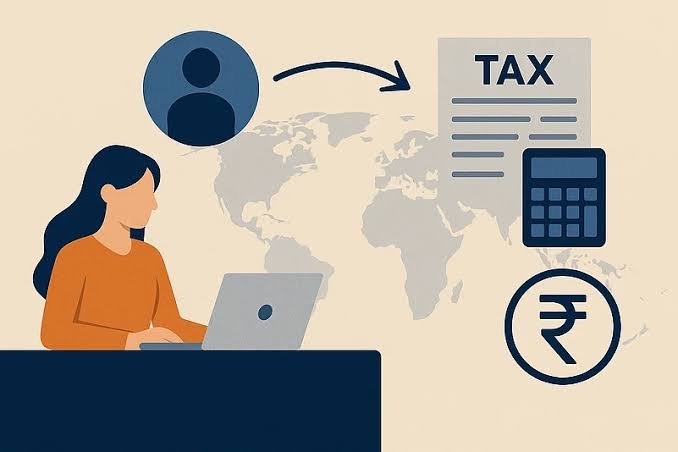
Compliance Snapshot
- Legality: No law bars serving foreign clients. Payment for services is a current account transaction, generally allowed without prior RBI approval.
- FEMA classification: Your work counts as an export of services.
- Paperwork: An e-FIRA or FIRC for every payment, plus the right RBI purpose code.
- Time limit: Export proceeds must reach India within 15 months of the invoice date, per recent RBI changes.
- GST: Zero-rated as an export under a Letter of Undertaking, once you’re registered.
- US clients: Submit Form W-8BEN to avoid default 30% withholding.
How FEMA Treats Your Work
The Foreign Exchange Management Act, 1999 is the law behind every foreign payment. The moment a foreign client pays you, foreign currency enters India and you come under FEMA. One guide says FEMA compliance for freelancers follows the same rules as corporate compliance, with no exceptions, though the detailed requirements are lighter in practice for individuals.
The RBI’s framework changed recently, and sources differ on the details:
- One source says the RBI notified the Foreign Exchange Management (Export and Import of Goods and Services) Regulations, 2026 on 13 January 2026, replacing the 2015 framework and many circulars, and introduced a unified Export Declaration Form that replaces SOFTEX.
- Another says the 15-month timeline came through an amendment dated 13 November 2025, effective 14 November 2025.
- A third says the move to 15 months takes effect under FEMA 2026 regulations from 1 October 2026.
Because these accounts disagree on dates, confirm the current regulation with your bank or a chartered accountant.
The Realisation Window
FEMA doesn’t let foreign earnings sit abroad indefinitely. Export proceeds must be realised and brought into India within a set period. The RBI extended that period from nine months to 15 months from the invoice date. One source adds that for INR-denominated exports the period is 18 months.
A 15-month window is generous. If a client pays late, track the invoice date and chase early.
Authorised Ways to Get Paid
Approved channels include:
- SWIFT wire into an authorised dealer bank.
- Payment platforms like PayPal, Wise and Payoneer, which work within authorised channels and their own KYC rules.
- RBI-licensed cross-border payment aggregators (PA-CB), such as EximPe and Cashfree, which keep inward remittances inside the regulated channel instead of routing them through a wallet or personal account.
Cost and paperwork vary:
- PayPal charges about 4.40% plus a fixed fee to receive a business payment, according to one 2026 guide. It’s the most expensive at most payment sizes, per another.
- Wise offers mid-market rates and an e-FIRC.
- Payoneer is often unavoidable for marketplace-dependent freelancers, though FIRC may need a manual request.
Fees quoted are from early 2026 and change, so check current pricing.
Purpose Codes, FIRC and Record-Keeping
Every inward remittance needs a purpose code that tells the RBI why you received the money. One guide lists P0802 for software and IT consulting, and P0803 for IT-enabled and business support services.
Keep:
- A Foreign Inward Remittance Certificate (FIRC) or the digital e-FIRA for each payment. It’s the proof that the payment was an export of services.
- Invoices and agreements.
- Documentation for at least six years, according to one guide.
An Import Export Code is generally optional for service exporters.
GST on Foreign Clients
Services exported to a foreign client, with payment received in convertible foreign exchange, qualify as zero-rated exports. Once your turnover crosses the registration threshold, you register for GST, file a Letter of Undertaking each financial year and invoice without charging IGST. The details are in my earlier freelancing piece on GST thresholds and LUT.
Income Tax in India
Residents are taxed on income from anywhere, including foreign clients. Foreign payers don’t deduct Indian TDS, so you report the income yourself and pay advance tax. Freelance income is generally treated as business or professional income.
US Clients and the W-8BEN
US clients and platforms like Upwork ask for Form W-8BEN. Without it, US tax law requires a flat 30% withholding.
With a valid W-8BEN claiming India-US treaty benefits, withholding on freelance services often drops to 0%. Guides point to Article 15 on independent personal services, and one notes the treaty’s “make available” test for technical services. Many say that where work is done from India, US withholding generally shouldn’t apply.
One 2026 update matters. The IRS still uses the October 2021 form, but its guidance says independent contractors claiming a treaty exemption on personal services income may need Form 8233 instead of relying only on W-8BEN. If a client asks for it, supply it.
If Tax Is Withheld Abroad
You aren’t taxed twice. Under Section 90 of the Income Tax Act, you can claim a foreign tax credit in India:
- Get proof of the tax withheld, such as Form 1042-S from the US client.
- File Form 67 on the income tax portal to secure the credit.
- Report the foreign income in your return.
The credit is capped at the Indian tax on that income.
Common Mistakes
- Using personal accounts of friends or relatives abroad, or other routes outside authorised channels.
- Skipping the e-FIRA or FIRC and the right purpose code.
- Letting foreign invoices stay unpaid past the realisation window.
- Not filing a W-8BEN until a client withholds 30%.
- Assuming that zero-rated exports mean no GST registration or filing is needed.
- Not reporting foreign income on your Indian return.
FAQs
Q1. Do I need RBI permission to work for foreign clients?
No. Payment for services is a current account transaction, generally allowed without prior RBI approval. FEMA governs how the money reaches you, not whether you can take foreign clients.
Q2. Is PayPal, Wise or Payoneer legal for receiving client payments?
Yes, these routes are widely used and work within authorised channels, but keep the purpose code and an e-FIRA or FIRC for every payment. Fees and paperwork support differ by platform.
Q3. How long can a foreign client take to pay?
Export proceeds must reach India within 15 months of the invoice date after the RBI’s extension from nine months. Sources differ on exact effective dates, so confirm the current regulation.
Q4. Will a US client withhold 30% from my payments?
Not if you give a valid W-8BEN claiming India-US treaty benefits; most freelance services see 0% withholding. The IRS may sometimes ask for Form 8233 instead, so follow the client’s request.
Q5. If tax is withheld abroad, can I get credit in India?
Yes. Claim a foreign tax credit under Section 90 by filing Form 67 with proof such as Form 1042-S. The credit is capped at the Indian tax on that income.