
Medical evacuation is the organised transfer of a traveller to a medical facility when suitable treatment is not available at the place where the emergency occurs during travel. It may involve a road ambulance, air ambulance or another medically appropriate form of transport.
The purpose is to help the patient reach a hospital that can provide the required level of care. The exact support available depends on the policy wording, medical advice, the location and the nature of the emergency.
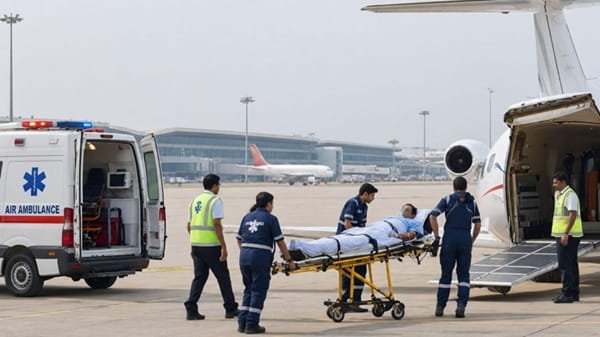
Understanding Medical Evacuation Coverage in Travel Insurance
Medical evacuation cover can form part of the emergency medical benefits offered under travel insurance. It is relevant when a traveller needs to be moved to the nearest suitable hospital because appropriate care is not available locally.
The transfer may be arranged by road or air, depending on the patient’s condition and distance involved. Cover, transport approval and claim payment remain subject to the policy terms, medical necessity and policy limits.
Situations That Require Medical Evacuation
Evacuation may be considered when safe treatment cannot be provided locally and moving the traveller becomes medically necessary for care.
Serious Medical Emergencies
A sudden medical condition may require care that a small clinic or facility cannot provide. In such cases, a doctor may advise transfer to another hospital. Prompt assessment helps decide whether moving the patient is appropriate. The timing depends on current clinical advice.
- The condition needs urgent hospital care.
- Local treatment options are not suitable.
- Medical supervision is required during transport.
Lack of Nearby Medical Facilities
Some destinations have limited access to hospitals, diagnostic services or emergency departments. A traveller may therefore need organised transport to reach appropriate medical care. Distance alone does not decide evacuation, as the medical need remains central. Local availability should be checked quickly when possible.
- The nearest hospital is far away.
- Local clinics lack the required facilities.
- The patient cannot travel safely without support.
Need for Specialised Treatment
Certain illnesses may require specialists, equipment or procedures that are unavailable at the first medical facility. A transfer may then be considered on medical advice. The receiving hospital should be able to provide the required care. Treatment needs guide the destination.
- Specialist consultation is required.
- Advanced testing is needed.
- The existing facility cannot provide the advised treatment.
Medical Emergencies in Remote Areas
Medical evacuation can become particularly relevant during trips to islands, mountains, rural regions or other places where normal ambulance access is limited. Weather, terrain and available transport may also affect how the transfer is arranged. Rescue access can affect response.
- The location is difficult to reach.
- Regular transport may not be medically suitable.
- The traveller needs supervised movement to a hospital.
Severe Injuries or Accidents
A serious accident can result in injuries that need immediate hospital treatment. The treating doctor may recommend movement to a facility with suitable trauma services. The patient may first need stabilisation before any transfer can take place. Transport should not worsen the injury.
- The injury requires urgent assessment.
- Surgery or specialist care may be necessary.
- Safe transfer needs medical monitoring.
Need for Emergency Transportation
A traveller who is medically unstable may not be able to use a taxi, private car or scheduled flight. Special transport may be arranged where medically justified. The chosen option should match the patient’s medical condition and transport needs. The safest practical option is preferred.
- A road ambulance may be required.
- An air ambulance may be considered for longer distances.
- Medical staff may accompany the patient during transfer.
Transfer to a Better Hospital
The first hospital reached after an emergency may provide initial care but may not have the facilities required for further treatment. Transfer can help continue care at a suitable centre. This decision is generally based on medical advice rather than personal preference alone.
- The first facility provides stabilisation only.
- Further treatment requires different resources.
- A doctor recommends movement to another hospital.
Medical Repatriation to Home Country
Medical repatriation is different from evacuation to the nearest suitable hospital. It generally refers to medically arranged transport back to the traveller’s country of residence after an emergency, when such movement is considered appropriate. The traveller’s medical condition and fitness to travel are important considerations.
- The traveller is fit for a medically supported transfer.
- Continued treatment may take place at home.
- The arrangement must meet the policy conditions.
Conclusion
Medical evacuation can be important when a traveller becomes seriously ill or injured, and suitable care is not available nearby. It helps arrange medically appropriate transport to a facility that can provide the required treatment. In some cases, medical repatriation may also be considered later. Before travelling, read the policy wording carefully to understand the scope of cover, approval process, limits and conditions that may apply to emergency medical transport.